

OpenExp
OpenExp guarda, reutiliza y comparte trayectorias de sesiones de agentes de IA (prompts, razonamiento y tool calls) como habilidades de Claude instalables. Open-source y MIT.
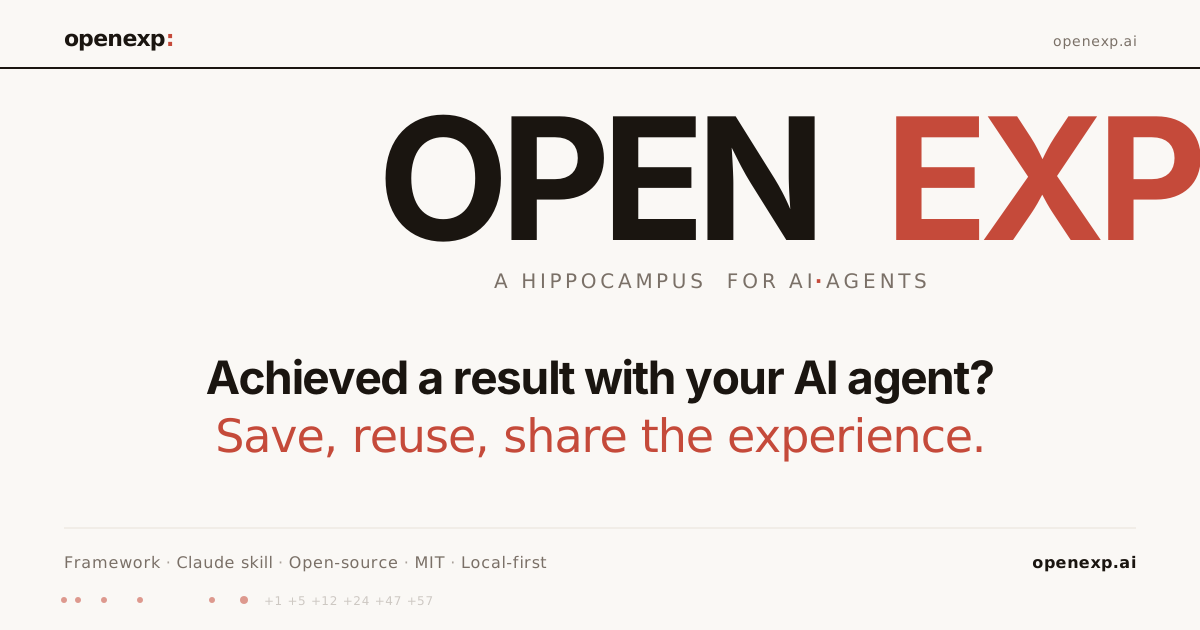
¿Qué es OpenExp?
OpenExp es una forma open-source de guardar y reutilizar una “experiencia” de un agente de IA (un exp) después de que logra un resultado. Un exp registra la trayectoria de un resultado —prompts, razonamiento, skills, scripts, tool calls y una línea de tiempo día a día— para que puedas compartirlo con otros o reproducirlo cuando surja una tarea similar.
El propósito principal es la reutilización práctica: en lugar de empezar de cero cada vez, tu agente Claude puede referenciar un exp coincidente y seguir el camino que previamente llevó a un resultado.
Características clave
- Almacenamiento de trazas de sesiones para resultados: Un exp captura prompts, razonamiento, skills, scripts y tool calls a lo largo de una línea de tiempo (“trayectoria”) asociada a un resultado.
- Formato exp de cuatro archivos: Cada exp consta de
meta.yaml(datos como id/outcome/grade),trajectory.anonymized.yaml(línea de tiempo cruda día a día),README.md(legible por humanos) ySKILL.md(instrucciones para Claude). - Compartir y reutilizar artefactos exp: Los exps se pueden publicar y compartir como repositorios open-source; otros pueden instalarlos o cargarlos en su directorio local de skills del agente.
- Reproducir para tareas similares: Cuando un agente ve una situación y una referencia a un nombre/etiqueta de exp, puede seleccionar una trayectoria coincidente y seguir los pasos grabados para alcanzar el mismo tipo de resultado.
- Instalación local primero vía CLI: El proyecto se instala desde la CLI y está diseñado para ejecutarse desde tu máquina; el flujo de trabajo documentado usa
~/.claude/skills/como destino para las skills de exp.
Cómo usar OpenExp
- Instalar OpenExp desde GitHub: Clona el repositorio (
git clone github.com/anthroos/openexp) y ejecuta el script de configuración proporcionado (./setup.sh). - Instalar un exp: Copia o coloca un exp en tu directorio local de skills de Claude en
~/.claude/skills/(los ejemplos y documentación del repo se refieren a soltar uno o más exps allí). - Reproducir vía situación + referencia exp: Al usar Claude, describe tu situación actual y referéncialo por nombre o etiqueta. Claude extrae del exp y sigue la trayectoria que llevó al resultado grabado.
- (Opcional) Publicar tu propio exp: El proyecto proporciona guías en “publishing your own exp” para convertir tus propias trayectorias exitosas en un exp que puedas compartir.
Casos de uso
- Reutilizar un flujo de ventas exitoso: Después de completar un trato asistido por IA, guarda la trayectoria como un exp para que la próxima vez que redactes propuestas, el agente pueda reutilizar las decisiones y pasos grabados.
- Lanzar una app usando un camino de compilación repetible: Registra una traza de sesión de IA para una entrega de app (incluyendo scripts y tool calls), luego reproduce la misma trayectoria cuando aparezcan requisitos similares.
- Automatizar configuraciones recurrentes de analítica: Crea un exp para una traza de sesión de “proceso de Google Analytics”, luego reutilízalo al configurar tareas de analítica nuevamente para evitar rederivar el mismo proceso.
- Compartir “skills” de agente en equipo: Publica un exp para que los compañeros lo instalen localmente y lo usen como referencia; el exp incluye tanto un README legible por humanos como
SKILL.mdpara Claude. - Probar qué funcionó vs. capturar consejos: Usa exps solo para caminos que alcanzaron un resultado con una calificación (como se describe en la sección “Benefits” del proyecto), manteniendo la biblioteca anclada en resultados.
Preguntas frecuentes
¿Es OpenExp un servicio en la nube?
No. La documentación describe un flujo de trabajo local primero con ejecución en tu máquina y sin servidor de terceros; también indica “no telemetry” y “no API key required”.
¿Qué contiene un “exp”?
Un exp registra una trayectoria anonimizada a lo largo del tiempo (prompts, razonamiento, skills, scripts, tool calls), junto con metadatos como id, outcome y grade, más archivos de documentación para humanos y para Claude.
¿Cómo decide el agente qué exp usar?
El flujo documentado es: describes tu situación y referéncialo por nombre o etiqueta; Claude extrae de él y sigue la trayectoria que logró el resultado. También se menciona una capacidad futura en la hoja de ruta para activación automática en patrones de situación sin nombrar.
¿Puedo reproducir el mismo exp con variantes de modelo diferentes?
El sitio indica que puedes “replay an Opus arc on Sonnet or Haiku”, lo que significa que la trayectoria se puede reutilizar en esas familias de modelos de Claude.
¿Bajo qué licencia está OpenExp?
OpenExp se describe como open-source con licencia MIT.
Alternativas
- Bibliotecas de prompts manuales / runbooks: En lugar de registrar llamadas a herramientas y una trayectoria día a día, puedes mantener instrucciones de texto. Esto suele carecer de un rastreo de sesión estructurado que se pueda reproducir automáticamente.
- Base de conocimientos general o documentación: Un wiki o base de conocimientos puede almacenar pasos y resultados, pero no capturará necesariamente la trayectoria completa de prompts/razonamiento/llamadas a herramientas en un formato reproducible.
- Otros frameworks de “workflow” para agentes: Alternativas en la categoría de frameworks de agentes pueden ofrecer flujos de trabajo reutilizables, pero el énfasis específico de OpenExp son rastreos de sesiones calificados por resultados empaquetados como habilidades de Claude instalables (
~/.claude/skills/).
Alternativas

AakarDev AI
AakarDev AI es una plataforma poderosa que simplifica el desarrollo de aplicaciones de IA con integración fluida de bases de datos vectoriales, permitiendo un despliegue y escalabilidad rápidos.

BookAI.chat
BookAI te permite chatear con tus libros usando IA simplemente proporcionando el título y el autor.

skills-janitor
skills-janitor audita y registra el uso de tus habilidades de Claude Code, comparándolas con 9 acciones de slash y sin dependencias.

BenchSpan
BenchSpan ejecuta benchmarks de agentes con IA en paralelo, registra puntuaciones y fallos en un historial organizado y ayuda a reproducir resultados por commit.

Lasso
Lasso es un PIM con IA para equipos de ecommerce: enriquece atributos y descripciones, procesa datos de proveedores y monitoriza competidores por app o API.

Codex Plugins
Usa Codex Plugins para combinar skills, integraciones de apps y servidores MCP en flujos reutilizables que amplían el acceso de Codex a Gmail, Drive y Slack.