
Connects to existing GTM tools
Connects to the GTM tools a revenue team already uses, rather than requiring a separate standalone workflow.

Houndly is a self-learning GTM copilot for revenue teams. It learns from prospects, campaigns, replies, meetings, and sales conversations to improve targeting, messaging, and funnel actions.
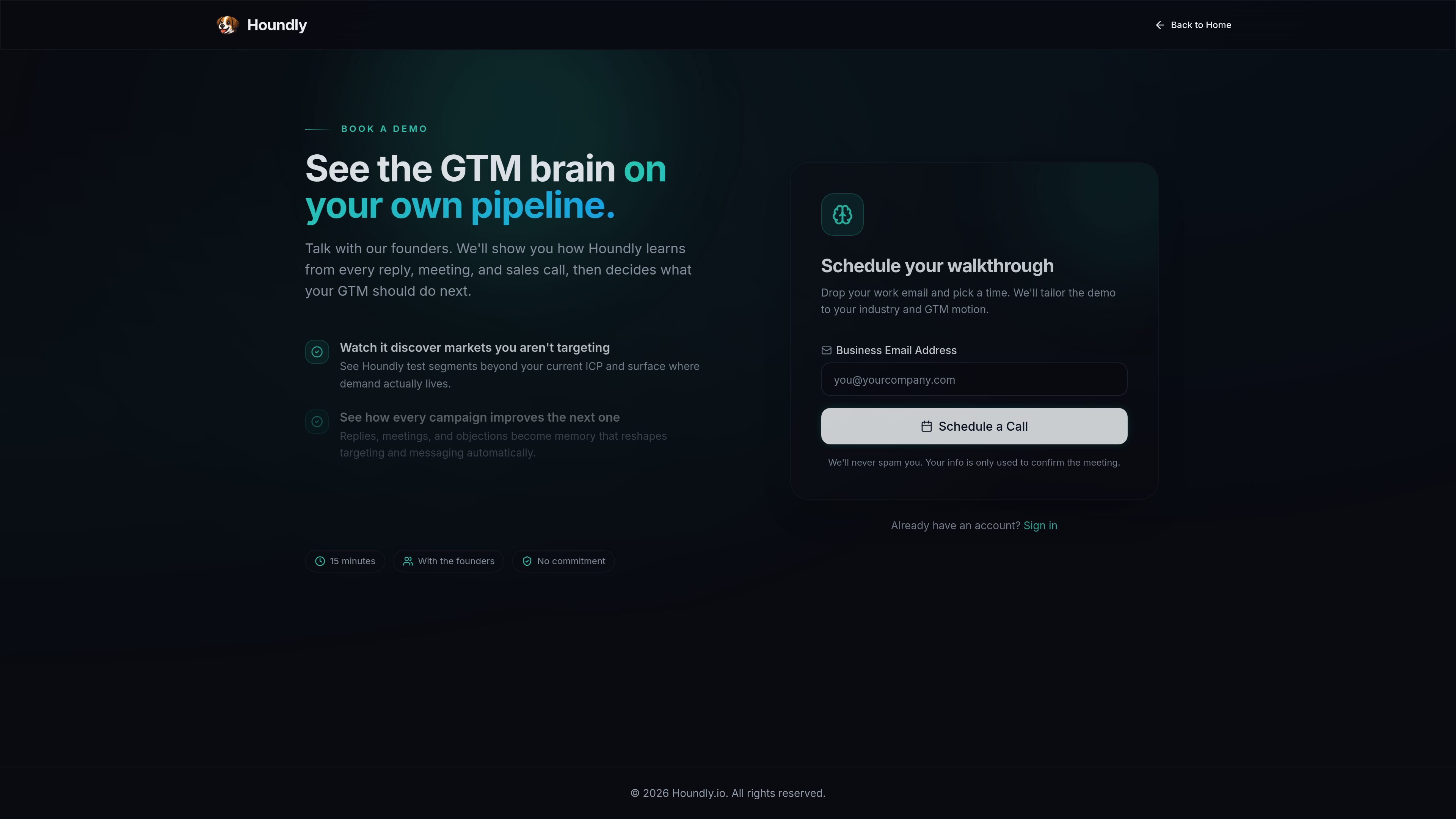
Houndly is a self-learning GTM copilot for revenue teams. The product is described as a GTM intelligence layer that connects to the tools a team already uses and learns from real sales and marketing activity.
According to the site, Houndly uses information from prospects, campaigns, replies, meetings, and sales conversations to improve targeting, messaging, ICP definition, and funnel conversion, then acts on those insights in the workflow.
Connects to the GTM tools a revenue team already uses, rather than requiring a separate standalone workflow.
Learns from prospect, campaign, reply, meeting, and sales conversation data to inform future actions.
Improves targeting and ICP definition using patterns it observes across sales and marketing activity.
Helps shape messaging by using what it learns from replies and conversations to improve what the team says next.
Acts on what it learns to support next steps across the funnel, including funnel conversion work.
Teams that want to improve prospect targeting using patterns learned from prior conversations and campaign outcomes.
Reps and managers who need sharper outreach language based on how prospects respond to messages and calls.
Teams working on ideal customer profile definition and adjustment using live GTM activity instead of static assumptions.
Revenue teams looking to connect learning from replies, meetings, and calls to the next step in the funnel.
Houndly is presented as a GTM intelligence layer for revenue teams. The site says it connects to the GTM tools a team already uses and learns from replies, meetings, and sales conversations to improve targeting, messaging, ICP definition, and funnel conversion.
The site is aimed at revenue teams, including people working on prospecting, outbound messaging, and sales conversations. It is positioned around improving how teams target accounts, what they say, and what they do next.
The source shows a sign-in flow on the pricing page with Google or email magic-link access. It does not provide public plan pricing, limits, or trial details in the collected text.
The rendered home page indicates Houndly connects to existing GTM tools. The collected sources do not list specific integrations by name.
The source says Houndly learns from every reply, meeting, and sales call, then improves future targeting and messaging. That suggests it is designed to adapt over time based on team activity.

Podium is an AI lead generation and lead management platform for local businesses. It centralizes lead conversations, automated follow-up, reviews, payments, and booking, with a 24/7 AI Employee available as an add-on.

Ninjō AI is an AI sales agent platform for creators and agencies that qualifies leads, handles sales conversations, and supports multi-channel follow-up. It can also be controlled from Claude or ChatGPT through MCP for users who want to manage agents by chat.

Blinked is a free Chrome extension for LinkedIn outreach that helps users research leads, draft personalized messages, and manage follow-ups inside LinkedIn. It is local first, with outreach data kept in the browser rather than on Blinked’s servers.

PromptScout tracks how ChatGPT, Gemini, Google AI Overviews, and Perplexity mention your brand or competitors, then pairs those results with source analysis and website audits. It helps teams decide what to fix in content, positioning, or site readiness next.

SaveMRR is a Stripe retention tool for SaaS teams that scans billing data for churn and MRR leaks, then automates recovery through dunning, cancel-save offers, win-back emails, and onboarding nudges. It is built for founders and bootstrapped teams using Stripe.

Hype is a web tool for finding trending YouTube topics by category, time range, and scoring mode. It helps creators spot emerging ideas, inspect source videos, and decide what to cover next.