
Asynchronous ingestion
Record conversation turns or submit documents through the SDK or API. The write call returns immediately while ingestion and subsequent processing run asynchronously without blocking the agent.

Synap is an agentic context-management platform that gives AI agents persistent, scoped memory across conversations, users, and organizations. It helps developers capture, organize, compact, and retrieve relevant context through SDKs, APIs, MCP, and framework adapters.
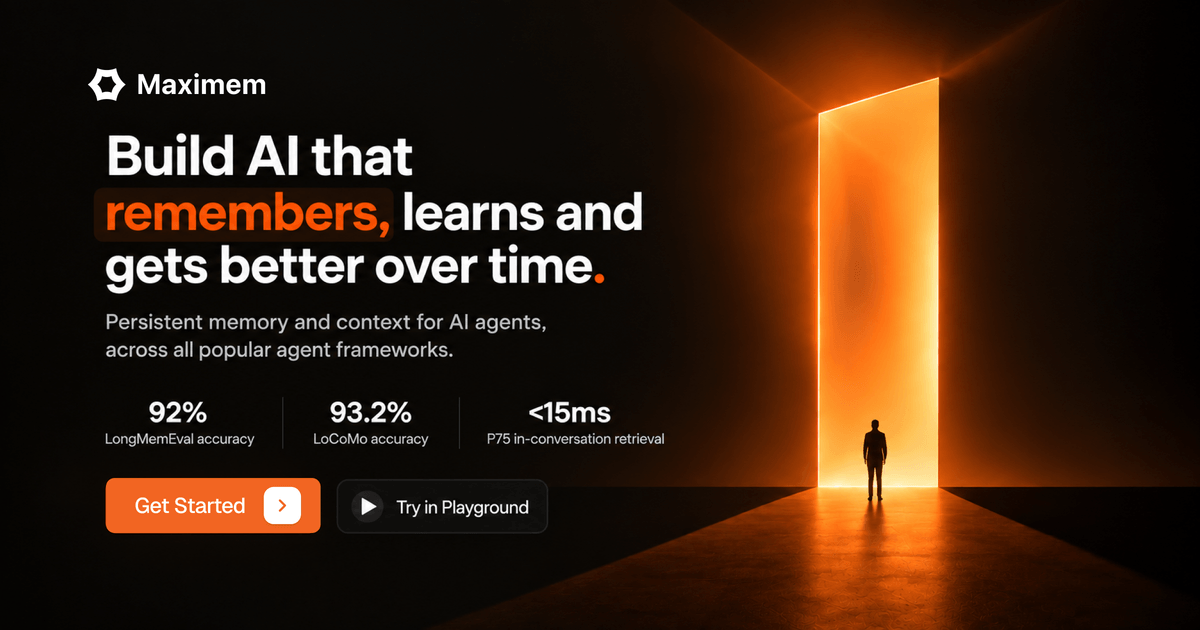
Synap is an agentic context-management platform for developers building AI agents. It records conversations and documents, turns them into structured and scoped memory, and retrieves relevant context for later agent responses across sessions and users.
The platform is designed to manage more than a single conversation window: short-term session context, long-term personal memory, and organizational knowledge can be kept in separate scopes. Synap combines asynchronous ingestion, structured extraction, vector and graph storage, anticipatory retrieval, consolidation, and compaction so developers do not have to assemble those memory operations themselves.
Record conversation turns or submit documents through the SDK or API. The write call returns immediately while ingestion and subsequent processing run asynchronously without blocking the agent.
Synap categorizes content, extracts structured memory, chunks information, resolves entities, and organizes the results instead of treating the conversation as unprocessed text.
Processed memories are written to vector storage for semantic similarity, graph storage for entity relationships, and file storage for source documents. Scope identifiers govern where information is stored.
The system searches applicable scopes in parallel and can use fast, accurate, or hybrid retrieval. Context can be pre-fetched during a conversation, with under 15 ms P75 in-conversation retrieval reported on the product site.
Background consolidation and agentic compaction reduce accumulated context while retaining relevant signal. Synap reports validated compaction and includes consolidation and compaction across plans.
A context architecture is generated per agent to govern extraction, scoping, retention, and related behavior. The product also supports custom memory schemas and organizational, long-term, and short-term memory layers.
Record user conversations over days or months and retrieve established preferences, facts, and prior decisions when the agent responds in a new session. Entity resolution is intended to connect names or aliases that refer to the same person.
Store product facts, policies, and other shared organizational knowledge separately from personal memories so multiple agents can use the appropriate company context without exposing unrelated customer data.
Pre-fetch relevant context while a live conversation is still in progress so an interactive or voice-oriented agent can receive memory without waiting for a separate retrieval step at response time.
Capture long-running project discussions and use consolidation and compaction to keep prompts focused as the history grows, while retaining useful information for later turns.
Give each agent a generated or customized memory architecture that controls extraction, retention, and scoping when a team needs behavior tailored to its application rather than a generic memory store.
Synap provides Python and TypeScript SDKs, a REST API for other languages, a hosted MCP endpoint, and native adapters for 23 agent frameworks. Messages can be recorded asynchronously, with an ingestion ID returned immediately.
You record conversation turns or submit documents through the SDK or API. Synap extracts structured memories, resolves entities, stores information across vector, graph, and file stores, and retrieves relevant context for later turns.
Synap supports fast, accurate, and hybrid retrieval modes. The pricing page states that all plans include these modes, along with anticipatory retrieval, consolidation, agentic compaction, custom memory schemas, and memory-architecture customization.
The product supports organizational memory shared across users and tenants, long-term memory per person across sessions, and short-term memory for the current session. Scope identifiers determine where ingested information belongs.
A free Trial tier is available without a credit card. Paid plans add higher credit volumes, more agent or instance capacity, support options, longer audit trails, and—on eligible plans—bring-your-own-key support. Enterprise plans include an on-premise deployment option.

Goldfish is an AI memory app for macOS that helps you reply, write, summarize, and continue using the context already on your Mac. It stores memory locally and writes in your tone.

Lasso is an ecommerce product data platform for enriching catalog records, processing supplier files, generating product content, and monitoring competitors. It combines a web app with a REST API, SDK, and MCP server for teams and developers.

CreateOS Sandbox is an isolated compute environment for running code and agent workloads inside Firecracker micro-VMs. It is designed for workflows that need machine-level isolation, private networking between sandboxes, and programmatic control through SDK, CLI, or MCP.

ArtDeck is a visual reference board app for iPhone, iPad, and Mac that lets artists collect mixed reference material on one canvas and study it with ToolBox lenses. It works offline, supports optional iCloud sync, and is sold as a one-time purchase with no account required.

GitBot is a local browser-based workspace for creating reusable coding bots powered by Claude Code, Codex, or OpenCode. It helps developers run those agents across repository folders with persistent threads and configurable permissions.

Codex Plugins bundle reusable skills, app integrations, and MCP servers into workflows you can install in the Codex app or use from Codex CLI. They help extend Codex with connected-service tasks, reusable instructions, and shared team workflows.