
Text-to-UI generation
Generate UI from text prompts so a product idea can move from a description to a first interface draft without starting from a blank canvas.

腾讯设计 Ardot is an AI-driven design tool for product teams that supports text-to-UI generation, image-to-design conversion, vector editing, and design-to-development handoff. It offers a free Starter plan and is available on macOS and the web.
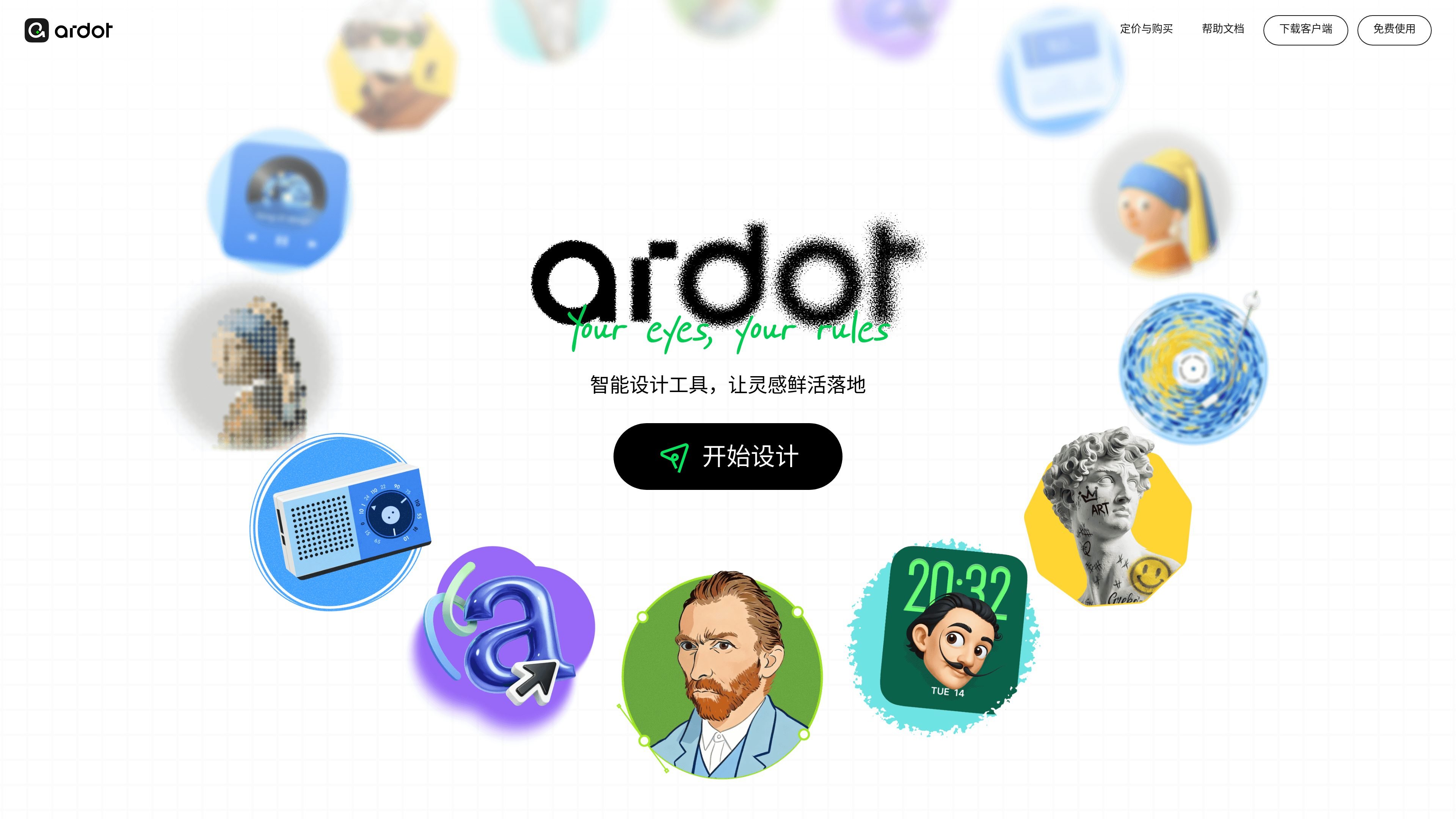
腾讯设计 Ardot is an AI-driven design tool for product teams that combines interface creation, layout editing, design-system management, and design-to-development handoff in one workspace. The product is presented as available on macOS and in the browser, with a free Starter plan and paid plan tiers for individuals, teams, and enterprises.
Its source pages emphasize two main workflows. One is AI-assisted creation, including text-to-UI generation, image-to-design conversion, and AI helpers for copy, naming, and explanations. The other is production-oriented editing and delivery, including vector editing, dynamic layout controls, shared design assets, team collaboration, and handoff outputs for engineering.
The pricing page distinguishes personal, team, and enterprise use cases. It also describes separate design seats and developer seats, which suggests the product is structured to support both creative editing and downstream implementation in the same platform.
The site’s documentation and policy pages identify the service as a Tencent-operated online design collaboration platform, and the attribution page shows that the product distribution includes many open source packages.
Generate UI from text prompts so a product idea can move from a description to a first interface draft without starting from a blank canvas.
Convert images into design drafts, giving teams a starting point for redesigns, reference-based iteration, or quick reconstruction of existing layouts.
Edit layouts and visual details with vector tools, including pen-based editing and support for advanced shape and transformation operations.
Use dynamic layout behavior such as Grid, percentage positioning, and true proportional locking to adapt designs across screen sizes.
Manage components, color styles, text styles, and variables so design assets stay reusable and synchronized across a file or team.
Move from design to development with annotated specs, component options, code snippets, and export formats such as CSS, iOS, Android, PNG, JPG, SVG, and PDF.
Use Ardot to turn a brief or prompt into an initial interface draft, then refine the result with layout and vector tools instead of starting from scratch.
Rebuild or reinterpret an existing screenshot or reference image into an editable design draft for faster iteration.
Create reusable components, styles, and variables so a team can keep product screens visually consistent across files and projects.
Prepare handoff materials for engineers with measurements, component variants, tokens, and code snippets to reduce back-and-forth during implementation.
Organize permissions, review activity, and asset access for team or enterprise collaboration, especially when multiple roles need different levels of access.
Ardot is available as a free Starter personal version, while Pro, Team, and Enterprise are described on the pricing page with limited-time free availability for some plans. The site also offers a Demo/POC path for Enterprise.
Ardot’s AI Credits are the unified unit used for AI functions such as image generation, style transfer, intelligent editing, and UI preview features. The pricing page says new users receive 1000 AI Credits during the limited free period, and each plan includes an assigned monthly credit allowance.
The site distinguishes design seats for designers and product managers from developer seats for engineering workflows. Design seats cover editing, components, and AI creation; developer seats cover viewing, annotation, slicing, token sync, and code generation.
The source pages show support for the macOS client and the web version. The homepage and pricing page also describe workflow features such as design-to-development handoff, code export, and team collaboration.
The source highlights code export for CSS, iOS, and Android, plus a dedicated development workflow with annotations and token sync. It does not list a broad third-party integration catalog on the pages provided.

Refero MCP for AI agents connects an MCP-compatible agent to Refero’s curated library of web and iOS product interfaces and user flows. It helps agents research real design patterns before generating UI, with access included in the Refero Pro plan.
PixelDrive is a bulk image generation API for creating many on-brand images from one template through a browser editor, REST API, CSV batch, or MCP. It suits teams that need repeatable image output with cacheable renders and usage-based pricing.

Napkin AI transforma texto em visuais editáveis para apresentações, documentos e conteúdo partilhável. Geração a partir de texto e exportação para PPT, PNG, SVG ou PDF.

Pixso é uma ferramenta de design UI nativa de IA de próxima geração que permite aos usuários gerar rascunhos de design e código com um único clique, servindo como uma alternativa nacional ao Figma.

创客贴 AI é uma plataforma de design inteligente alimentada por IA que inclui várias ferramentas de design de IA para ajudar os usuários a reduzir a complexidade do design e melhorar a eficiência do design.

Make Real is a Next.js app that turns hand-drawn wireframes into working HTML prototypes using the tldraw SDK and AI models. It helps users sketch on a canvas, generate code, and review the result in an embedded preview.