
Import AI-made work for review
Bring AI-generated drafts into Nativ Docs so the team can review the work directly instead of working only from a share link.

Nativ Docs is a collaboration layer for AI-generated documents, presentations, and sites. It helps teams review drafts in context, comment on specific ideas, and move feedback into the next version.
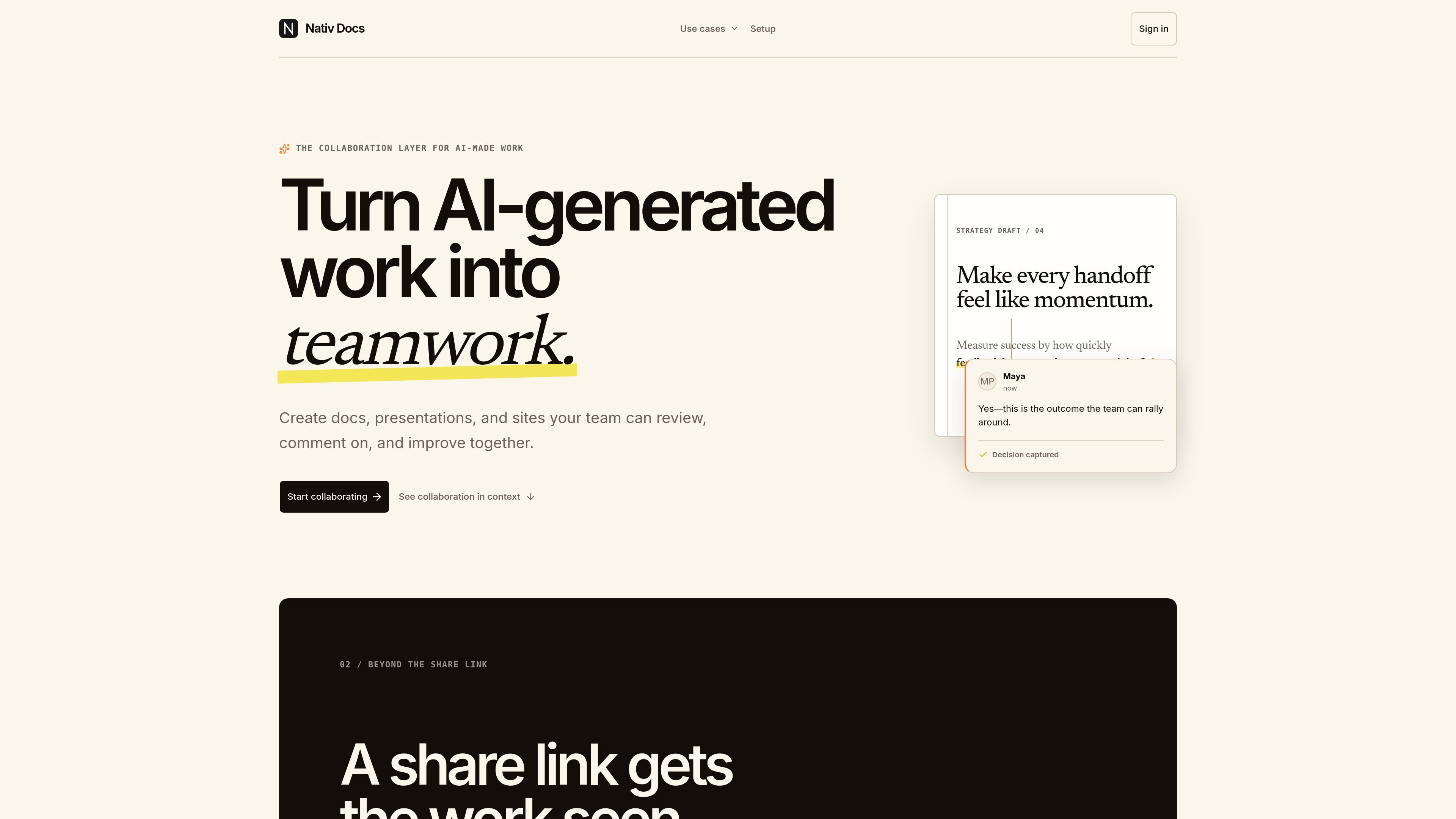
Nativ Docs is a collaboration layer for AI-made work. It is designed to turn documents, presentations, and sites generated by AI into shared drafts that a team can review, comment on, and improve together.
The product centers on keeping feedback attached to the work itself. Instead of sending people to a separate chat thread or relying only on a share link, Nativ Docs gives teams a place to discuss the exact idea, capture decisions, and move the draft forward with a clearer handoff.
Bring AI-generated drafts into Nativ Docs so the team can review the work directly instead of working only from a share link.
Comments are attached to selected words or ideas, keeping the discussion tied to the specific part of the draft being reviewed.
The page shows a sequence for discussing work, resolving decisions, and sending feedback back to the agent for the next draft.
The site frames the product around documents, presentations, and sites, so the same review flow can be used across those content types.
The product emphasizes a visible record of decisions, owners, and review windows for launch-style work.
A team receives an AI-written brief, deck, or site draft and needs a structured place to review the draft together before it is sent out or published.
Stakeholders want to comment on a specific sentence, section, or idea without losing the context of what they are discussing.
A project owner needs to gather feedback, capture a decision, and move the work into a revised draft with a visible handoff.
Launch teams or similar groups want each asset to have an owner and review window so the next step is clear to everyone involved.
Nativ Docs is positioned as a collaboration layer for AI-made documents, presentations, and sites. The source shows a workflow where you publish the draft, discuss it in context, and turn feedback into the next draft.
The site explicitly mentions documents, presentations, and sites as supported work types. It does not provide a fuller compatibility list on the pages reviewed.
The workflow shown on the site is: bring in the draft, invite the team to comment on the exact idea, then resolve decisions and send the feedback back to your agent.
The source does not provide setup steps or integration details. It does show sign-in options for email and Google on the library page.
The pricing page URL currently returns a 404, so no pricing, plan, or trial details are available from the reviewed pages.

Biji é uma plataforma versátil projetada para aumentar a produtividade por meio de ferramentas e recursos inovadores.

runevr is a connected workspace for creative teams that combines boards, media review, chat, recordings, drive, calls, and AI agents in one room-based environment. It is designed to reduce tool switching and keep project context together.

BotBoard is a task-management layer for AI agents that helps teams assign work, track progress, and review output. It supports CLI, MCP, and HTTP connections for tools like OpenClaw, Codex, Claude Code, and Cursor.

Artifacts by Samepage is a connected writing surface for product teams that turns signals and existing work context into drafts such as PRDs, release notes, feature requests, bug tickets, and status updates. It includes built-in AI editing and can publish work into tools like Jira, GitHub, Confluence, Slack, and Linear.

HackathonHost is white-label hackathon and game jam management software for organizers running hackathons, game jams, demo days, and related competitions. It combines registration, team building, judging, live control, certificates, and analytics in one hosted workspace.

hob is an independent workspace for coding agents that keeps agent sessions, terminals, history, and follow-up work organized around the tools and providers you already use. It is aimed at developers who want local control over routing, history, and workspace structure rather than a bundled model stack.