
Engineering performance baseline
Scores performance from commit history and compares current output with the same team’s pre-AI year, so teams can see whether they are actually faster rather than just busier.

Navigara AI ROI measures engineering performance from commit history and turns AI spend into a capacity-and-roadmap view of return. It helps teams explain what AI produced, what it cost, and how much of it supported named objectives.
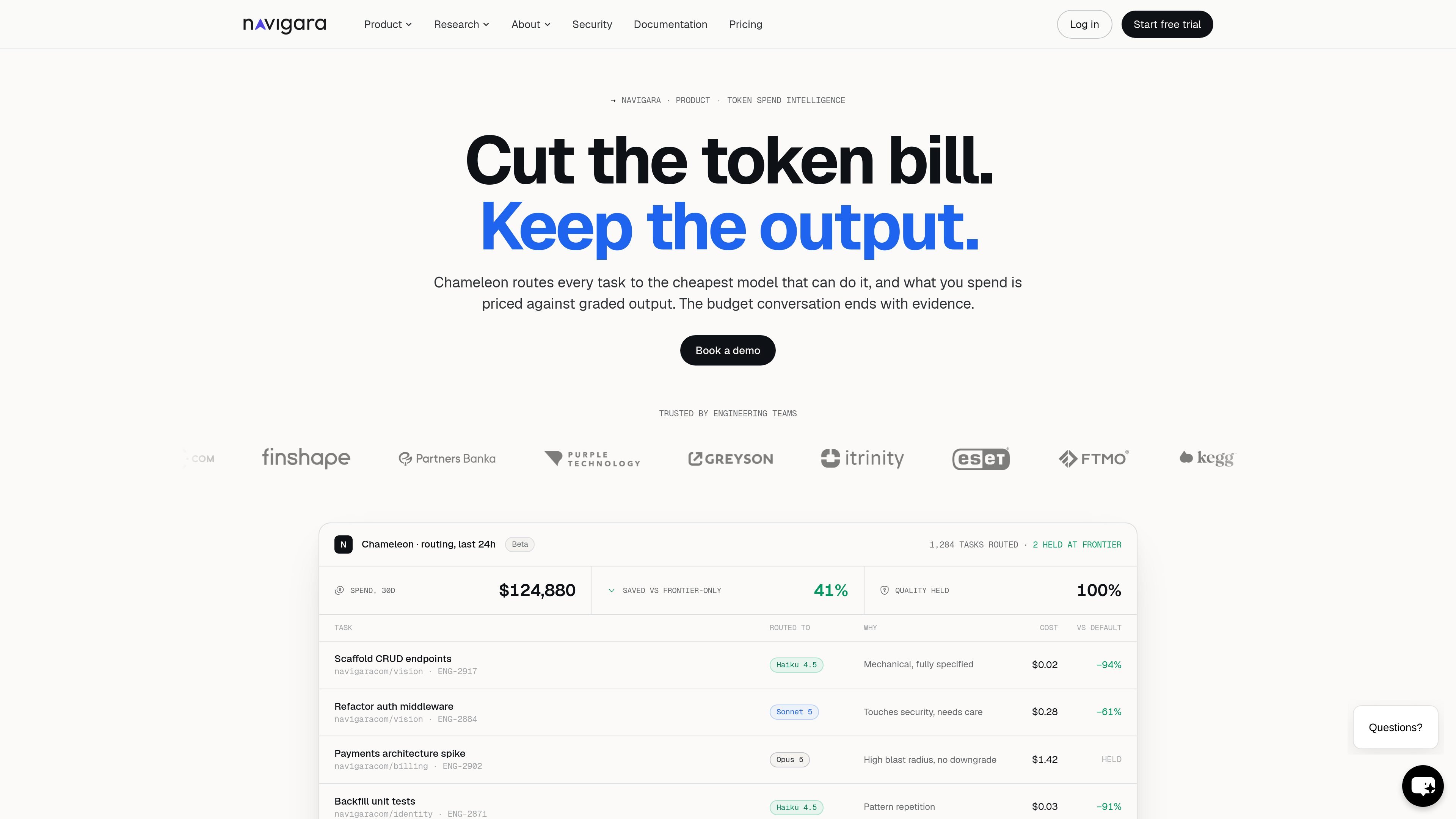
Navigara AI ROI is a product for measuring whether AI actually made engineering teams faster, and what that speed cost. It turns commit history into performance scores, compares those scores with a pre-AI baseline, and expresses the gain as capacity added rather than a vague productivity claim.
The product then connects that added capacity to AI spend and roadmap delivery. In the Pro plan, teams can break spend into work types, attribute spend to roadmap objectives through Jira or Linear, and translate the result into a monthly ROI statement that finance and engineering can read in the same terms.
Scores performance from commit history and compares current output with the same team’s pre-AI year, so teams can see whether they are actually faster rather than just busier.
Converts throughput into capacity added, using ETV and commit-level grading to express gains as engineer-equivalents instead of a raw percentage.
Breaks AI spend into work categories such as features, maintenance, tests, docs, and fixes, making the bill readable by type of work rather than as one lump sum.
Connects spend to roadmap objectives through Jira or Linear so teams can see how much of the AI bill supported named goals, off-roadmap work, or no stated outcome.
Includes a smart model router that sends tasks to the cheapest model that can meet the quality bar, with policy based on task shape, blast radius, and team preferences.
Provides weekly, monthly, and quarterly reporting, plus team and developer breakdowns and peer-cohort benchmarking for organizations that need recurring performance review.
Use the product when you want a baseline before or after an AI rollout. It compares the current team against the same team’s pre-AI year and turns the change into capacity, so the team can judge whether AI changed throughput in a meaningful way.
Use Pro when finance or leadership asks what the AI budget produced. Navigara attributes spend to work type and prices it against graded output, which helps answer whether the bill translated into features, maintenance, tests, docs, or fixes.
Use the roadmap alignment flow when you need to distinguish roadmap work from unplanned effort. The product connects to Jira or Linear and shows how much spend was tied to named objectives, aligned but off roadmap, or not tied to a stated outcome.
Use the reporting views when you need a recurring update for a team, department, or leadership review. The product offers per-developer and per-team breakdowns and weekly, monthly, and quarterly reports.
Use the deployment options when security or data residency matters. Enterprise supports either an on-prem collector with a cloud front end or a fully on-premises setup, while keeping source code inside your perimeter.
The product measures engineering performance from commit history, then combines that with AI spend and roadmap alignment in the Pro plan. Measure focuses on capacity added and performance trends, while Pro adds spend attribution, Jira or Linear alignment, model routing, process checks, and benchmarking.
No. Both Measure and Pro are cloud SaaS plans. Enterprise is the option for on-prem collector, full on-premises, or air-gapped deployment.
Yes. The pricing page says the free Explore trial lasts 14 days and includes up to 1,000 pull requests analyzed, with full platform access during the trial and no charge during that period.
Navigara reads commit history and does not require shipping source code to the cloud for Enterprise deployments. The enterprise options include a cloud SaaS setup with an on-prem collector or a fully on-premises deployment.
The source explicitly mentions Jira and Linear for roadmap alignment, and it refers to connecting commit history and repositories for performance analysis. Other integration details are not specified on the pages provided.

PromptScout tracks how ChatGPT, Gemini, Google AI Overviews, and Perplexity mention your brand or competitors, then pairs those results with source analysis and website audits. It helps teams decide what to fix in content, positioning, or site readiness next.

SaveMRR is a Stripe retention tool for SaaS teams that scans billing data for churn and MRR leaks, then automates recovery through dunning, cancel-save offers, win-back emails, and onboarding nudges. It is built for founders and bootstrapped teams using Stripe.

Hype is a web tool for finding trending YouTube topics by category, time range, and scoring mode. It helps creators spot emerging ideas, inspect source videos, and decide what to cover next.

Biji é uma plataforma versátil projetada para aumentar a produtividade por meio de ferramentas e recursos inovadores.

Sleek Analytics is a privacy-friendly web analytics tool with real-time visitor tracking, Core Web Vitals, and revenue attribution. It helps site owners understand traffic and conversions without cookie banners or a heavy setup.

Struere is an AI-native platform for turning spreadsheet data into structured operational software with dashboards, alerts, and automations. It is aimed at teams that want to replace manual spreadsheet workflows without building custom tools from scratch.