
Case library
Browse a library of 1,692 cases spanning films, products, campaigns, memes, music, games, apps and other cultural moments, with category filters and case-level scores.

How It Spread is a research library of viral marketing case studies that maps how films, products, campaigns, memes and other releases move from origin to peak. It helps strategists, marketers and researchers compare spread mechanics, timelines, platforms, sources and outcomes.
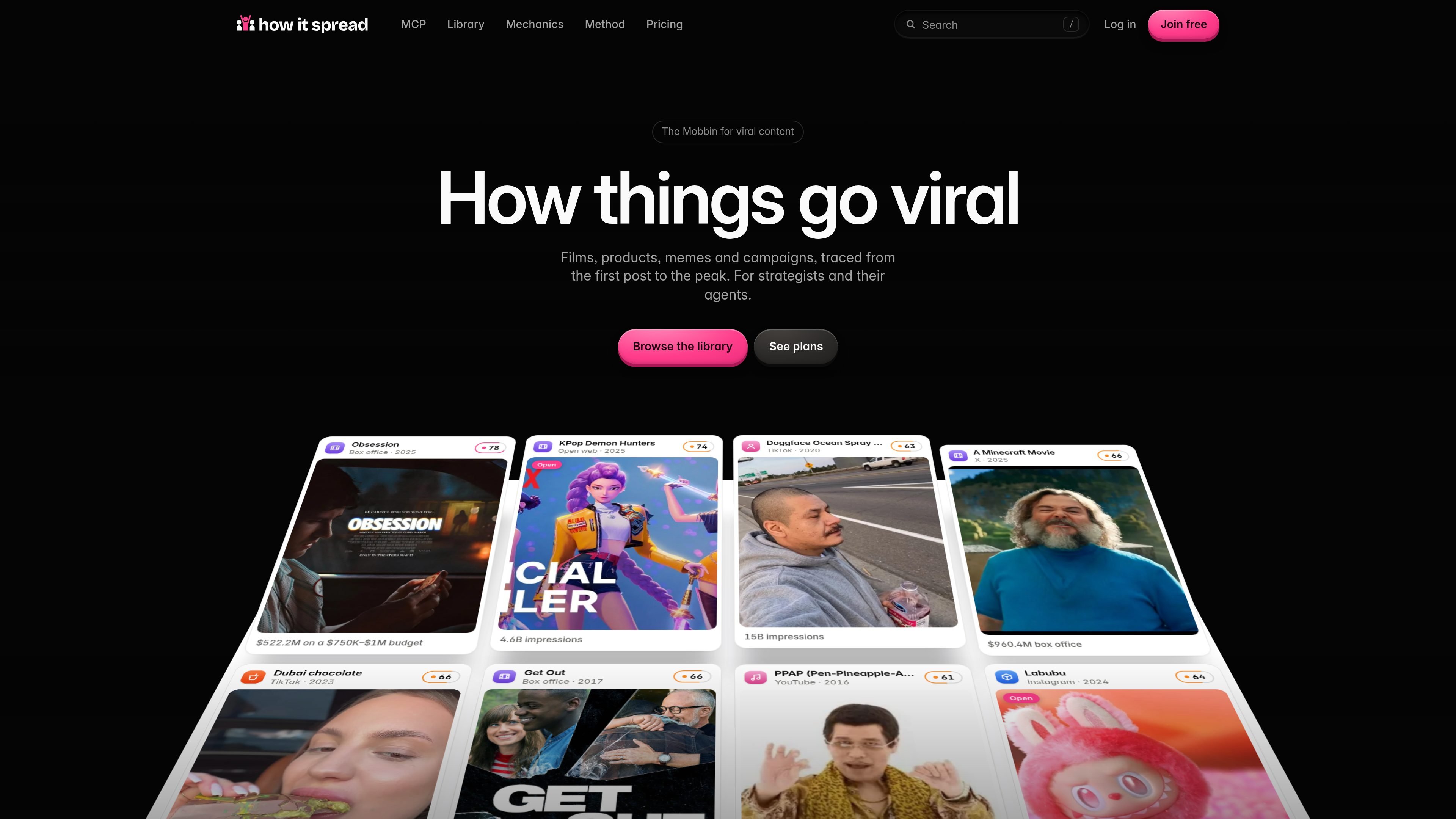
How It Spread is a research library and case-study tool for understanding why content, products and campaigns go viral. It traces examples from an initial post, release or event to later amplification and peak performance, connecting people, platforms, press, audience behavior and commercial outcomes.
Each case combines a timeline and chart with a Spread Score covering reach, contagion, breadth, velocity and longevity. The library includes examples such as films, social videos, products, apps, campaigns, memes and music, while individual records link to sources and identify whether figures are reported, self-reported or approximate. Free browsing supports initial research; paid plans open deeper records and additional research outputs.
Browse a library of 1,692 cases spanning films, products, campaigns, memes, music, games, apps and other cultural moments, with category filters and case-level scores.
Follow a case from its first seed or origin through amplification, platform changes, press coverage, audience activity and peak or afterlife events.
Compare how a breakout performed across reach, contagion, breadth, velocity and longevity, combined into a Spread Score for each case.
Review the platforms, mechanics and actors associated with a case, such as maker origin, sound or audio meme, press loop, identity badge, scarcity drop or platform jump.
Inspect linked coverage and sourced metrics. The site distinguishes reported, self-reported and approximate figures in case records, as shown in examples such as Obsession and KPop Demon Hunters.
Paid plans include recommendations, radar alerts, slide decks, and API and MCP access; the site also offers a team plan with seats.
Study a film, series, song or creator-led release by mapping its origin, press attention, fan participation, platform jumps and commercial or audience peak.
Compare product, app or campaign breakouts across mechanics, platforms and measurable outcomes to identify patterns worth testing in a launch plan.
Use sourced timelines and evidence labels to brief a strategy team, explain a breakout to stakeholders or build a presentation from comparable cases.
Follow selected sectors or cases through radar alerts and revisit saved records when monitoring changes is more important than one-time browsing.
Use the API and MCP listed on paid plans to make case research available in supported agent or data workflows, subject to the product's plan and access terms.
How It Spread is a research library for tracing how films, products, memes, campaigns and other cultural moments spread from an origin post or event to a later peak. Cases include dated events, platforms, people or organizations involved, and linked sources where available.
You can browse the case library and view Spread Scores, numbers, media and charts without an account. A free account opens the full timeline and the explanation of why each case worked; some detailed records, sources and strategic recommendations are reserved for paid plans.
A case timeline generally connects an origin or seed to platform jumps, press coverage, audience activity, commercial results and later afterlife. The site presents these as dated events across platforms such as TikTok, YouTube, Reddit, Instagram, X, the open web, the box office and retail, depending on the case.
Paid plans add the full record, every number and source, recommendations on what to do, radar alerts, decks and access to an API and MCP. The site also lists a Team plan with seats and a shared invoice, although detailed team workflows are not described in the available material.
The library covers multiple breakout types, including films, products, food and drink, apps and software, campaigns, series, music, games, books, creators, memes and formats. Its cases can be filtered by category, platform or mechanic-related groupings shown on the library page.

Hype is a web tool for finding trending YouTube topics by category, time range, and scoring mode. It helps creators spot emerging ideas, inspect source videos, and decide what to cover next.

Paperpal 是一款面向学术写作的 AI 工具,提供文献阅读、语言润色、引用、查重、AI 检测和投稿前检查。它适合需要在英文论文和学术材料上进行写作、修改与合规自检的学生、研究人员和教师。

VForms lets you place questionnaires directly inside YouTube videos so viewers answer in context instead of switching to a separate form. It is aimed at collecting feedback and insights through timestamped, embeddable video forms.

Scite — AI-платформа для поиска статей, проверки контекста цитирования и ответов на основе научной литературы.

Radar is a self-hostable media intelligence and social listening app for monitoring public sources, analyzing mentions, and generating briefs or content outputs with optional Claude AI. It is aimed at individuals and small teams that want an enterprise-style workflow without a cloud account.

Shodh is an AI-powered research and strategy platform for business questions that need structured investigation, source-backed evidence, and auditable recommendations. It is aimed at founders, operators, consultants, investors, and corporate development teams.