UStackUStack
Sequenzy icon

Sequenzy

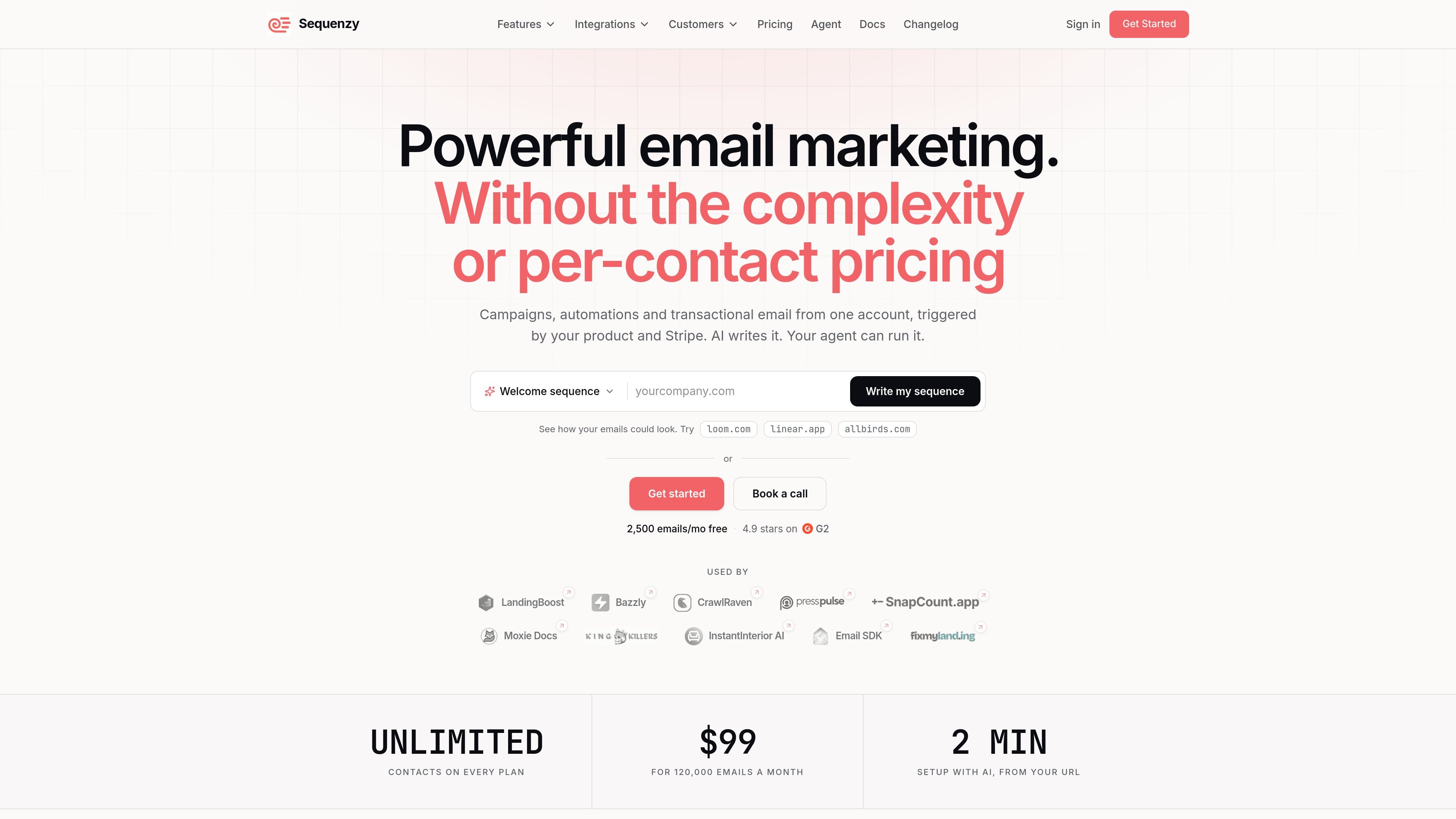
Sequenzy is an email marketing and automation platform for SaaS teams, stores, and AI teams. It combines campaigns, event-driven workflows, transactional email, segmentation, and revenue attribution, with developer and AI-agent access.

Sequenzy

Email marketing, automation, and transactional sending in one platform

Sequenzy is an email marketing platform for SaaS products, stores, and AI teams. It combines bulk campaigns, event-driven automations, transactional email, audience segmentation, and revenue reporting in one account, with sends triggered by product activity, commerce events, Stripe, or custom backend events.

The platform uses email volume rather than contact count as its pricing basis and states that contacts and sending domains are unlimited on every plan. Teams can work through the dashboard, developer interfaces, or supported AI-agent tools, while generated campaigns and sequences remain editable before approval and sending.

Core capabilities

Visual automation builder

Build event-driven journeys on a visual canvas with triggers, delays, conditions, branches, email actions, webhooks, and tag operations. Supported triggers include Stripe, PostHog, custom backend events, list or tag changes, and inactivity.

Transactional email API

Send receipts, password resets, invoices, and other application messages through the REST API or SMTP relay. Templates, variables, direct HTML/text, attachments, retries, and delivery notifications are documented.

Smart segmentation

Create dynamic audiences with attribute, tag, engagement, and event filters, plus AND/OR logic. Subscriber data can include fields such as plan and MRR, enabling targeted campaign and automation enrollment.

Revenue and engagement tracking

Measure delivery, replies, clicks, goals, and revenue by flow, campaign, or individual email. The platform also provides configurable attribution windows, A/B testing, automatic UTM tracking, and send-time optimization.

AI-assisted email creation

Generate campaign and sequence drafts from a website or brand information, including subject lines, copy, layout, and palette. Content remains editable in the block editor before sending.

Developer and agent workflows

Use REST API, CLI, MCP, and SDK-based workflows alongside the dashboard. Sequenzy states that campaigns and automations require approval before they send, supporting agent-assisted execution.

Practical use cases

  • User onboarding

    Guide new users from signup toward activation with timed messages and branches based on whether they complete key product actions. The automation builder can apply tags and send follow-up content automatically.

  • Payment recovery and trial conversion

    React to Stripe billing events such as failed payments, subscription deletion, or trial endings. Workflows can send card-update prompts, win-back messages, or upgrade nudges according to account status and timing.

  • Segmented lifecycle campaigns

    Use plan, MRR, recent activity, engagement, and event data to identify relevant audiences, then send targeted campaigns or enroll matching contacts in a sequence.

  • Application and transactional email

    Deliver receipts, invoices, password resets, and other product-triggered messages through the transactional API or SMTP relay while keeping templates and sending infrastructure alongside marketing email.

  • Agent-assisted email operations

    Let an AI agent or developer create segments, draft campaigns, and manage email operations through MCP, CLI, REST API, or the dashboard, with approval before sending.

Pros and Cons

Pros

  • Combines campaigns, automations, transactional messages, segmentation, and attribution in one account.
  • Unlimited contacts and sending domains are stated on every plan, with pricing based on email volume.
  • Supports visual, behavior-driven workflows without requiring automation logic to be hand-coded.
  • Provides REST API, SMTP, CLI, MCP, and SDK access for developer and agent-assisted workflows.
  • Includes revenue attribution, A/B testing, and send-time optimization alongside delivery and engagement tracking.

Cons

  • The available source does not fully document setup requirements, operational limits, or the complete integration inventory.
  • SMS and MMS are presented as an add-on rather than part of the core email capability.

FAQ

What types of email can Sequenzy send?

Sequenzy combines campaigns, event-driven automations, and transactional email in one account. Emails can be triggered by Stripe events, PostHog events, custom events sent from a backend, list or tag changes, and inactivity conditions.

How are Sequenzy automations created and managed?

The automation builder uses a visual canvas with triggers, delays, conditions, branches, email actions, webhooks, and tag operations. The source also documents REST API, SMTP relay, SDK, CLI, and MCP access for developer and agent workflows.

Can Sequenzy send transactional emails?

Yes. Sequenzy supports transactional sending through a REST API and SMTP relay, including template-based or direct HTML/text messages, variables, attachments, bounce validation, and delivery notifications.

Can audiences be segmented?

Sequenzy includes dynamic segments using subscriber attributes, tags, engagement, and events, with AND/OR logic. Campaigns can target lists or segments and use data such as plan, MRR, and recent activity.

How is Sequenzy priced?

The pricing page states that all plans include unlimited contacts and that pricing is based on emails sent. It lists a free tier with 2,500 emails per month, while paid plans and custom-volume options are also available.

Quick Facts

Category
Email marketing and marketing automation
Primary users
SaaS teams, stores, and AI teams
Core channels
Campaigns, automations, and transactional email
Trigger sources
Stripe, PostHog, custom backend events, lists, tags, and inactivity
Developer access
REST API, SMTP relay, SDK, CLI, and MCP
Pricing model
Based on emails sent; unlimited contacts stated on every plan
Sequenzy - AI Tool, Features, Use Cases & Alternatives | UStack