
First-food logging
Log foods that babies try, including dates, textures or preparation, amount, response, and notes for later review.

BabyFoodTracker is a web-based baby feeding and allergy tracker for first foods, 100 foods before 1 progress, allergen exposure, and reaction notes. It helps parents keep a simple record for home use and pediatrician conversations.
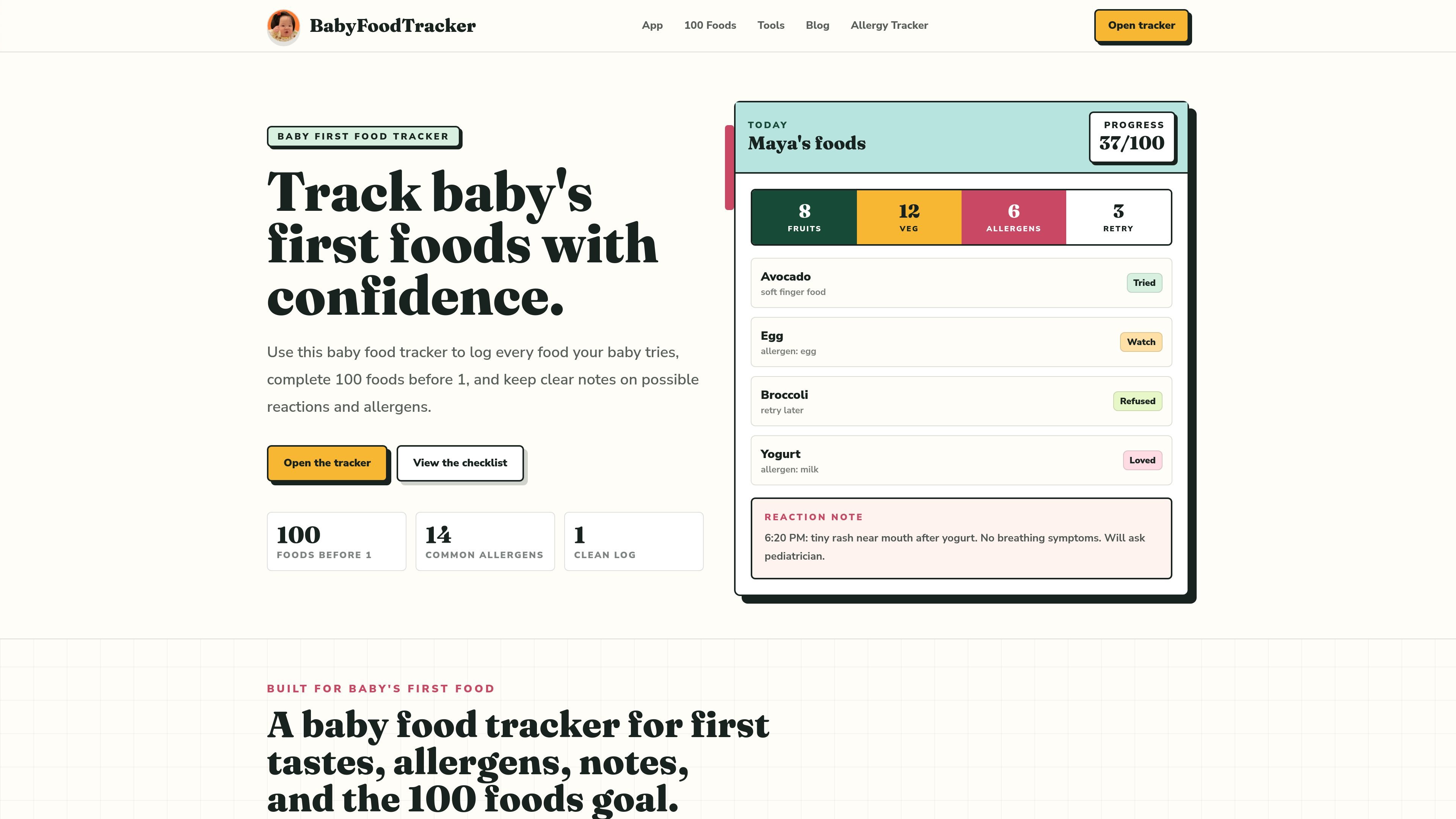
BabyFoodTracker is a web-based baby feeding and allergy tracking tool for first foods, allergen exposure, and reaction notes. It is designed to help parents keep a structured record of what their baby tried, how each food was served, and what happened afterward.
The site centers on two workflows: a browser-based tracker for ongoing logging and a printable allergy log for fridge-friendly notes. It also includes the 100 foods before 1 checklist, common allergen categories, retry status, and reminders that the tool records history rather than diagnosing allergies.
Log foods that babies try, including dates, textures or preparation, amount, response, and notes for later review.
Track progress toward the 100 foods before 1 goal and keep a visible count of foods tried.
Keep common allergens visible in the tracker so important exposures are not buried inside general meal notes.
Add reaction notes with symptom timing, care notes, and follow-up details for pediatrician conversations.
Use built-in starter foods, add custom foods, remove items, print a paper copy, or export local data from the app.
Save records locally in the browser, with no account required for the core app and support for multiple languages on the site.
Track each new food your baby tries, including texture, amount, and whether it was liked, refused, or noted for a reaction.
Record exposures to common allergens and keep the timing and symptoms together for later review with a clinician.
Print a simple sheet for the fridge when you want a visible paper record instead of relying only on the app.
Keep foods that were refused or need another try in a retry queue so they are easy to revisit later.
Build a clean note trail before a pediatrician or allergist visit so you can describe what happened, when it happened, and what you observed.
BabyFoodTracker is a record-keeping tool for first foods, allergen exposures, possible reactions, and notes you can bring to a pediatrician or allergist. It does not diagnose allergies or replace medical care.
Yes. The product is built around first foods and the 100 foods before 1 goal, and it keeps common allergens visible while you log foods, retries, and reactions.
The app tracks common allergens such as milk, egg, fish, shellfish, tree nuts, peanuts, wheat, soy, sesame, and other allergen categories shown on the site. The printable log also organizes exposures across the common allergen set.
No. The site is explicit that BabyFoodTracker records symptoms and timing, but does not diagnose allergies or decide emergency care.
No account is required for the core web app. The site says data is saved locally in the browser on the device, with optional export or print actions.
MIRA vision develops synthetic-data-driven AI for pathology image analysis in medical diagnostics. Its website positions the product for teams that need privacy-compliant training data, automatic annotations, and controlled data generation.

Renight is a sleep-focused app that plays Monaural Beats before bed. It is aimed at people who want to improve the quality of limited sleep and wake up feeling more refreshed.

KeptWell is an AI medical document hub for families navigating serious illness. It helps people upload records, track changes, share a family view, and ask questions with citations back to the source material.

Soonr Health is a preconception health optimization app for couples preparing for pregnancy. It combines shared lifestyle tracking, cycle-based fertility guidance, and optional hormone measurements to help partners prepare together.

FoodHealth is a dietitian-built shopping companion for people on GLP-1 medications. It scans packaged foods, assigns a 1–100 score, and helps users decide what to buy, eat, or swap.
LabelLens escanea etiquetas de alimentos envasados desde una foto o subida y ofrece una puntuación nutricional con un resumen claro de ingredientes, aditivos y valores clave.