
Connects to existing systems
Rex connects to existing ERP, CRM, inbox, and vendor portal systems and starts from the live process rather than a migration project. The homepage says it learns from years of context already in those systems.

Rex is an AI operations partner for enterprise order-to-cash teams. It works across existing ERPs, inboxes, and portals to triage receivables work, route exceptions, and keep cash-moving tasks in motion.
Rex is an AI operations partner for order-to-cash teams. It is built to work across receivables, collections, inbox triage, portals, disputes, and cash application on top of existing enterprise systems.
The product is positioned as a way to keep routine AR work moving continuously while escalating only the judgment calls. According to the site, it connects in days, works against enterprise SLAs, and gives finance teams a live view of what is blocked, approved, or ready to move forward.
Rex connects to existing ERP, CRM, inbox, and vendor portal systems and starts from the live process rather than a migration project. The homepage says it learns from years of context already in those systems.
The product continuously triages inbox work, works customer portals, and follows up on payment-related tasks across the AR book. It is described as covering every account and every invoice rather than only a queue of selected exceptions.
When a case needs human judgment, Rex routes VIP issues, disputes, and policy exceptions for approval with context, evidence, and a recommended next step. Routine work stays automated while decisions remain with the team.
Rex provides a live activity feed and daily summaries that include SLA status, blocked cash, open exceptions, and approvals needed. The homepage also shows real-time visibility into receivables and action history.
The product extracts and organizes information from emails and portal activity, such as portal names, payment terms, and purchase order references. In the Synthesia story, it reads incoming threads and drafts a reply in the company’s voice.
The site presents integrations for enterprise tools including Oracle NetSuite, SAP, Microsoft Dynamics, Workday, Oracle Fusion, Salesforce, Slack, Microsoft Teams, SharePoint, and Google Drive. These appear as supported connection points on the homepage.
Use Rex when AR teams are spending too much time sorting a shared inbox and replying to routine customer questions. The product can categorize threads, attach context, and draft replies so cases move faster.
Use Rex to manage invoice submission and portal work across systems such as SAP Ariba, Coupa, Tungsten, Tradeshift, and Taulia, as shown in the Synthesia case study. It can retrieve purchase orders, prepare submissions, and post invoices when they are ready.
Use Rex when collections work needs continuous follow-up across many accounts, rather than periodic manual check-ins. The site says it can run payment follow-ups and help teams stay ahead of receivables.
Use Rex to surface disputes, blocked cash, and accounts at risk of slipping past terms. The homepage shows live visibility into outstanding balances, DSO trends, and risk signals.
Use Rex when a team wants an auditable way to route VIP issues, policy exceptions, or disputes to a human approver while routine work remains automated. It sends judgment calls with evidence and a recommended next step.
Rex is designed to connect to existing ERP, inbox, CRM, and portal systems rather than replacing them. The homepage says it works with your current systems and that no migration is required.
The source shows Rex handling order-to-cash work across the AR inbox, customer portals, collections, cash application, disputes, and related reconciliation workflows. It is positioned as an operations layer for finance teams running receivables at scale.
The homepage says Rex connects with ERP, CRM, inboxes, and vendor portals, and specifically shows support for Oracle NetSuite, SAP, Microsoft Dynamics, Workday, Oracle Fusion, Salesforce, Slack, Microsoft Teams, SharePoint, and Google Drive.
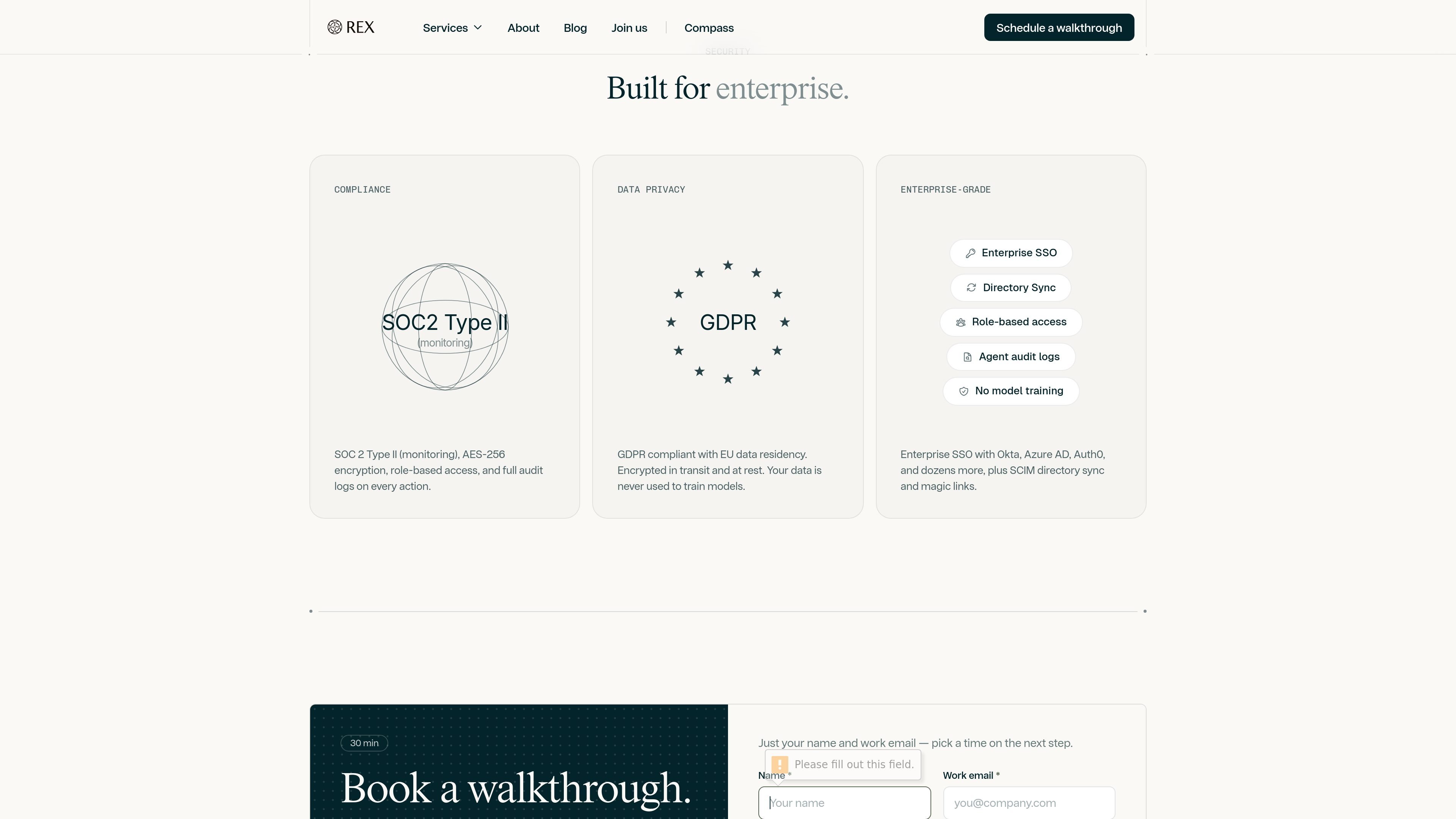
The source says Rex is built for enterprise use, with SOC 2 Type II monitoring, GDPR compliance with EU data residency, role-based access, audit logs, SSO, and SCIM directory sync.
The pricing page currently returns a 404, so the source does not provide public pricing, plan structure, or contract details.

Wysera is an AI business platform that combines PostWyse for content and OpsWyse for CRM and revenue workflows, powered by the shared Wyse AI. It is built for solo operators, teams, and agencies that want approval-first automation across publishing, lead follow-up, and related operations.

Codex Plugins bundle reusable skills, app integrations, and MCP servers into workflows you can install in the Codex app or use from Codex CLI. They help extend Codex with connected-service tasks, reusable instructions, and shared team workflows.

Struere is an AI-native platform for turning spreadsheet data into structured operational software with dashboards, alerts, and automations. It is aimed at teams that want to replace manual spreadsheet workflows without building custom tools from scratch.

Podium is an AI lead generation and lead management platform for local businesses. It centralizes lead conversations, automated follow-up, reviews, payments, and booking, with a 24/7 AI Employee available as an add-on.

OpenFlags is an open-source, self-hosted feature flag platform for modern JavaScript teams. It supports local evaluation, targeted rollouts, and controlled launches while keeping flag data in your own infrastructure.

Awish is an AI-powered no-code automation platform that turns natural-language requests into automated workflows across connected apps. It serves individuals and teams that want to automate repetitive tasks, chat-based assistants, and workflow updates without manual configuration.