
Goal-based program planning
Kilo uses your goal, training history, available days, equipment, and constraints to propose a strength, cardio, or hybrid program and explain the tradeoffs.

Kilo is an AI-assisted fitness coach for consistent lifters and hybrid athletes. It delivers programs, workouts, logging, check-ins, and context-aware adjustments through iMessage, with a focused web link for structured workout entries.
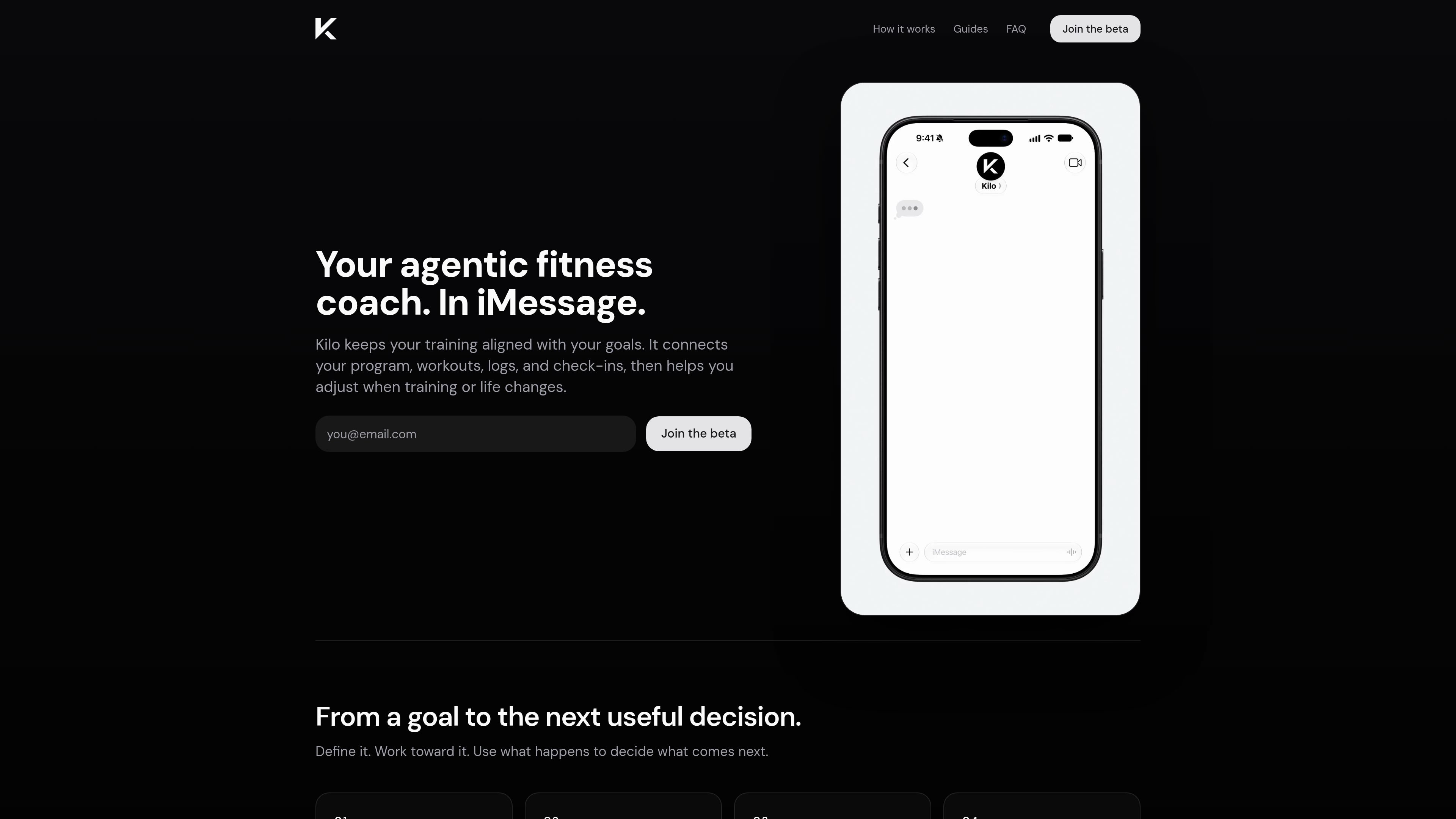
Kilo is an AI-assisted, agentic fitness coach delivered primarily through iMessage. It connects a user’s goals, training program, workout logs, check-ins, and coaching history so each conversation can inform the next training decision.
The service proposes strength, cardio, or hybrid programs based on factors such as experience, schedule, equipment, and constraints. It sends workouts and check-ins, accepts workout records by text or through a focused web form, and recommends adjustments when training or life changes. Kilo is aimed at serious lifters and hybrid athletes who already train consistently and want ongoing guidance rather than a passive tracker.
Kilo uses your goal, training history, available days, equipment, and constraints to propose a strength, cardio, or hybrid program and explain the tradeoffs.
On training days, the prescribed work is delivered in iMessage, so the next session is available in the conversation rather than requiring a separate app workflow.
Record workouts by text or use a focused web link for structured exercises, sets, distance, and time. Logged work becomes context for later coaching decisions.
Report schedule changes, soreness, sleep, energy, stress, or other relevant context. Kilo starts from the current program and recorded history when discussing what to do next.
Users choose what to check in on and how often. Weekly review connects goals and commitments with completed, missed, or unknown activity, then supports recommitting or changing the plan.
Kilo keeps structured records of goals, programs, logged sessions, check-ins, preferences, and decisions, while noting that its recall and context are not perfect.
A lifter can provide available days, equipment, experience, and time constraints, then receive a complete strength plan with an explanation of the relevant tradeoffs.
When travel, work, or a missed session changes the week, the user can report the change in iMessage and ask Kilo to move or modify the work while preserving recovery considerations.
A hybrid athlete balancing lifting and running can keep both activities within one coaching context rather than reconstructing competing schedules across separate plans.
A user experiencing soreness, poor sleep, or a difficult recovery day can share that context alongside the training log and discuss whether to keep the prescription or reduce the workload.
Someone who wants accountability without constant notifications can choose check-in topics and cadence, then use the weekly review to recommit, leave activity unknown, or adjust the upcoming week.
Kilo is intended for lifters and hybrid athletes who already train consistently, care about measurable progress, and want help making the next training decision. It may be more than needed for people starting from zero or seeking only passive workout tracking.
You text Kilo in iMessage. Your questions, program, workouts, updates, check-ins, and agreed changes stay in the same conversation. For structured logging, Kilo can send a focused web link for recording exercises, sets, distance, and time.
Kilo learns your goal, experience, schedule, equipment, and relevant constraints, then proposes a strength, cardio, or hybrid program. When circumstances change, it recommends an adjustment and you decide whether to apply it.
Kilo is in beta and is onboarding lifters in small groups. The site asks interested users to leave an email so the team can reach out.
Kilo is a monthly subscription that costs less than a single session with most coaches. The site does not publish a specific price.

Teloframe is an AI-powered football coaching platform for building tactics, editing drills, planning sessions, and managing player development in one workspace. It includes a Free tier plus Pro and Club plans for coaches and analysts who need more collaboration and team features.

LeanUp is an AI calorie tracker and meal-planning app for logging meals, tracking macros, and getting personalized nutrition guidance. It supports barcode scanning, photo-based food recognition, manual search, and recipe reuse.

TrakMac is a voice-first macro tracking app for fitness-focused users on iOS. It estimates calories and macros from spoken meal descriptions, then helps users log food and stay aligned with their training goals.

Padel Chess is a web-based learning platform for improving padel tactical skills through puzzle-based practice. It helps players work on positioning, shot selection, and decision-making in realistic court scenarios.

PitchHighway helps singers learn songs with real-time pitch feedback, guided drills, and free browser tools for range testing, warm-ups, key finding, and note practice. It works in the browser and on iPhone and iPad.

what do i wear ✶ run suggests running outfits based on your location and the current weather. It factors in temperature, wind, humidity, UV, and rain, then updates recommendations hour by hour.