
Flexible meal logging
Log meals by snapping a photo or by describing what you remember, so the diary fits real-life routines instead of requiring precise tracking.

Napkin Math is a food diary for logging meals and reviewing eating patterns over time. It is aimed at people who want a low-friction way to understand habits, symptoms, and gentle nutrition goals without focusing on calorie counting.
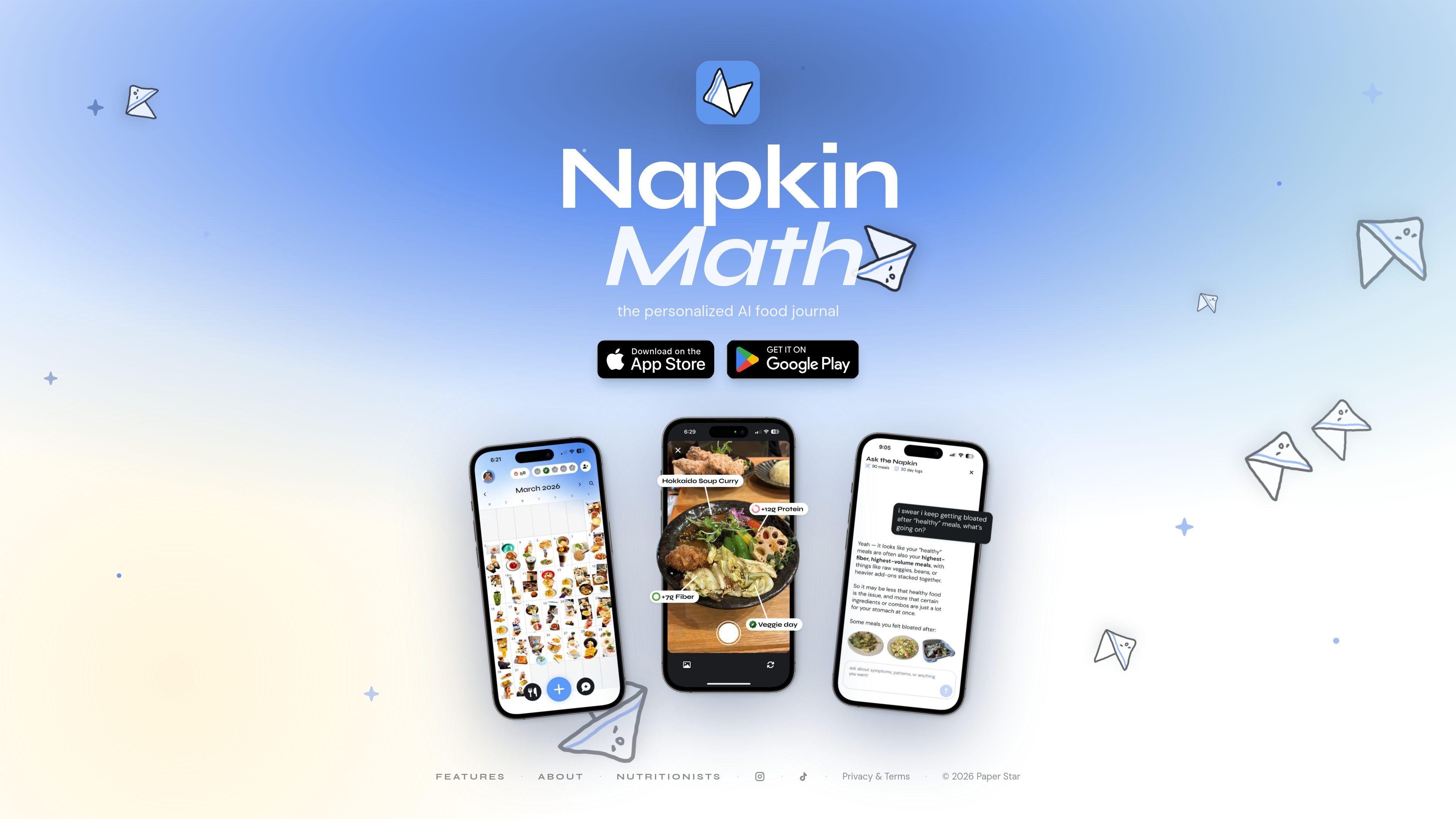
Napkin Math is a food diary that helps people understand their eating habits over time. The product describes itself as a simple, beautiful food journal for tracking meals and reviewing patterns without centering calorie counts.
Its core purpose is to make logging easy enough to keep up with and useful enough to look back on later. Users can record meals quickly, then use the history to spot trends, reflect on how food relates to symptoms or energy, and make gradual changes that feel realistic.
Log meals by snapping a photo or by describing what you remember, so the diary fits real-life routines instead of requiring precise tracking.
Review entries across weeks and months to notice eating patterns and trends that are easy to miss in day-to-day logging.
Use your food record to look for links between meals and how you feel, including symptoms, energy, appetite, and digestion.
Track changes you want to make gradually, such as eating more protein or being more consistent with meals, without a rigid plan.
Use a clean, pleasing interface that is meant to make logging feel satisfying enough to return to regularly.
Work from an awareness-first model that avoids calorie-counting as the main focus and frames recommendations as suggestions rather than medical advice.
Use Napkin Math as a day-to-day journal when you want a simple place to record meals without turning logging into a chore.
Review entries over time to notice recurring patterns in what you eat and how those patterns relate to your habits.
Look back at food records when you feel off and try to connect meals with symptoms, energy, appetite, or digestion.
Share weeks or months of food data with a nutritionist so a consult can start from a more complete record of what you actually ate.
Work on gradual changes such as adding protein or becoming more consistent with meals while keeping the process flexible and non-punitive.
Napkin Math is a food diary that helps you log meals and review patterns over time. The site emphasizes awareness and reflection rather than calorie counting.
The product is designed around easy logging. The site says you can snap a photo, or describe a meal by text or voice, depending on what is fastest in the moment.
The product appears aimed at people who want a more thoughtful food diary, including individuals tracking how certain foods affect energy, appetite, digestion, or other symptoms, as well as nutritionists who want patients to share food records for consults.
The site does not show pricing details on the available pages. The pricing URL returns a 404, so no plan or cost information is confirmed from the source.

MIRA vision develops synthetic-data-driven AI for pathology image analysis in medical diagnostics. Its website positions the product for teams that need privacy-compliant training data, automatic annotations, and controlled data generation.

Renight is a sleep-focused app that plays Monaural Beats before bed. It is aimed at people who want to improve the quality of limited sleep and wake up feeling more refreshed.

KeptWell is an AI medical document hub for families navigating serious illness. It helps people upload records, track changes, share a family view, and ask questions with citations back to the source material.

Soonr Health is a preconception health optimization app for couples preparing for pregnancy. It combines shared lifestyle tracking, cycle-based fertility guidance, and optional hormone measurements to help partners prepare together.

FoodHealth is a dietitian-built shopping companion for people on GLP-1 medications. It scans packaged foods, assigns a 1–100 score, and helps users decide what to buy, eat, or swap.
LabelLens analizza le etichette degli alimenti confezionati da foto o upload e restituisce un punteggio nutrizionale con spiegazione chiara di ingredienti, additivi e valori chiave.