
Global hotkey clipboard panel
Press the global shortcut to bring up clipboard history as a floating panel, then paste the selected item back without switching windows.

oioi is a free, open-source clipboard manager for macOS, Windows, and Linux. It opens clipboard history from a global shortcut and lets you search, filter, and paste back text, images, or files.
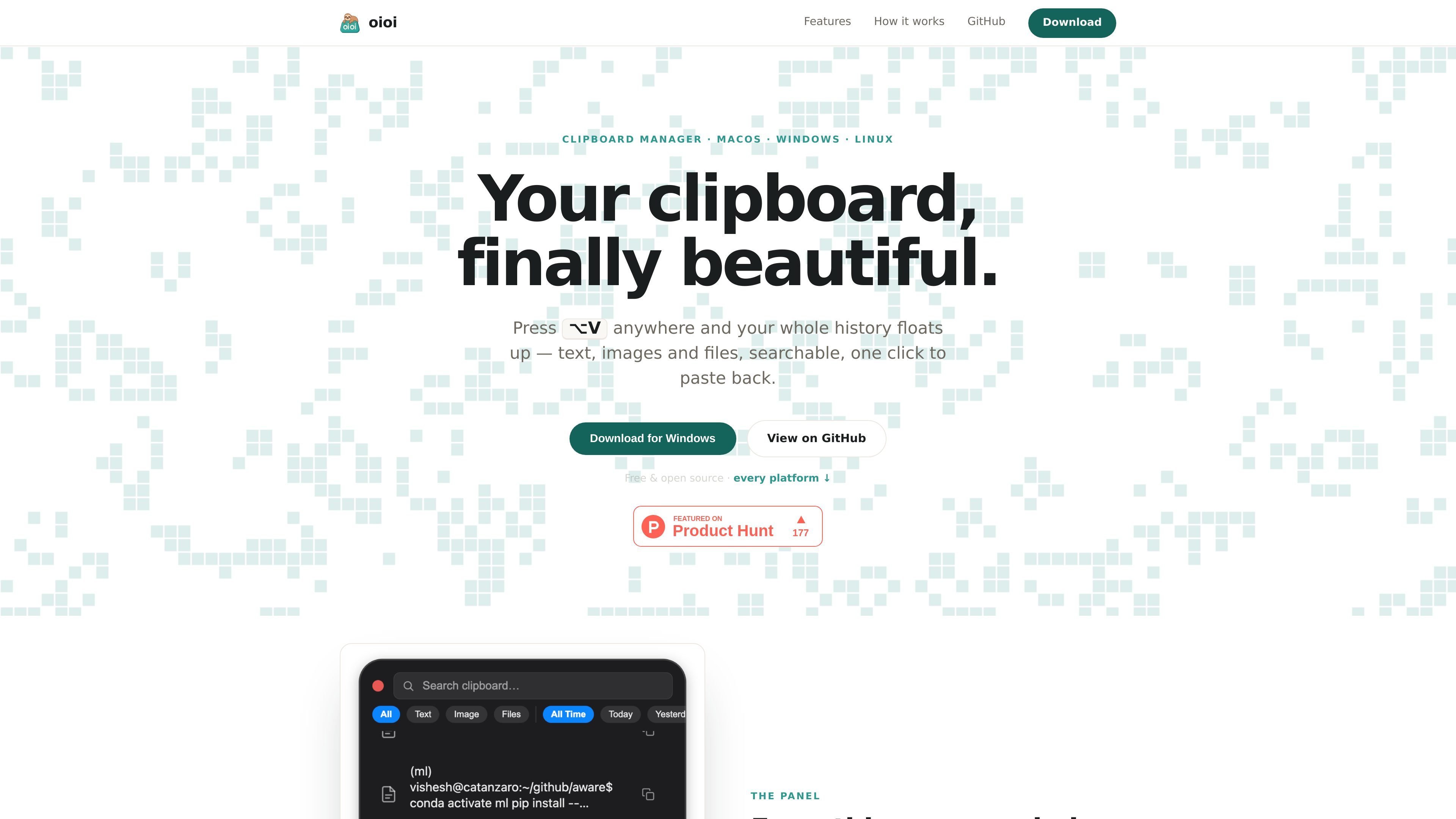
oioi is a clipboard manager for macOS, Windows, and Linux. It is built to surface your clipboard history instantly from a global shortcut, with a panel that floats above the app you are using.
The product is aimed at people who copy and paste throughout the day and want a quicker way to recover text, images, or files without switching context. The homepage emphasizes a local-first workflow: setup starts with a walkthrough, history stays on your machine, and the app is free and open source under the MIT license.
Press the global shortcut to bring up clipboard history as a floating panel, then paste the selected item back without switching windows.
Search the full history and narrow results by text, images, or files so you can find the right clip quickly.
Text, images, and files are captured, thumbnailed where relevant, and kept searchable in the local history.
The app loads pre-warmed and rendered low-res first so the panel appears quickly when summoned.
Choose a frosted liquid-glass look or a flat panel, adjust blur and corners, and set a custom shortcut.
History stays on the device with no cloud, account, or telemetry according to the homepage.
Open oioi with a hotkey when you need to recover something you copied earlier, then paste it back into the current app without hunting through other windows.
Filter by text, images, or files to narrow a mixed clipboard history when you know the type of item you need more than its exact wording.
Use the panel as a quick visual history while moving between editor, browser, and other desktop apps, keeping the workflow on top of the app you are already using.
On first launch, follow the built-in walkthrough to set the shortcut and permissions so the app is ready for everyday use.
oioi captures clipboard history locally on your machine and lets you summon it with a global shortcut. From there you can search, filter by text, images, or files, and paste an item back with one click or the Enter key.
The homepage says oioi supports macOS, Windows, and Linux, with native builds for Apple Silicon and Intel on macOS.
The site describes oioi as free and open source under the MIT license. The pricing page is not available, so there is no evidence of a paid plan on the site.
Yes. The homepage says setup includes a short first-run walkthrough that helps you choose your shortcut and handle permissions so the app works across apps from the first launch.
oioi is designed for one-person local use: history stays on your machine, and the homepage does not mention team features, sharing, or sync.

Osaurus is a native macOS AI agent platform for Apple Silicon that keeps models and data on your Mac. It can also connect to ChatGPT, Claude, or Gemini when a task needs a cloud model.

Goldfish is an AI memory app for macOS that helps you reply, write, summarize, and continue using the context already on your Mac. It stores memory locally and writes in your tone.

Biji es una plataforma versátil diseñada para mejorar la productividad a través de herramientas y características innovadoras.

Codex Plugins bundle reusable skills, app integrations, and MCP servers into workflows you can install in the Codex app or use from Codex CLI. They help extend Codex with connected-service tasks, reusable instructions, and shared team workflows.

Redline is a budgeting tool for Claude Code that paces sessions to stay within time, token, cost, or plan-percentage limits. It uses Claude Code’s native hooks and statusline to help sessions finish with a usable result instead of stopping abruptly.

Claude Overlay is a Windows desktop overlay for Claude Code that reads your screen so you can ask questions, inspect content, and request edits without leaving the current app. It runs on your existing Claude subscription through the Claude CLI, so no separate API key is required.