

Mindspend
Mindspend is a mindful spending app to track expenses without bank connections—focus on reflection, money mood, and habit-building.
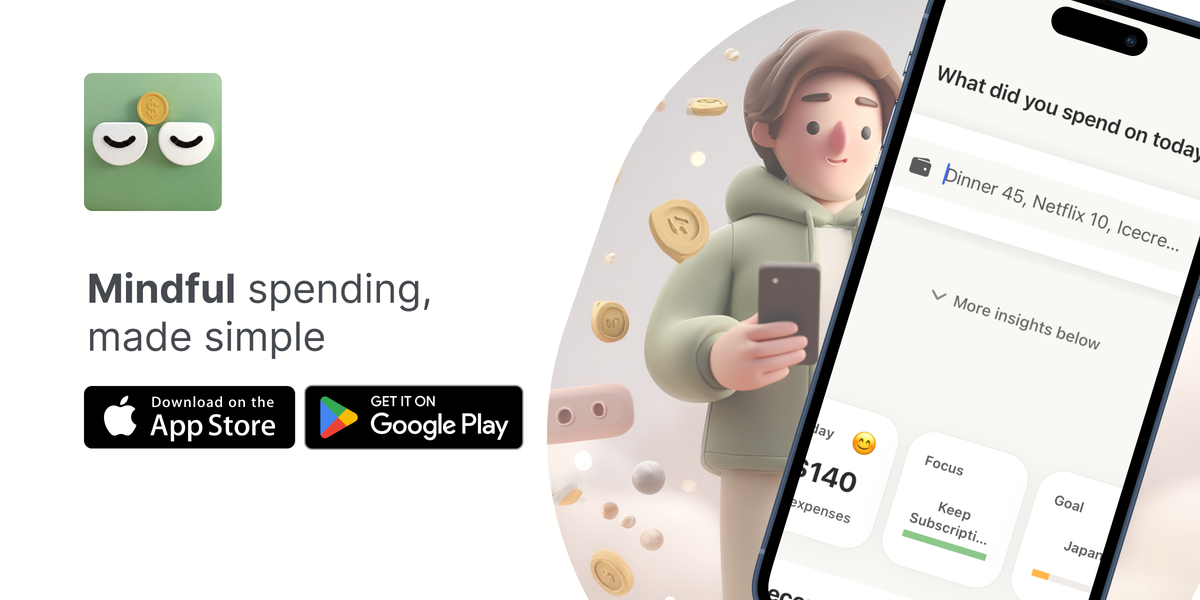
What is Mindspend?
Mindspend is a mindful spending app designed to help you track your spending without connecting to banks or using bank accounts. Its focus is on building clarity and calm through reflection—so you can notice how money decisions affect your feelings and habits.
Rather than centering on financial accounts or automation, Mindspend emphasizes intentional review. The app encourages users to reflect on emotional spending triggers and practice simple rules to reduce impulse purchases.
Key Features
- No banks / no account connection: You can use Mindspend without linking bank accounts, aiming for clarity without account setup.
- Offline-first experience (100% offline): The product is described as fully offline, supporting use without bank connectivity.
- Quick setup (30-second setup): The website notes a fast initial setup flow so you can start tracking immediately.
- Mindful spending education built into the experience: The site includes guidance such as emotional spending triggers, the “24-hour rule,” and how feelings influence money behavior.
- Spending reflection prompts: Users are guided to consider their “money mood” and to track spending in relation to how it makes them feel.
- Concepts for values-based spending: The app positions “values-based spending” as a way to spend intentionally based on what you mean.
How to Use Mindspend
- Set up the app using the noted quick setup process.
- Start tracking your spending while using the app’s mindful prompts rather than account-based dashboards.
- Review your entries with attention to emotion and behavior, including your money mood and potential emotional spending triggers.
- Apply the provided techniques—for example, using the “24-hour rule” to reduce impulse buys.
Use Cases
- Stopping impulse purchases: When you notice an urge to buy, you can apply the “24-hour rule” concept to pause before spending.
- Identifying emotional spending triggers: If you often spend when you feel a certain way, you can use the app’s trigger-oriented guidance to recognize patterns and manage them.
- Building a more intentional habit: If your goal is not just budgets but behavior change, you can focus on mindful tracking and habit-building through reflection.
- Practicing values-based spending: If you want spending decisions aligned with what you actually care about, you can use the values-based spending approach highlighted in the app’s materials.
- Grounding your budget with feelings (not only numbers): If spreadsheets or classic budgeting don’t capture your behavior, you can use Mindspend’s “tracking your money mood” orientation.
FAQ
Does Mindspend require connecting to my bank account? No. The product is described as having “No banks” and “No accounts,” and it’s presented as using a 100% offline approach.
How long does setup take? The website states a 30-second setup.
What is “mindful spending” in the Mindspend context? Mindful spending is presented as intentional spending supported by reflection on emotional triggers, your money mood, and simple techniques like the “24-hour rule.”
Is Mindspend a traditional budgeting app? The page positions Mindspend as focused on mindful spending and emotional tracking rather than automated or account-based budgeting approaches.
Where does Mindspend focus: emotions or budgeting numbers? The materials emphasize emotions and behavior—such as money mood, emotional spending triggers, and values-based spending—over purely numerical tracking.
Alternatives
- Classic zero-based budgeting tools (budget-first workflows): If you prefer constructing a budget from income and categorizing spending within that framework, a zero-based budgeting approach may match better than mindful emotional reflection.
- Account-aggregating budgeting apps (automation-first workflows): If your main requirement is automated transaction tracking from connected accounts, consider account-based budgeting tools rather than an offline/no-connection workflow.
- Envelope-style budgeting (category boundaries): If you want spending limits enforced by envelopes, envelope budgeting differs from Mindspend’s emphasis on “money mood” and emotional triggers.
- Spreadsheet tracking (manual and customizable): If you’re comfortable tracking in spreadsheets, a spreadsheet can be adapted for emotion notes, but it won’t replicate the app’s guided mindful concepts like triggers and the “24-hour rule.”
Alternatives

Finchum
Finchum is a personal finance planning tool that forecasts future bank balances, helping users visualize financial runway, mortgage readiness, and large purchase timelines through secure, read-only account synchronization.

CashPylot
CashPylot is an all-in-one business finance dashboard for startups: track expenses, manage invoices, and forecast cash flow with insights.

Lovon
Lovon is an AI mental health therapy platform with voice-first encrypted support, plus articles and free tools for anxiety, depression, ADHD & relationships.

Ramp
Ramp is a spend management platform combining corporate cards, expense management, travel, accounts payable, and accounting automation for finance teams.

NOTtodolist: Stop & Breathe
NOTtodolist: Stop & Breathe is an iPhone app with a “NOT-To-Do List,” release practice, and Zen Night Protocol for breathing before sleep.

Double
Double practice management software for bookkeepers and accountants with QuickBooks/Xero integration to streamline month-end close, reviews and client portal updates.