

NVIDIA DLSS 5
NVIDIA DLSS 5 is an AI-based neural rendering technology for real-time games, generating photoreal lighting and materials from color and motion.
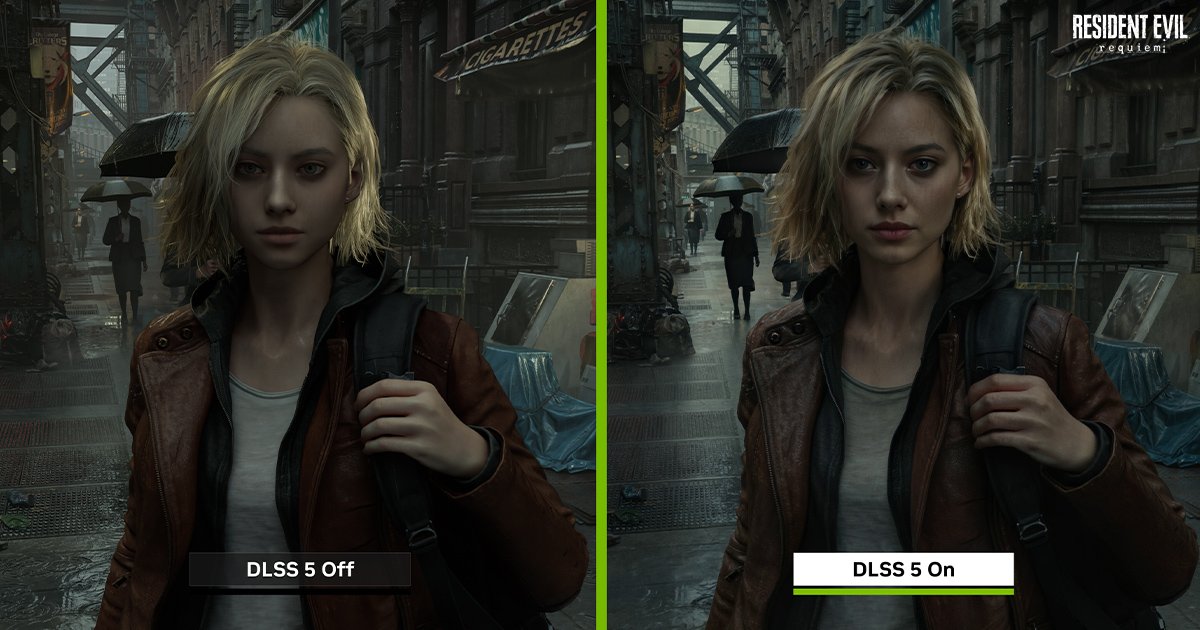
What is NVIDIA DLSS 5?
NVIDIA DLSS 5 is an NVIDIA technology aimed at improving visual fidelity in real-time games using an AI-based neural rendering model. NVIDIA describes DLSS 5 as introducing a real-time approach that infuses rendered images with photoreal lighting and materials.
The core purpose of DLSS 5, as presented in the article, is to bridge the gap between the constraints of real-time game rendering (for interactive frame budgets) and the higher visual complexity often associated with offline cinematic rendering. NVIDIA positions DLSS 5 as moving beyond performance-focused upscaling toward generating more visually detailed results while remaining grounded in a game’s underlying 3D content.
Key Features
- Real-time neural rendering model for games: Uses an AI model designed to run in real time for interactive gameplay.
- Frame inputs include color and motion vectors: Takes each frame’s color and motion vectors as input to guide how visual details are generated.
- Photoreal lighting and materials infused into the scene: Generates lighting and material detail that NVIDIA says is anchored to source 3D content.
- Deterministic, temporally stable output goals: NVIDIA states DLSS 5 delivers results that are deterministic and consistent from frame to frame.
- AI model trained on scene semantics and lighting conditions: NVIDIA describes end-to-end training to understand elements such as characters, hair, fabric, and translucent skin, plus lighting conditions like front-lit, back-lit, and overcast.
- Handles complex rendering effects while retaining scene structure: NVIDIA specifically calls out subsurface scattering on skin, fabric sheen, and light-material interactions on hair.
How to Use NVIDIA DLSS 5
DLSS 5 is intended to be used through game developer integration rather than as a standalone user app. In practice, users would enable the DLSS 5 option (where available) inside a supported game’s graphics settings.
Game developers, per NVIDIA’s description, would use DLSS 5 inputs derived from the game render—color and motion vectors per frame—and configure the workflow so the AI outputs remain anchored to the game’s 3D content and artist intent.
Use Cases
- Players in supported games seeking higher visual fidelity: When a game includes DLSS 5, players can enable it to improve lighting/material appearance while maintaining real-time interaction.
- Studios aiming to add photoreal detail without offline rendering workflows: Developers can use an AI neural rendering model designed to generate visually precise images within a real-time frame budget.
- Games with fast-moving action requiring temporal consistency: Because DLSS 5 is described as temporally stable and frame-consistent, it targets use cases where motion continuity matters.
- Scenes with challenging materials and skin/hair rendering: NVIDIA highlights subsurface scattering, fabric sheen, and hair light-material interactions as specific targets for improved visual handling.
- Multiple lighting setups (e.g., front-lit, back-lit, overcast): The article describes training and behavior across different environmental lighting conditions, which suits scenes that vary in illumination.
FAQ
Is DLSS 5 just an upscaling solution? NVIDIA describes DLSS 5 as evolving beyond performance upscaling. It uses color and motion vectors and focuses on infusing photoreal lighting and materials.
What inputs does DLSS 5 use per frame? According to the article, DLSS 5 takes the frame’s color and motion vectors as input.
Does DLSS 5 aim to stay consistent between frames? Yes. NVIDIA states the output is intended to be deterministic and temporally stable, consistent from frame to frame.
What kinds of visuals does NVIDIA say the model is trained to handle? NVIDIA mentions scene semantics such as characters, hair, fabric, and translucent skin, and environmental lighting conditions like front-lit, back-lit, and overcast.
Where can I get DLSS 5? The article frames DLSS 5 in the context of game developer support and lists example titles, but it does not provide standalone download or installation steps for end users.
Alternatives
- Other DLSS generations (e.g., DLSS 4.5): NVIDIA compares DLSS 5 to prior DLSS approaches, including DLSS 4.5’s AI-based pixel generation and drawing fewer of the original pixels. Older DLSS options may target similar goals with different input/output behavior.
- Traditional real-time rendering approaches (e.g., ray/path tracing without neural rendering): These approaches rely on conventional rendering computations rather than AI-infused neural rendering, which changes the workflow and performance/quality tradeoffs.
- AI image upscaling methods outside the DLSS family: The article contrasts offline video AI models (which are hard to control and can be non-deterministic) with the deterministic, real-time game-focused approach of DLSS 5. Non-game-specific upscalers may differ in temporal stability and control.
- Neural rendering systems that generate images from game content: Broader category alternatives include other real-time neural rendering pipelines, typically differing in what inputs they use (e.g., whether motion vectors are used) and how they ensure consistency with a 3D scene.
Alternatives

Terraforge: Alchemy Craft Game
Tier-based puzzle game: drag and mix elements to discover new creations, saved in an in-app grimoire. Optional Master Forger hints; offline + iCloud sync.

DailyPlay.ai
Turn passive visitors into loyal customers with DailyPlay.ai—create personalized, data-driven mini games built for your brand’s engagement goals.

AakarDev AI
AakarDev AI is a powerful platform that simplifies the development of AI applications with seamless vector database integration, enabling rapid deployment and scalability.

BookAI.chat
BookAI allows you to chat with your books using AI by simply providing the title and author.

skills-janitor
Audit, track usage, and compare your Claude Code skills with skills-janitor—nine focused slash commands and zero dependencies.

FeelFish
FeelFish AI Novel Writing Agent PC client helps novel creators plan characters and settings, generate and edit chapters, and continue plots with context consistency.