

Your Site Is Fucked
Get a free instant audit for a public URL with plain-English findings on broken links, SEO, performance, accessibility, mobile readiness, basics.
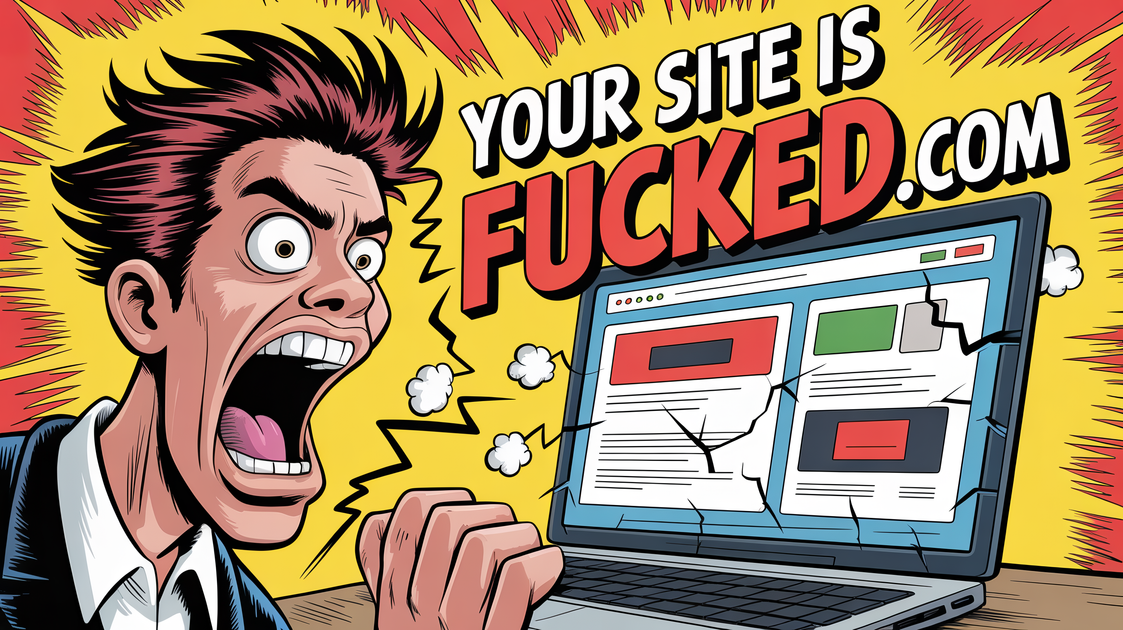
What is Your Site Is Fucked?
Your Site Is Fucked is a free web audit tool that crawls a public URL and produces a plain-English report. It checks links and multiple on-page and technical signals—SEO, speed/performance, accessibility, mobile readiness, security basics, and content quality—so you can see what’s working and what needs fixing.
The core purpose is to quickly surface issues (for example, broken links or accessibility problems) and rank or organize findings so you can address higher-impact problems first, rather than guessing what’s wrong.
Key Features
- Instant public-URL scan: You submit a URL and the tool crawls it quickly, aiming to review relevant signals across the site instead of only performing a single-page check.
- Broken link detection: It identifies dead/failed links and reports the number of broken links found.
- SEO on-page checks: It evaluates SEO-related elements such as meta tags, titles, and headings.
- Performance and speed metrics: It tests the site against web.dev standards and reports performance-related results.
- Accessibility checks against WCAG guidance: It assesses accessibility and reports results aligned with WCAG guidelines.
- Mobile readiness checks: It evaluates mobile performance/readiness, explicitly calling out mobile considerations (the page notes that a large share of traffic is mobile).
- Security basics: It checks HTTPS and basic header/security items described as part of OWASP Top 10 concerns.
- Content quality signals: It includes readability, word count, and an AI-powered writing analysis component.
How to Use Your Site Is Fucked
- Submit a URL: Paste any public URL (e.g., a landing page, blog, or web app) into the tool.
- Run the crawl and receive the report: The crawler checks links, meta tags, and speed/performance metrics in seconds and returns a plain-English report.
- Review findings and prioritize fixes: Look at the issues listed and address items ranked by impact; share the report with your team to coordinate fixes.
Use Cases
- Find broken links before they affect users: Scan a marketing page or documentation site to identify dead links and prevent visitors from hitting errors.
- Audit SEO elements across a site: Use the report to check whether titles, headings, and meta tags are set up as expected and to spot gaps.
- Improve load time and performance: Run an audit when pages feel slow to get performance results compared to web.dev standards.
- Assess accessibility readiness: Use WCAG-aligned checks to understand whether the site supports accessibility requirements and where users may struggle.
- Review technical and safety basics: Run a scan to confirm HTTPS usage and review basic security-related items (including checks referenced from OWASP Top 10 topics).
- Evaluate content and readability: Use the content quality section for readability, word count, and AI writing analysis signals.
FAQ
Is this tool for a single page or a whole site? The tool accepts a public URL and crawls it, checking links and on-page/meta signals. The example output references multiple sites scanned and broken links found, indicating it’s designed for more than just a single page view.
What kinds of issues does the report include? The report includes broken links, SEO elements (meta tags, titles, headings), performance/speed metrics (against web.dev standards), accessibility checks (aligned with WCAG), mobile readiness, security basics (HTTPS/headers and OWASP Top 10-referenced items), and content quality signals (readability, word count, and AI writing analysis).
Does the tool rank issues? The page says fixes are shown ranked by impact, so you can prioritize higher-impact issues first.
Can I use it on landing pages, blogs, and web apps? Yes. The page explicitly states it checks landing pages, blogs, and web apps when you submit a public URL.
Does the tool require a paid plan or account? The provided page calls the audit “Free,” but it does not mention accounts, pricing tiers, or how access works. If you need details on sign-in or limits, you’ll want to check the site’s workflow where you submit the URL.
Alternatives
- Dedicated SEO audit tools: These focus on SEO checks (titles, meta tags, crawling) and may provide deeper reporting for search-related issues; they may or may not include the same accessibility/security/content signals in one report.
- Website performance audit tools: Tools centered on speed and performance optimization often produce detailed performance breakdowns; they may require additional tools to cover accessibility and security.
- Accessibility audit tools: Accessibility-first scanners focus on WCAG-related issues and may offer more specialized guidance; you would still need separate checks for broken links, SEO elements, and security basics.
- Security and header checkers: Security-focused scanners can help validate HTTPS and related security headers and configurations; they typically don’t cover SEO, link integrity, or content readability in the same workflow.
Alternatives

PromptScout
PromptScout tracks how your brand is mentioned, which competitors are recommended, and what sources are cited in AI answers—plus website audits.

ClayHog
ClayHog tracks AI Search Visibility & GEO—see what ChatGPT, Gemini, Perplexity, Claude, and Google AI Overviews say about your brand, incl. citations and sentiment.
beehiiv
beehiiv is an all-in-one newsletter and website platform with publishing, growth, analytics, and monetization tools for creators and brands.

Skayle
Skayle is a fully automated content and visibility engine that runs search-powered research before writing to help brands rank on Google and AI search.

SaveMRR
SaveMRR scans Stripe billing data to find SaaS MRR leaks and help recover failed payments, save cancellations, and win back churn—60-sec Free Revenue Scan.

Sleek Analytics
Lightweight, privacy-friendly analytics with real-time visitor tracking—see where visitors come from, what they view, and how long they stay.