
Prompt tracking
Track prompts across AI platforms to see which queries influence how your brand appears in generated answers.

ClayHog is an AI search visibility platform for tracking brand presence in ChatGPT, Gemini, Perplexity, Claude, and Google AI Overviews from one dashboard.
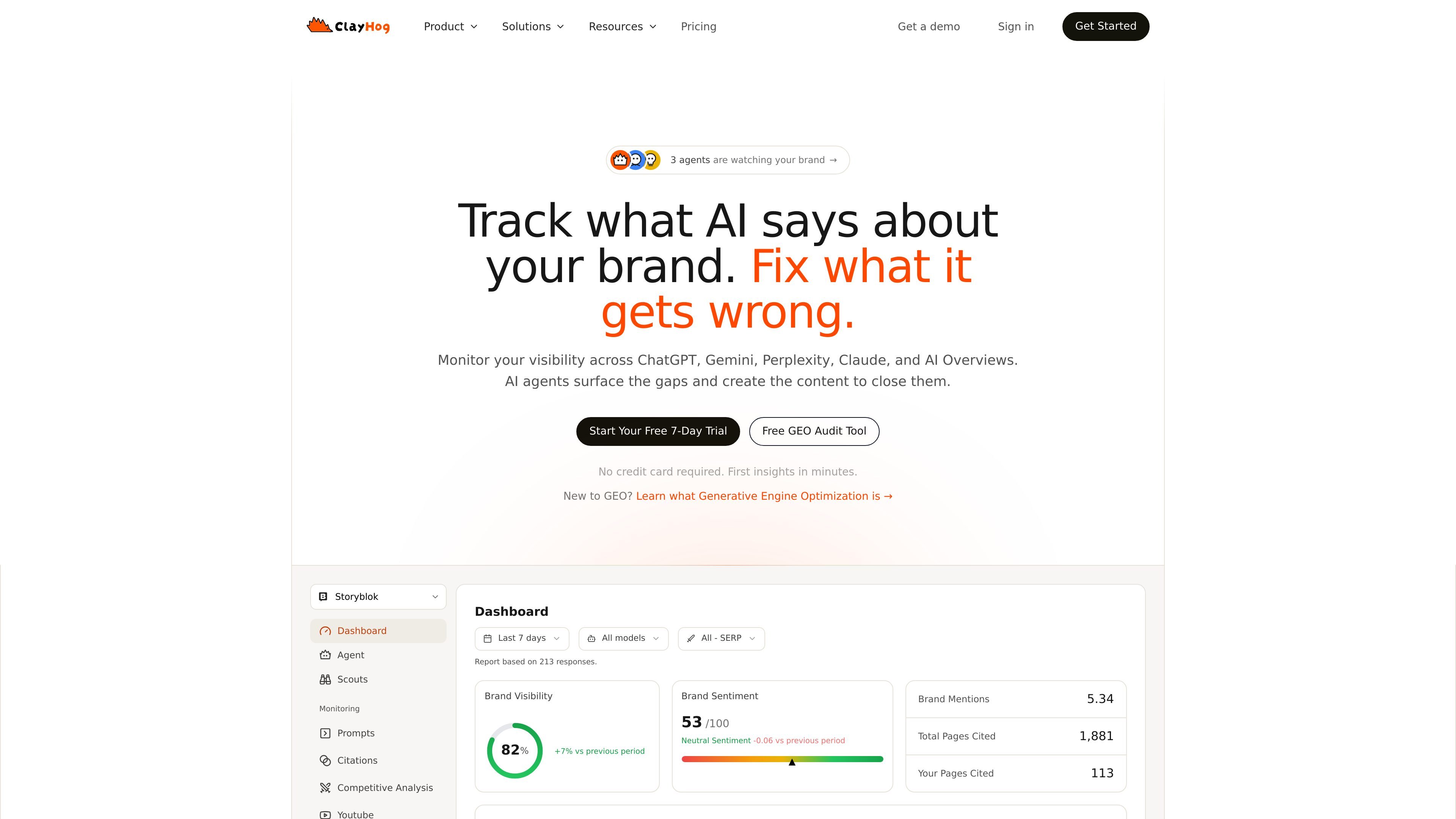
ClayHog is an AI search visibility platform for tracking how brands appear in answers from ChatGPT, Gemini, Perplexity, Claude, and Google AI Overviews. It combines prompt monitoring, competitive analysis, citation tracking, sentiment analysis, and content creation in one system.
The site positions the product for agencies, marketing teams, and SEO teams that want to manage brand visibility across multiple AI search engines. It also includes scheduled monitoring jobs called Scouts, free GEO audit access, and plan tiers that support different numbers of tracked domains and prompts.
Track prompts across AI platforms to see which queries influence how your brand appears in generated answers.
Compare your brand’s citations, visibility, position, and sentiment against competitors across ChatGPT, Gemini, Perplexity, Claude, and Google AI Overviews.
Identify citation gaps and content opportunities, then generate or refresh content aimed at improving AI search visibility.
Measure how often your brand is mentioned and how AI platforms frame it, including visibility score and sentiment tracking.
Review AI crawler logs to understand how AI systems may be encountering your content, with support for domain authority and citation context.
Use Storyblok integration, API and MCP support, and multi-team access where included in the plan.
Use the platform to see how AI models describe your brand, which prompts surface you, and where citations are missing.
Compare your brand with direct competitors to identify citation gaps, share-of-voice shifts, and sources that competitors win.
Organize recurring prompt checks by campaign, topic, or team using Scouts and scheduled monitoring.
Use content creator workflows to turn citation gaps and topic opportunities into content for AI search visibility.
Review visibility, sentiment, and citation data with clients or internal stakeholders using shared dashboards and team access.
ClayHog offers a free 7-day trial with no credit card required. The pricing page also says you can start with a free GEO audit before signing up.
The pricing page says Scouts are scheduled monitoring jobs that run prompts against selected AI models on a daily, weekly, or monthly schedule. Each Scout has its own prompts, models, and analytics dashboard.
The product tracks AI platforms such as ChatGPT, Gemini, Perplexity, Claude, and Google AI Overviews. The site says support is continuously expanded as new AI search platforms emerge.
ClayHog is presented as a platform for teams, agencies, and SEO or marketing users. The site highlights unlimited team members on its plans, along with dashboards and scheduled reports for shared use.
The site documents support for Storyblok on certain plans, and it also references API, MCP, and custom integrations in enterprise discussions. It does not list a broad native integration catalog on the pages provided.

PromptScout tracks how ChatGPT, Gemini, Google AI Overviews, and Perplexity mention your brand or competitors, with source analysis and website audits.

beehiiv is a newsletter platform for creators, publishers, and brands to build, grow, and monetize email newsletters and websites in one place.

SaveMRR is a Stripe retention tool for SaaS teams to scan churn and MRR leaks, then automate recovery with dunning, cancel-save offers, win-back emails, and onboarding nudges.

Hype is a web tool for finding trending YouTube topics by category, time range, and scoring mode. Spot emerging ideas and review source videos.

Sleek Analytics is a privacy-friendly web analytics tool with real-time visitor tracking, Core Web Vitals, and revenue attribution.
Struere turns spreadsheet data into structured operational software with dashboards, alerts, and automations for teams replacing manual spreadsheet workflows.