

Arm AGI CPU
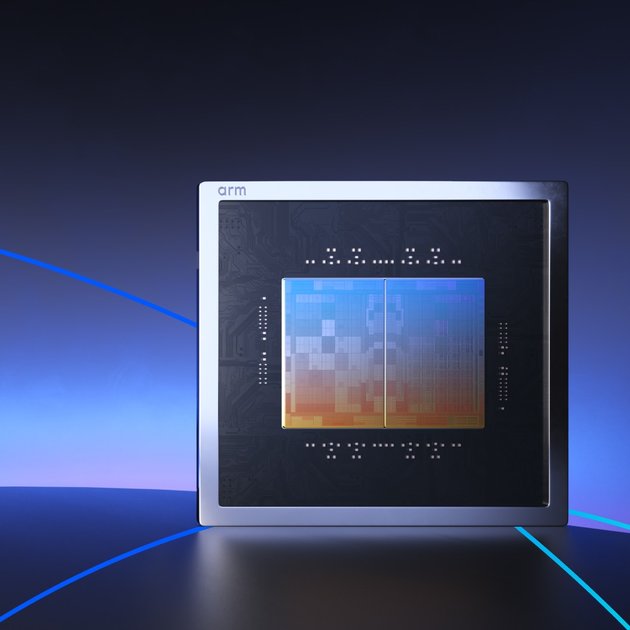
Arm AGI CPU is production silicon for AI infrastructure, built for agentic workloads with rack-level performance and extreme data-center density.
What is Arm AGI CPU?
Arm AGI CPU is Arm’s first production silicon designed for AI infrastructure at scale. It targets agentic workloads in modern data centers, where software agents need the CPU to orchestrate compute, manage accelerators, and coordinate many concurrent agents.
The design is positioned for rack-level performance and high density in data-center deployments. It is based on Arm Neoverse CSS V3 and is intended to fit into Arm’s broader software and hardware ecosystem to help organizations move faster when deploying AI systems.
Key Features
- Rack-level performance focus: Designed to deliver higher performance at rack scale by making coordinated choices across microarchitecture, memory, clock frequency, and I/O.
- High-bandwidth, low-latency memory system: A memory subsystem aimed at preventing memory bottlenecks from limiting performance.
- Efficiency for dense deployments: Low per-core TDP is intended to support denser deployments and reduce thermal throttling under high utilization.
- Dedicated cores to reduce contention: Each core is described as dedicated, which can help reduce resource contention when many threads are active.
- AI instruction support: Includes bfloat16 and INT8 AI instructions (Armv9.2) to support common AI compute paths.
- High I/O lane availability and modern interconnect support: Specifies 96 PCIe lanes, PCIe Gen6, and CXL 3.0 Type 3 alongside multiple Gen4 control lanes.
How to Use Arm AGI CPU
- Plan your deployment around rack- or dense-server requirements for agentic AI workloads (CPU orchestration plus accelerator management).
- Choose a reference or vendor server platform that supports Arm AGI CPU (the page lists multiple server form factors and reference designs).
- Validate system-level configuration using the published specifications (cores, memory type/speed, PCIe/CXL capabilities, and socket support) to match your accelerator and I/O needs.
- Begin installation and workload bring-up on the selected server, then iterate based on performance and density targets at the rack level.
Use Cases
- Agentic AI data center execution: Running systems where software agents reason, decide, and act while the CPU helps coordinate large numbers of concurrent agents and accelerators.
- Rack-scale AI infrastructure: Deploying AI workloads with an emphasis on maximizing performance and utilization per rack in modern data centers.
- Dense cloud deployments: Using systems intended to support denser configurations where power and thermal headroom at high utilization matter.
- Accelerator-heavy server platforms: Building platforms that require substantial PCIe connectivity and support for CXL 3.0 Type 3 for modern I/O/memory expansion scenarios.
- Multiple-server form factor deployments: Selecting between dense node designs and other form factors (e.g., OCP-standard or traditional 2U designs) depending on data-center constraints.
FAQ
-
What kind of workloads is Arm AGI CPU aimed at? It is aimed at agentic AI workloads that require CPU orchestration—managing accelerators and coordinating many concurrent agents.
-
On what architecture is Arm AGI CPU based? The page states it is based on Arm Neoverse CSS V3.
-
Does Arm AGI CPU include AI instruction support? Yes. It specifies bfloat16 and INT8 AI instructions under Armv9.2.
-
What memory and I/O capabilities are specified? The page lists 12x DDR5 RDIMM (up to 8800 MT/s), and 96 PCIe lanes (PCIe Gen6) with CXL 3.0 Type 3.
-
How do I get a system to run it? The page points to Arm AGI CPU servers available now and several reference designs; you would typically select a supported server platform and deploy your AI infrastructure on it.
Alternatives
- Other data-center CPUs optimized for AI accelerators: Instead of a rack-first agentic-focused CPU, you can consider CPUs targeted at general AI server performance; the difference is the specific focus on agentic orchestration and rack-level density described here.
- Arm-based server platforms without Arm AGI CPU: If you already run Arm Neoverse-based deployments, the alternative is to use existing Arm data-center processors; the tradeoff is that you forgo the specific agentic, rack-density-oriented design described for Arm AGI CPU.
- GPU-first server architectures (minimal CPU orchestration emphasis): Some deployments may rely on GPUs to handle more workload orchestration. This can shift the workflow away from CPU-centric coordination that Arm AGI CPU is described to support.
- Alternative server form-factor designs: If rack density is the priority, consider platforms designed for high density in your preferred chassis/standard (the page lists multiple reference designs and vendor server systems that differ by form factor).
Alternatives

AakarDev AI
AakarDev AI is a powerful platform that simplifies the development of AI applications with seamless vector database integration, enabling rapid deployment and scalability.

BenchSpan
BenchSpan runs AI agent benchmarks in parallel, captures scores and failures in run history, and uses commit-tagged executions to improve reproducibility.

Edgee
Edgee is an edge-native AI gateway that compresses prompts before LLM providers, using one OpenAI-compatible API to route 200+ models.

Pioneer AI by Fastino Labs
Pioneer AI by Fastino Labs is an agentic fine-tuning platform that improves open-source language models with Adaptive Inference and continuous evaluation.

Codex Plugins
Use Codex Plugins to bundle skills, app integrations, and MCP servers into reusable workflows—extending Codex access to tools like Gmail, Drive, and Slack.

Whirr
Whirr is a quiet macOS menu bar app that mirrors Claude Code agent activity to your Mac’s notch—so you can glance without watching the screen.