
Trust formation and setup
GetDynasty sets up QSBS-eligible trusts, using standardized documentation and established processes to move from planning to execution.

GetDynasty offers QSBS trust setup, administration, and tax filing support for startup founders and early employees planning a liquidity event.
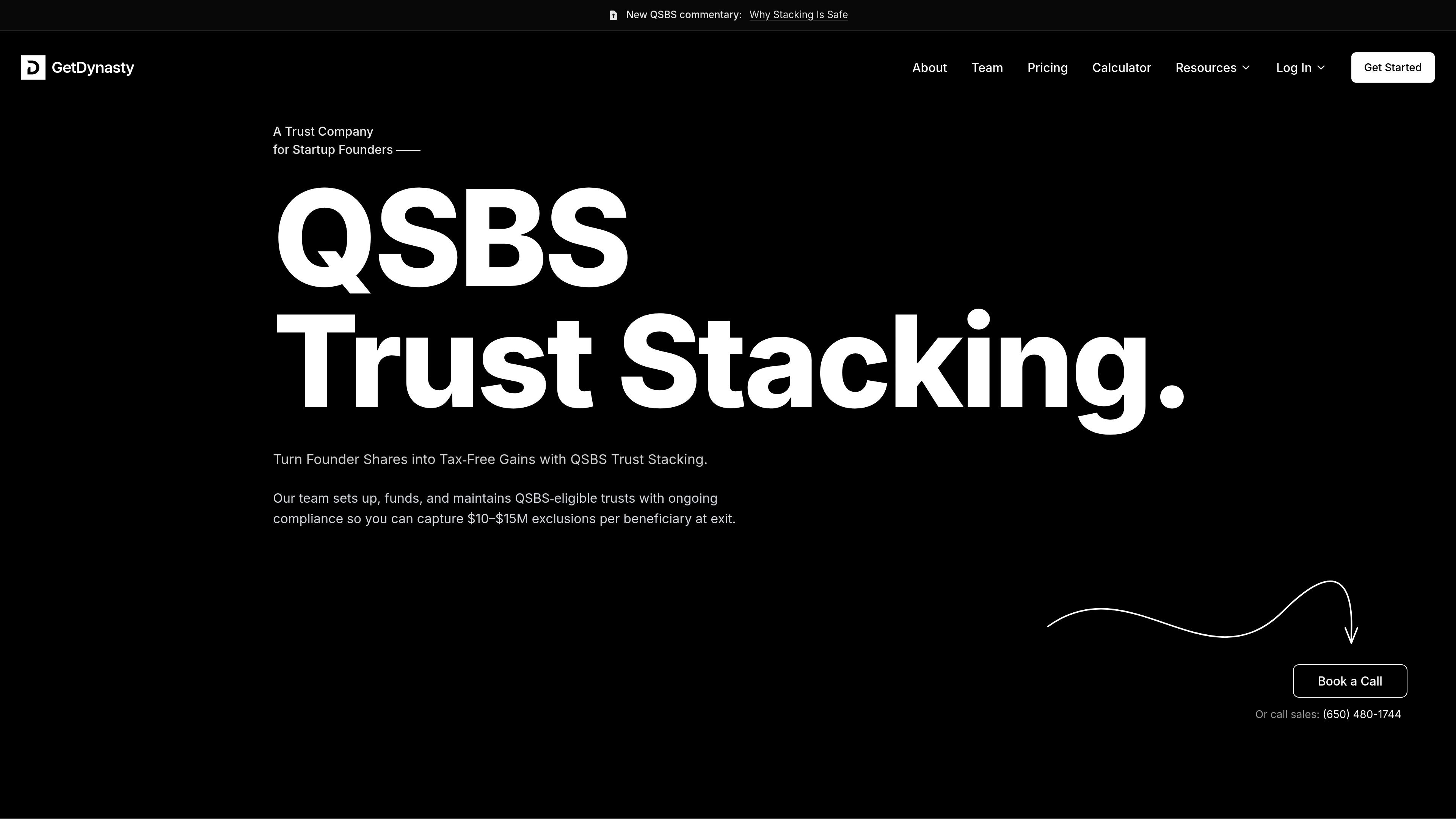
GetDynasty is a trust services company focused on QSBS trust stacking for startup founders and early employees. The product is built around transferring founder shares into properly structured trusts so users can potentially multiply the Section 1202 capital gains exclusion at exit.
The service combines trust setup, ongoing administration, and tax return support. The site says the team handles setup, funding, and maintenance of QSBS-eligible trusts with ongoing compliance, and that trust administration is provided through Dynasty Trust Company, a duly chartered Nevada corporate trust company affiliated with GetDynasty.
GetDynasty sets up QSBS-eligible trusts, using standardized documentation and established processes to move from planning to execution.
The service maintains trusts over time, including record-keeping, beneficiary communication, and other administration work needed to keep the structure current.
Annual federal income tax returns are included in the trust service, with Form 1041 preparation and filing for each trust.
The site says users can call a voice agent trained on QSBS and the trust program to get plain-English answers at any time.
A QSBS planning calculator is available to estimate potential savings from trust stacking before a liquidity event.
GetDynasty offers educational materials, including a QSBS University course and a commentary on why stacking is safe under the rules described on the site.
Founders planning a future exit can use Dynasty to set up QSBS trusts before a sale or liquidity event, when timing matters for the strategy described on the site.
Users who already hold founder shares can transfer eligible stock into trusts and maintain the structure with ongoing administration and tax filing support.
Teams that want to understand the basics before speaking with sales can use the voice agent, calculator, and QSBS University materials to learn the workflow and estimate possible savings.
Founders comparing whether stacking fits their situation can review the commentary on why stacking is safe and the site’s explanation of legitimate family planning versus aggressive structures.
People who want a simpler outsourced process can rely on Dynasty for standardized setup, beneficiary communication, and annual Form 1041 preparation.
GetDynasty is for founders and early employees who want to transfer QSBS-eligible shares into trusts for potential Section 1202 tax savings before a liquidity event. The site also frames it as useful for families and founders planning around estate transfer and asset protection.
The site says GetDynasty sets up, funds, and maintains QSBS-eligible trusts with ongoing compliance. It also offers trust administration, record-keeping, beneficiary communication, and annual federal income tax returns for each trust.
The pricing page lists a pre-liquidity QSBS Trust Package at $2,000 per year, including up to four trusts. It also lists a post-liquidity option at $3,000 per year per trust, plus tax preparation costs, with no setup fees and cancel-anytime billing.
The home page says the team built a voice agent trained on QSBS and the trust program, and it also provides a QSBS University course and a planning calculator. These resources are meant to help users understand the strategy and estimate potential savings.
The site says GetDynasty is focused on QSBS trust stacking and related trust administration. It does not describe a broad app marketplace or external integration ecosystem on the pages provided.
KlutterAI is an AI expense tracker for iOS and Android to capture receipts, organize spending, track budgets, surface recurring charges, and export reports.

Trump Accounts is an investment account for a child’s long-term financial security, with support for activation, bank linking, contributions, investing, statements, tax documents, and account closure.

GentleCase is immigration case management software for law firms, with client profiles, case tracking, visa templates, document management, messaging, and a branded client portal.

Termsy Chrome extension scans Terms of Service and Privacy Policy pages, highlights critical clauses, and shows them in a sidebar. Not legal advice.

Silex is a Swiss legal AI for lawyers and law firms, speeding up legal research with Swiss hosting and a 7-day free trial.

元典智库 is a legal research and search platform for lawyers, in-house counsel, law students, judges and prosecutors, with one-stop access to statutes, cases and legal information.