
Zero-config data masking
Hoop redacts PII, PHI, and PCI data before it reaches Claude’s context, so the model can work with query results without seeing raw sensitive values.

Claude Code Gateway is Hoop.dev’s access-governance layer for Claude Code, masking sensitive data, blocking dangerous commands, and recording AI-assisted sessions.
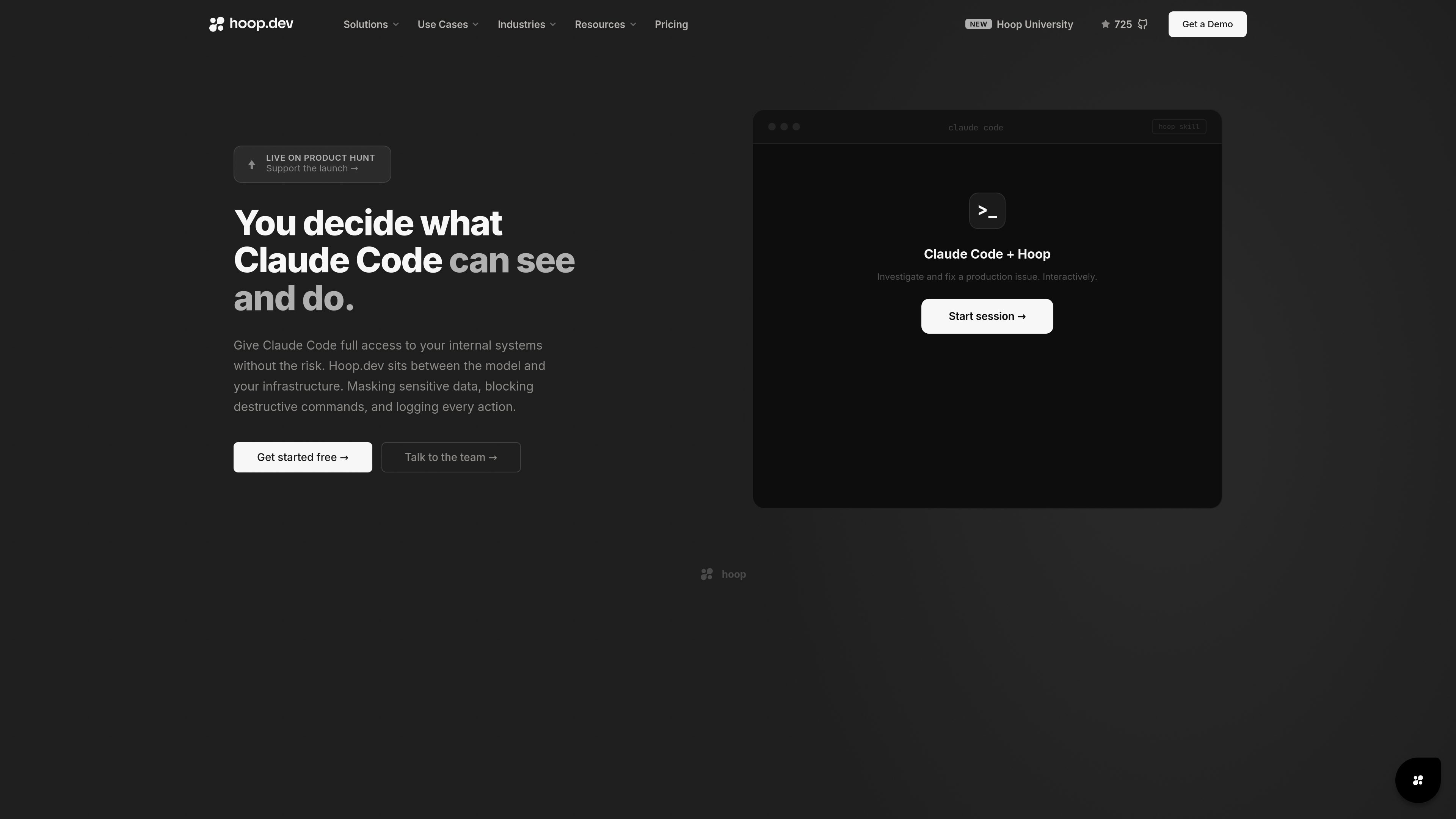
Claude Code Gateway is Hoop.dev’s access-governance layer for Claude Code. It sits between the model and your infrastructure so teams can let Claude Code query systems, run commands, and interact with internal services without exposing raw secrets or allowing unsafe actions to pass through unchecked.
The product combines protocol-level masking, command blocking, human approval workflows, and session logging. The site positions it for teams that want Claude Code to keep operating with full context while policies determine what data it can see and what operations it can complete.
Hoop redacts PII, PHI, and PCI data before it reaches Claude’s context, so the model can work with query results without seeing raw sensitive values.
Dangerous commands such as DROP TABLE, DELETE without WHERE, and rm -rf are intercepted at the protocol layer and terminated before they execute.
Schema changes and other risky actions can be routed to Slack or Microsoft Teams for one-click approve/reject decisions, so execution pauses until a human responds.
Every command, response, approval, and rejection is recorded in a replayable audit trail for review and forensic use.
The gateway supports controlled access for databases, application runtimes, SSH, Kubernetes, web services, TCP, RDP, AWS SSM, and custom CLI tools.
Pricing is organized around identities connecting through the gateway, with the site describing support for engineers, service accounts, and AI agents under one plan.
Let developers use Claude Code against internal databases or APIs while masking sensitive fields in query results and command output.
Require human review for schema changes, production writes, and other risky operations before the command executes.
Stop destructive operations such as database drops or unsafe shell commands before they reach infrastructure.
Keep a replayable record of AI-assisted sessions for compliance, audit, incident review, or post-incident analysis.
Route Claude Code through a governed gateway so teams can control what it can see and do without changing Claude Code itself.
Hoop sits between Claude Code and your infrastructure, so it can mask sensitive data, block destructive commands, and route risky actions for approval before execution.
The source shows setup paths for Docker, AWS CloudFormation, and Kubernetes, plus a cloud signup flow. It also says you can connect Claude Code to Hoop with one environment variable and no code changes.
The pricing page says one plan includes all features, with pricing based on the number of identities connecting through the gateway. It lists engineers, service accounts, and AI agents as identities.
Yes. The site describes access from humans, service accounts, and AI agents, and includes support for Slack and Microsoft Teams approvals, plus developer and self-hosted deployment options.

ClawTick is an AI agent automation platform for scheduling jobs from the CLI, dashboard, or REST API. Built for developers and teams using LangChain, CrewAI, webhooks, or custom workflows with monitoring, alerts, and logs.

OpenFlags is an open-source, self-hosted feature flag platform for JavaScript teams, with local evaluation, targeted rollouts, and controlled launches.

EAS Observe monitors production performance in Expo and React Native apps, showing startup metrics, session timelines, release markers, and errors in the Expo dashboard.

Rectify is an all-in-one SaaS operations platform with session replay, monitoring, support, code scanning, roadmaps, and changelogs for product teams.

PromptScout tracks how ChatGPT, Gemini, Google AI Overviews, and Perplexity mention your brand or competitors, with source analysis and website audits.

Sleek Analytics is a privacy-friendly web analytics tool with real-time visitor tracking, Core Web Vitals, and revenue attribution.