

KIT.domains
KIT.domains automates domain monitoring and SSL tracking with alerts for expirations and DNS (MX/NS) changes, centralized in a shared dashboard.
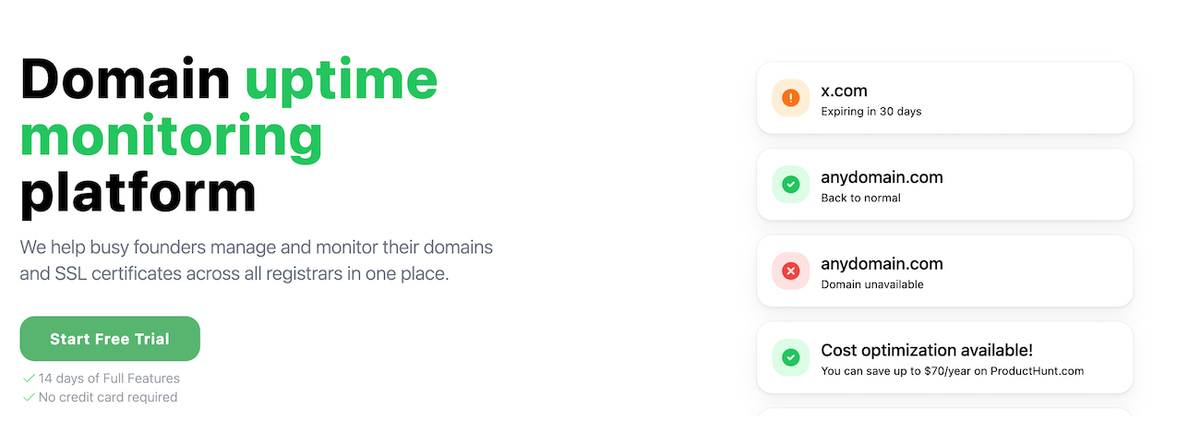
What is KIT.domains?
KIT.domains is an automated domain monitoring and SSL tracking platform designed for teams that manage many client domains. It continuously tracks domain expirations, SSL certificate status, and DNS integrity (including MX/NS changes) and notifies the right people before issues affect client websites.
The core purpose is to reduce domain-related incidents such as expired domains, SSL errors, or DNS misconfiguration by centralizing status visibility, alerting, and a renewal-focused calendar for a full client portfolio.
Key Features
- Domain expiration alerts: Detects domain renewal dates and raises notifications ahead of expiration to help prevent overdue domains.
- SSL expiration detection: Tracks certificate validity and alerts when SSL renewal is needed, addressing cases where SSL problems surface unexpectedly.
- DNS integrity monitoring (MX/NS): Monitors DNS changes in real time and flags updates to records such as MX and NS.
- Centralized domain dashboard: Provides a single command-center view of domains across clients, including expiration status, SSL health, availability/incident history, and alerts.
- Team collaboration with role-based access: Supports client-scoped organizations and role-based team access so colleagues can view and act on relevant items.
- Manual and API import: Lets admins add domains manually and also import via API; the page notes support for registrars such as Namecheap, Porkbun, and others.
- Notifications and workflow integration: Sends alerts via Slack, webhooks, email, Telegram, and integrates with a helpdesk workflow through HaloPSA; a REST API is available for custom registrar setup.
- Renewal calendar: Displays domain and SSL expiration dates in a calendar with visual urgency levels and supports export to iCal or CSV.
How to Use KIT.domains
- Start the free trial (the page states a 14-day trial with no credit card required).
- Add your domains either by importing via API or by adding them manually.
- Set up notifications so your team receives alerts through one or more channels (e.g., Slack, email, webhooks, or Telegram).
- Review the centralized dashboard and calendars to track which domains or SSL certificates are expiring soon and to see recent incident history.
Use Cases
- MSPs preventing client churn from expired domains: Monitor a portfolio of client domains and receive early warnings when renewals are approaching, so outages don’t become client-facing incidents.
- SSL renewal management for teams with limited monitoring coverage: Detect expiring or invalid SSL certificates and get alerted before clients notice SSL errors.
- DNS change detection during troubleshooting: Identify when DNS records such as MX/NS have changed and reference recent incident timelines to support faster root-cause analysis.
- Shared operational visibility across a domain team: Invite colleagues into KIT.domains, use role-based team access, and coordinate responses when domains require action.
- Incident response workflows with helpdesk routing: Use webhooks and HaloPSA integration (and/or the REST API) so alerts feed into existing response processes and the right team member can act.
FAQ
-
Do I need a credit card to try KIT.domains? The page states that the 14-day free trial requires no credit card.
-
What does KIT.domains monitor? According to the page, it tracks domain expirations, SSL certificate status, and DNS integrity—specifically changes to records such as MX and NS.
-
How are alerts delivered to my team? The page lists alert channels including Slack, webhooks, email, Telegram, and also mentions HaloPSA service desk integration.
-
Can I add domains to KIT.domains automatically? Yes. The page states you can import domains manually or via API, and it also mentions support for registrars such as Namecheap and Porkbun.
-
Is there a way to plan renewals over time? Yes. KIT.domains includes a renewal calendar view and allows exporting calendar data to iCal or CSV.
Alternatives
- DNS/SSL monitoring services: Tools focused primarily on uptime, SSL certificate checks, or DNS change detection can cover parts of this workflow, but may not provide the same unified renewal calendar and multi-client dashboard approach described for KIT.domains.
- Manual spreadsheet + ticketing workflow: Teams can track expiration dates and DNS/SSL issues themselves, but this is typically harder to maintain at scale and relies on manual review instead of automated monitoring and alert routing.
- General infrastructure monitoring platforms: Observability tools can detect symptoms (like downtime), but they may require additional setup to track domain expirations/SSL validity and may not be tailored to portfolio-level renewal workflows.
- Helpdesk-first monitoring with custom integrations: Instead of a dedicated domain monitoring platform, some teams route signals from other sources into their ticketing system; the main difference is that KIT.domains centers on domain/SSL/DNS events and a renewal-focused view.
Alternatives

ClawTick
ClawTick is a CLI-first AI agent automation platform for scheduling webhook tasks on cron with monitoring, alerts, retries, and execution logs.

OpenFlags
OpenFlags is an open source, self-hosted feature flag system with a control plane and typed SDKs for progressive delivery and safe rollouts.

Rectify
Rectify is an all-in-one operations platform for SaaS, combining monitoring, analytics, support, roadmaps, changelogs, and agent management—via conversation.

PingPulse
PingPulse monitors AI agent workflows with real-time handoff tracking, workflow visualization, and configurable alerts for failures, stalls, and out-of-order execution.

Latitude
Latitude is open-source observability for Claude Code—monitor every agent turn with full session traces, failure detection, and cost/usage visibility.

PromptScout
PromptScout tracks how your brand is mentioned, which competitors are recommended, and what sources are cited in AI answers—plus website audits.