
Manual spending tracking
Record purchases manually instead of linking a bank account, so the app stays focused on reflection and awareness rather than automatic aggregation.

Mindspend is a mindful spending app that helps people track purchases without connecting to banks. It focuses on emotional awareness, values-based spending, and lightweight goal-setting rather than traditional budgeting.
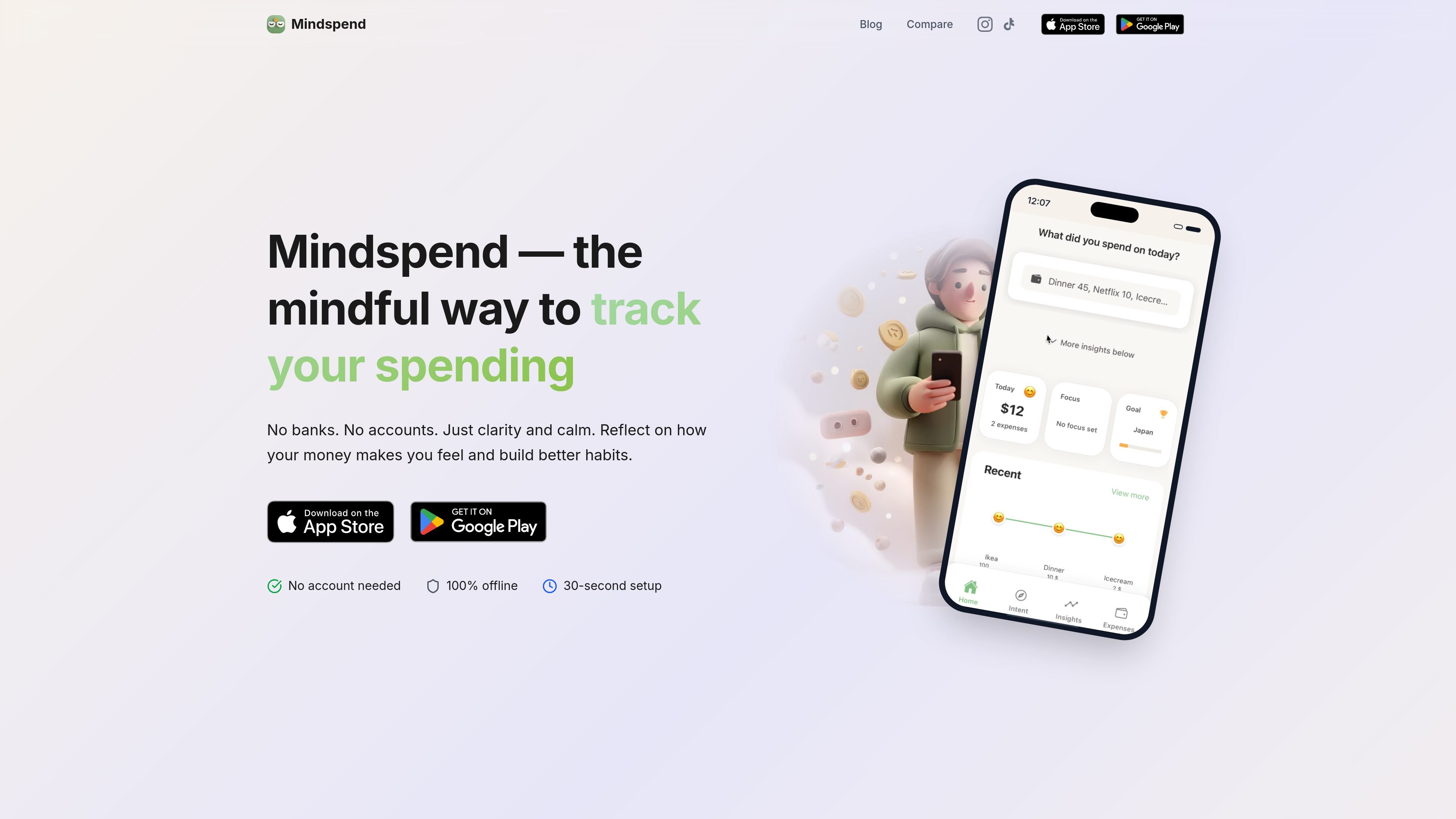
Mindspend is a mindful spending app built to help people understand why they spend, not just where their money goes. The homepage positions it as a way to track expenses without connecting to banks, with no account needed, 100% offline operation, and a setup that takes about 30 seconds.
Instead of automatic budgeting or bank-linked reporting, Mindspend centers the experience on reflection. The site highlights emotion tracking, Smart Buckets based on personal values, and Weekly Focus Goals as the core workflow for building awareness, spotting spending triggers, and making more intentional purchase decisions.
Record purchases manually instead of linking a bank account, so the app stays focused on reflection and awareness rather than automatic aggregation.
Rate how purchases feel and review emotional patterns over time to understand what tends to lead to regret, satisfaction, or impulse buying.
Organize spending by values using Smart Buckets, which the site positions as a way to align spending with what matters to you.
Set Weekly Focus Goals to keep spending intentional and to create a lighter-weight alternative to a traditional budget.
Use the app offline, with the homepage explicitly calling out 100% offline operation and no account needed.
Learn from content on the site about emotional spending triggers, mindful spending, and comparisons with budgeting tools such as YNAB and Monarch Money.
Use Mindspend if you want to notice emotional triggers such as stress, boredom, or late-night impulse shopping and connect those patterns to specific purchases.
Use it when budgeting apps feel too rigid and you want a lighter system that emphasizes reflection and values over strict category control.
Use it if you prefer not to connect financial accounts and want a manual, offline tool that still helps you keep track of spending habits.
Use the app after purchases to review how each one felt, making it easier to separate satisfying spending from purchases that quickly turn into regret.
Use Mindspend alongside a budgeting system when you want a clearer explanation for why overspending happens, not just a report of where the money went.
Mindspend is built for mindful spending rather than traditional budgeting. It helps you log purchases, reflect on how they felt, and spot emotional or situational patterns behind your spending.
No. The site says Mindspend works without connecting to banks, and the comparison page describes it as manual entry rather than automatic bank sync.
The source pages mention emotion tracking, Smart Buckets based on values, and Weekly Focus Goals. They do not provide a full feature list or workflow beyond those capabilities.
The pricing page at the provided URL currently returns a 404 page, so the source does not confirm a plan structure, price, free tier, or trial.
The public pages and articles focus on individual spending awareness. They do not describe team, shared-account, or collaboration features.

Timebook is a time tracking, invoicing, and bookkeeping app for freelancers and single-member LLCs. It combines hours, invoices, and basic books in one place, with optional Plaid bank sync and AI-agent support.

Finchum is a personal finance planning tool that aggregates accounts and forecasts future balances for users in the US and Canada. It supports secure sync without sharing bank passwords, with OAuth where available and file-based imports as a fallback.

KlutterAI is an AI-powered expense tracker that helps people capture receipts, categorize spending, and monitor budgets from iOS or Android. The product also surfaces recurring charges, spending alerts, and exportable reports.

CashPylot is finance software for startups and freelancers that combines invoicing, expense tracking, cashflow monitoring, budgets, and client management in one platform. It offers a 7-day free trial on a single paid plan.

SimplyPortfolio is a manual portfolio tracker for stocks, ETFs, gold, and silver that combines multiple accounts into one dashboard. It supports multi-currency reporting, cost-basis tracking, and CSV export, with a free tier for up to 3 holdings.

Trump Accounts is an investment account product for building long-term financial security for a child. The site also offers support for activation, bank linking, contributions, investing, statements, tax documents, and account closure.