UStackUStack
Pali icon

Pali

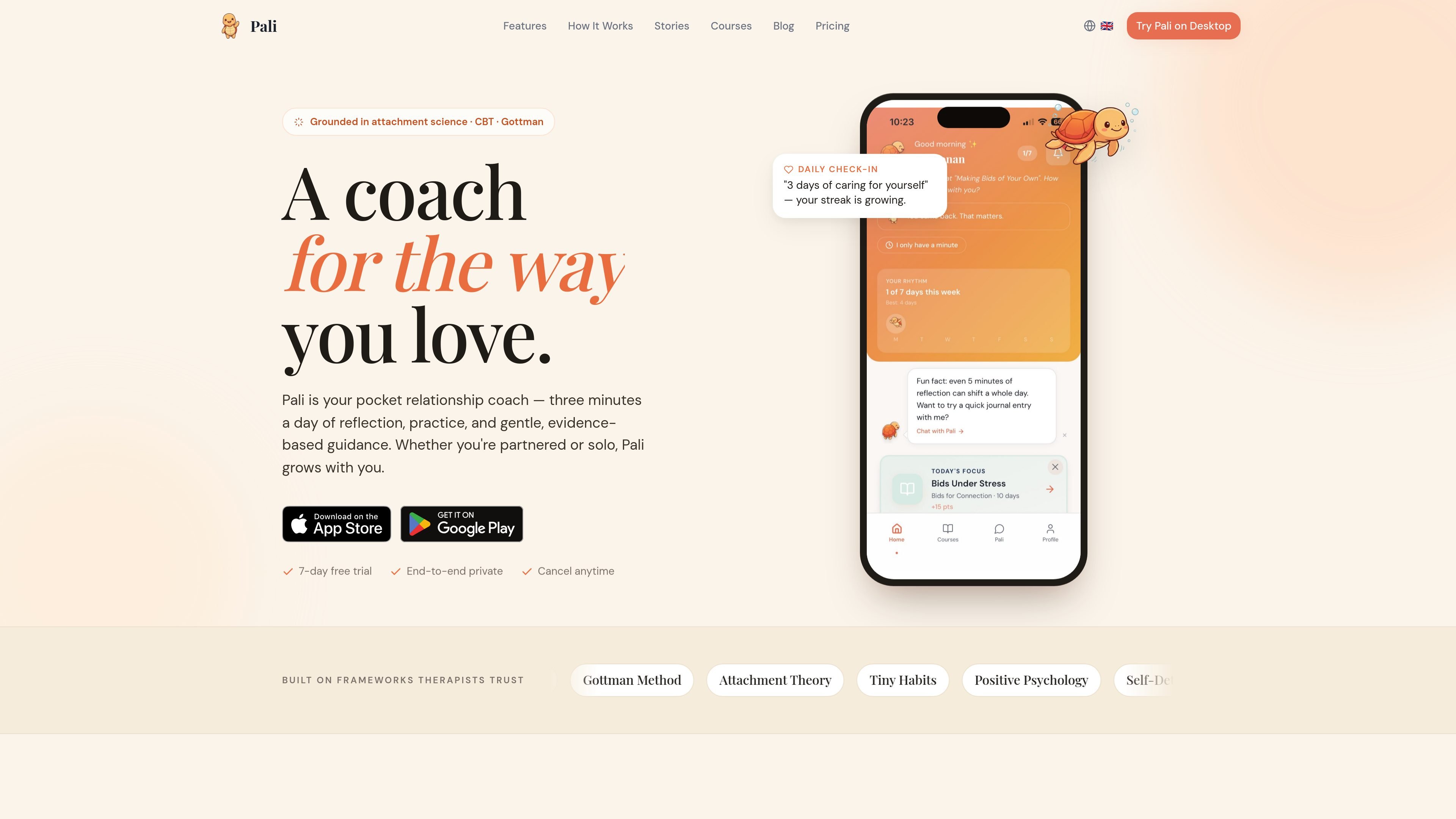
Pali is an AI coach with daily exercises for relationship-building and personal growth, grounded in attachment theory, CBT, and positive psychology.
Pali

What is Pali?

Pali is an AI coach designed to support relationship-building and personal growth. It provides daily exercises aimed at improving self-awareness and helping users build deeper connections.

The exercises are described as grounded in attachment theory, cognitive behavioral therapy (CBT), and positive psychology. The intent is to guide users through structured practice whether they are in a relationship or single.

Key Features

  • Daily exercises for relationship and self-growth to create consistent practice over time rather than one-off advice.
  • Approach grounded in attachment theory to support work around how people relate and respond in close connections.
  • CBT-based techniques to focus on cognitive and behavioral change through structured prompts.
  • Positive psychology framing to incorporate exercises that emphasize healthier mindsets and constructive behaviors.
  • Works for different relationship contexts (the site explicitly references both people in relationships and those who are single).

How to Use Pali

  • Start with the daily exercises provided by the app/coaching experience.
  • Complete the guided prompts in the order offered each day to work through attachment- and CBT-informed practice.
  • Use the exercises to reflect and adjust—the goal is increased self-awareness and better connection habits over time.

Use Cases

  • Strengthening a current relationship: Use the daily exercises to build awareness of your relational patterns and practice changes that support healthier connection.
  • Making sense of relationship dynamics while single: Follow the same attachment- and CBT-grounded practice to improve self-awareness and approach relationships with clearer habits.
  • Cognitive reframing for recurring conflict: Work through CBT-style prompts to identify thought patterns and practice alternative responses during stressful moments.
  • Developing more constructive communication: Use daily practice to reinforce healthier behaviors and mindsets that support deeper, more intentional connection.
  • Ongoing personal growth beyond a single issue: Continue the daily routine to build self-awareness and supportive habits even when there isn’t an immediate relationship crisis.

FAQ

  • Is Pali only for couples? No. The site states it’s for people whether they are in a relationship or single.

  • What methods are Pali’s exercises based on? The exercises are described as grounded in attachment theory, CBT, and positive psychology.

  • What does “daily exercises” mean in practice? The product emphasizes a daily practice format where users complete guided exercises as part of the coaching experience.

  • What is the main goal of using Pali? To build deeper connections and improve self-awareness through structured coaching exercises.

Alternatives

  • Attachment-theory or relationship coaching programs (non-AI): Typically rely on guided frameworks or curricula rather than an AI coach; they may be better if you prefer structured courses or worksheets.
  • CBT self-guided journaling or therapy workbooks: Focus on cognitive and behavioral skills like thought restructuring; they may differ by being less centered on relationship dynamics.
  • Positive-psychology habit apps: Emphasize mindset and constructive routines; they may overlap on the well-being angle but may not provide attachment-focused relationship coaching.
  • Therapist-led relationship counseling: Offers real-time professional guidance; it differs by being conducted with a human clinician rather than an AI exercise format.