
Prompt or API access
Mindcase exposes structured web data through either prompt or API usage, with a console for starting runs and managing access.

Mindcase is a web data API and console for extracting structured data from websites and major platforms, with prompt or API access and prepaid per-record billing.
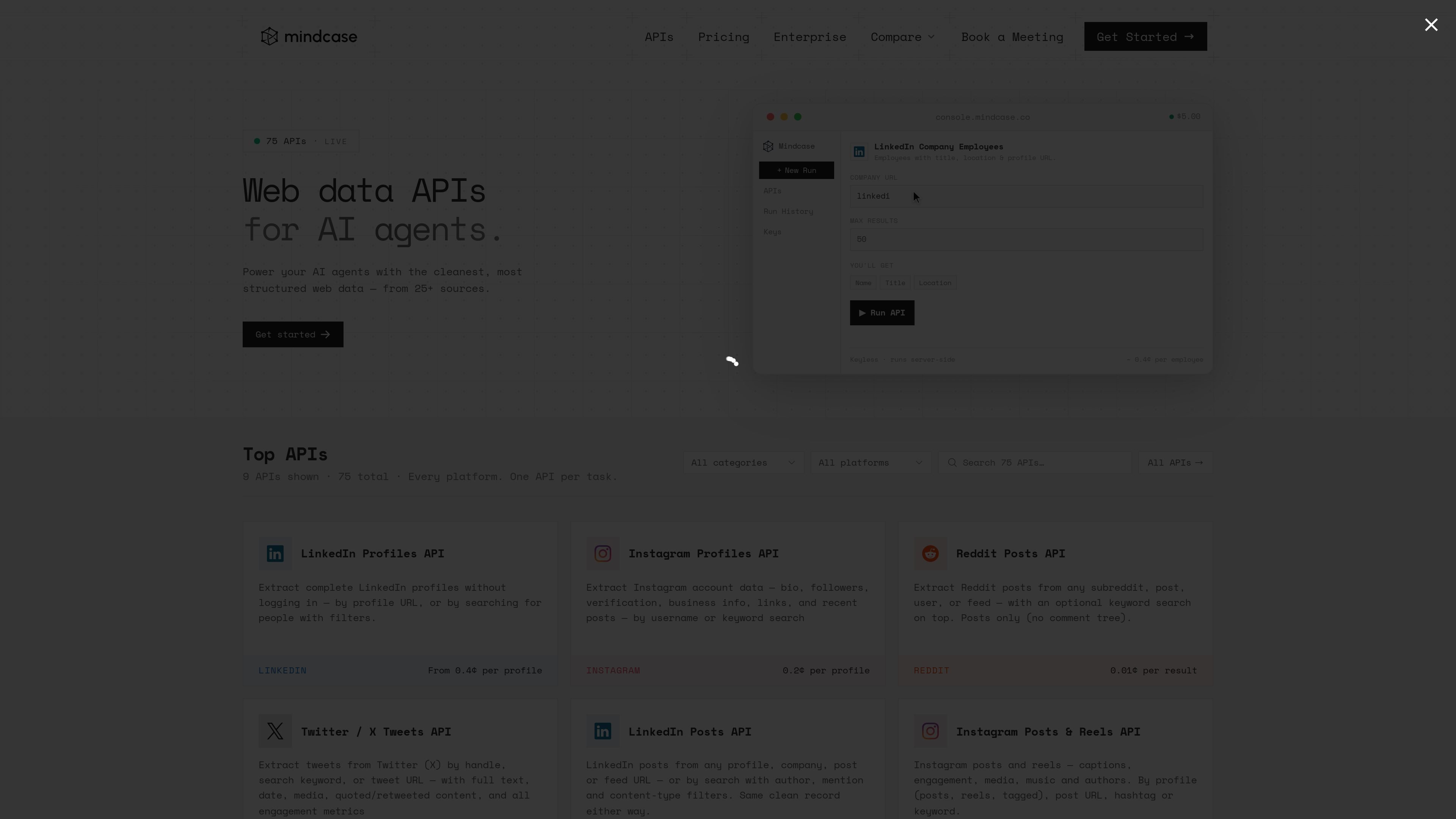
Mindcase is a web data platform for retrieving structured information from websites and online platforms. It offers prompt-based access and an API, with a catalog of pre-built scrapers for sources such as Amazon, LinkedIn, Google Maps, Instagram, Crunchbase, Reddit, Twitter/X, YouTube, and Facebook.
The product is designed for users who need clean rows of web data without building or maintaining their own scrapers. Its API documentation describes an asynchronous run-and-poll workflow, while the pricing page shows prepaid, per-record billing with no seats or recurring plan structure.
Mindcase exposes structured web data through either prompt or API usage, with a console for starting runs and managing access.
The site highlights 75+ pre-built scrapers across major sources including Amazon, LinkedIn, Google Maps, Instagram, Crunchbase, and others.
The API workflow is asynchronous: you start a job, poll for completion, and receive structured rows in the results response.
The skills file describes bearer-token authentication using a Mindcase API key for non-public endpoints.
Pricing is based on records returned from prepaid wallet credit, rather than seat-based plans.
Build agents or internal tools that need structured rows from platforms like LinkedIn, Google Maps, or Amazon without engineering and maintaining custom scrapers.
Pull source-specific records such as profiles, posts, places, reviews, or products into spreadsheets, databases, or downstream workflows.
Run repeatable data jobs where teams need a clear start, poll, and results pattern rather than manual browsing.
Use the console and API catalog to find the right task-specific agent before sending the required inputs and retrieving the output rows.
Mindcase provides structured web data through either prompt-based usage or its API. The site also offers a console for getting an API key and starting runs.
The pricing page says Mindcase is priced per record using prepaid wallet credit, with no plans, no seats, and no expiry on credits.
The site documents an asynchronous workflow for the API: start a run, poll for results, and then read the returned rows. The skills file notes that every call requires an API key.
The support page says users can contact support by email or phone, and for run-specific issues they should include the run ID.

ByteAsk is a terminal-first AI coding agent for C and C++ that edits repos and verifies changes with compilers, debuggers, sanitizers, and tests.

CreateOS Sandbox is an isolated compute environment for running code and agent workloads in Firecracker micro-VMs with private networking and SDK, CLI, or MCP control.

GitBot is a local browser workspace for reusable coding bots powered by Claude Code, Codex, or OpenCode, with persistent threads and configurable permissions.

hob is an independent workspace for coding agents, with local control over sessions, terminals, history, routing, and follow-up work.

Ably Chat is a chat API platform for custom realtime chat apps, with rooms, typing indicators, presence, reactions, message updates and usage-based pricing.

Manta AI is an autonomous web app testing tool that maps app behavior, catches regressions, and generates tests from a URL, no scripts or selectors needed.