
Open source SDKs and firmware
The open source device SDKs and firmware provide a starting point for building and customizing a Muse gadget.

Muse Gadgets offers open source SDKs and firmware to build custom devices with ESP32, Raspberry Pi, displays, audio, buttons, sensors, and more.
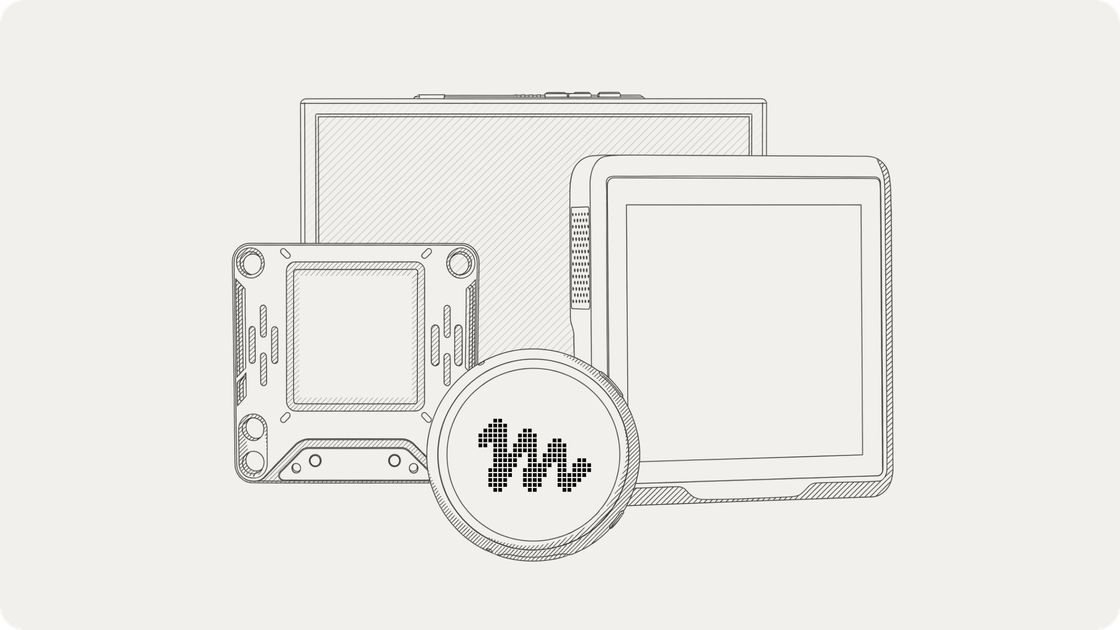
Muse Gadgets is an open source hardware project for connecting self-built devices to Muse. Instead of selling a single fixed gadget, it provides device SDKs and firmware that makers can use with an off-the-shelf ESP32 board, a Raspberry Pi, or another Linux computer.
The resulting gadget can combine Muse with physical interfaces such as displays, buttons, microphones, speakers, sensors, and actuators. Builders start with an SDK token and a project idea, configure the device, and customize the hardware or software for a particular interaction. The project also publishes example builds and invites contributors to share their designs through the community Discord and GitHub.
The open source device SDKs and firmware provide a starting point for building and customizing a Muse gadget.
Program an off-the-shelf ESP32 board to connect it to Muse, then add compatible peripherals such as displays, audio input and output, or sensors.
Use a Raspberry Pi or another Linux box as a Muse gadget and add custom commands for tasks such as interacting with Home Assistant or handling system administration chores.
Example projects cover screens, push-to-talk controls, speakers, microphones, buttons, LED status indicators, color e-ink displays, and other device components.
SDK tokens are added to the SDK configuration so a self-built gadget can pair with the Muse app.
The project is published under the Apache 2.0 license, allowing makers to inspect the source and contribute improvements back to the community.
Use a Raspberry Pi or Linux box to let Muse interact with Home Assistant or run custom system administration commands.
Build a compact voice interface with push-to-talk, a microphone, and a speaker, using example hardware such as the Waveshare ESP32-S3-Touch-AMOLED-1.75CA or Home Assistant Voice Preview Edition.
Add a display for status, images, briefings, reminders, shopping lists, or other information. The examples include color screens, a 1.75-inch AMOLED display, and an e-ink display.
Create a small desk or handheld companion with a button, screen, and audio output so Muse can respond physically rather than only through the app.
Develop a new board integration or modify an existing project, then publish the source and a short demonstration for other community members to build on.
Muse Gadgets are open source devices that you build yourself. The site describes two SDK paths: an ESP32 Device SDK for compatible ESP32 boards and a Linux Device SDK for a Raspberry Pi or another Linux box.
Start by obtaining an SDK token, selecting a project idea or supported board, and adding the token to the SDK configuration. The token lets a gadget pair with the Muse app.
The ESP32 SDK can connect a board to Muse and support additions such as a screen, audio input and output, or other sensors. The Linux SDK can turn a Raspberry Pi or Linux computer into a gadget with custom commands.
An SDK token is required for gadgets built with the Muse Gadget SDK, and each token can be used by a limited number of devices. The SDK is intended for personal tinkering rather than a supported product or developer platform, and may change or stop working without warning.

ByteAsk is a terminal-first AI coding agent for C and C++ that edits repos and verifies changes with compilers, debuggers, sanitizers, and tests.

CreateOS Sandbox is an isolated compute environment for running code and agent workloads in Firecracker micro-VMs with private networking and SDK, CLI, or MCP control.

GitBot is a local browser workspace for reusable coding bots powered by Claude Code, Codex, or OpenCode, with persistent threads and configurable permissions.

hob is an independent workspace for coding agents, with local control over sessions, terminals, history, routing, and follow-up work.

Ably Chat is a chat API platform for custom realtime chat apps, with rooms, typing indicators, presence, reactions, message updates and usage-based pricing.

Manta AI is an autonomous web app testing tool that maps app behavior, catches regressions, and generates tests from a URL, no scripts or selectors needed.