

Atyla
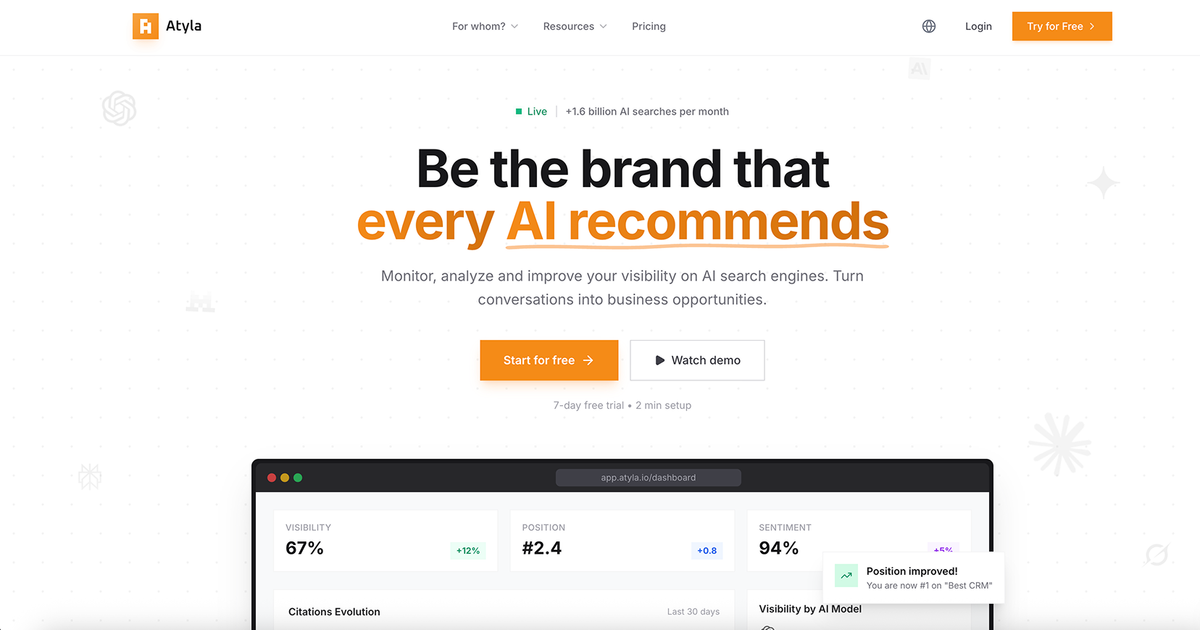
Atyla is a GEO platform that monitors and improves brand visibility on AI answer engines like ChatGPT, Perplexity, Gemini and Claude.
What is Atyla?
Atyla is a GEO (Generative Engine Optimization) platform designed to monitor and improve a brand’s visibility in AI search and answer engines. It tracks how often and where AI models mention a brand, and turns those signals into audits and actions aimed at increasing the likelihood of being cited.
The core purpose of Atyla is to help teams measure AI presence across multiple models (including ChatGPT and others) and to analyze which prompts, sources, and citation patterns influence AI answers—so brands can improve content and positioning before they are outranked in AI results.
Key Features
- Prompt tracking (set up prompts to monitor): Organize the prompts that matter to your AI search strategy, including using AI-suggested prompts and search volumes to prioritize opportunities.
- Multi-model visibility tracking: Monitor rankings and presence across AI engines/models such as ChatGPT, Perplexity, Gemini, Claude, Grok, and more, so you can see where you rank on each platform.
- Competitor benchmarking (up to 5 competitors): Add brands to compare share of voice/visibility and receive alerts when positions change.
- Citations analysis (key sources): Identify sources that AI models cite for specific prompts (e.g., Reddit, Wikipedia, your site, competitor sites) and use that information to refine GEO strategy.
- Audit and GEO action plan: Run a site audit and receive concrete recommendations to be cited by AI engines, including article ideas, missing content to cover target prompts, and an editorial strategy.
How to Use Atyla
- Start a trial and complete the initial setup: Begin with the 7-day free trial (the site states a 2-minute setup) and use the prompts and configuration flow to define what you want to track.
- Add brand(s) and competitors: Configure your brand and (depending on plan) track competitor brands to establish benchmarks for visibility and share of voice.
- Track prompts across AI models: Run scans that measure presence/rankings on the AI engines you care about.
- Review citations and run an audit: Use citations analysis to understand the sources shaping AI answers, then generate a GEO action plan based on your website’s current coverage.
- Act on recommendations: Use the provided content and editorial guidance to address gaps in coverage and improve how your brand is referenced in AI responses.
Use Cases
- Monitor brand mentions across AI engines: Track whether ChatGPT and other AI models mention your brand for the prompts that reflect your market and offerings.
- Benchmark against competitors for AI share of voice: Compare your AI visibility to specific competitor brands and get notified when your relative positions change.
- Find what sources AI models cite: Determine whether AI answers rely on sources like Reddit, Wikipedia, your site, or competitor sites, and adjust your content strategy accordingly.
- Generate content plans to earn citations: Use the GEO audit to identify missing content and receive article ideas and editorial structure recommendations intended to improve your chance of being cited.
- Align different teams around AI visibility: Use the platform outputs (prompt rankings, citations, and action plans) to coordinate marketing and content work around improving AI responses rather than only traditional search.
FAQ
-
What is GEO (Generative Engine Optimization)? GEO refers to improving visibility in generative AI answer engines by tracking prompts, AI model rankings/mentions, and citations, then taking actions to increase the likelihood of being referenced.
-
Which AI engines does Atyla track? The site lists monitoring for ChatGPT, Perplexity, Gemini, Claude, Grok, and more.
-
Can I try Atyla for free? Yes. The website states a 7-day free trial with no credit card required.
-
How quickly can I start using the platform? The site states 2-minute setup for the free trial.
-
What outputs does Atyla provide besides rankings? In addition to prompt/model visibility, Atyla provides citations analysis and a GEO action plan that includes recommendations such as article ideas and missing content to improve citation likelihood.
Alternatives
- Traditional SEO platforms: Tools focused on ranking in web search (“blue links”) rather than citations and prompt-based visibility in AI answer engines.
- Brand monitoring/CRM-focused suites: Platforms that manage marketing or customer data may help with outreach and reporting, but they typically don’t specialize in measuring prompt-driven AI citations across multiple models.
- General AI search analytics tools: Alternative tools may track mentions or visibility signals in AI contexts, but may differ in whether they provide GEO-style prompt/citation analysis and an actionable audit.
- Content and knowledge optimization workflows: Approaches centered on publishing and updating content (without dedicated AI citation/prompt tracking) can improve relevance, but usually require more manual analysis to connect content changes to AI engine citations.
Alternatives

PromptScout
PromptScout tracks how your brand is mentioned, which competitors are recommended, and what sources are cited in AI answers—plus website audits.

ClayHog
ClayHog tracks AI Search Visibility & GEO—see what ChatGPT, Gemini, Perplexity, Claude, and Google AI Overviews say about your brand, incl. citations and sentiment.

beehiiv
beehiiv is an all-in-one newsletter and website platform with publishing, growth, analytics, and monetization tools for creators and brands.

Skayle
Skayle is a fully automated content and visibility engine that runs search-powered research before writing to help brands rank on Google and AI search.

SaveMRR
SaveMRR scans Stripe billing data to find SaaS MRR leaks and help recover failed payments, save cancellations, and win back churn—60-sec Free Revenue Scan.

Sleek Analytics
Lightweight, privacy-friendly analytics with real-time visitor tracking—see where visitors come from, what they view, and how long they stay.