

Gigacatalyst
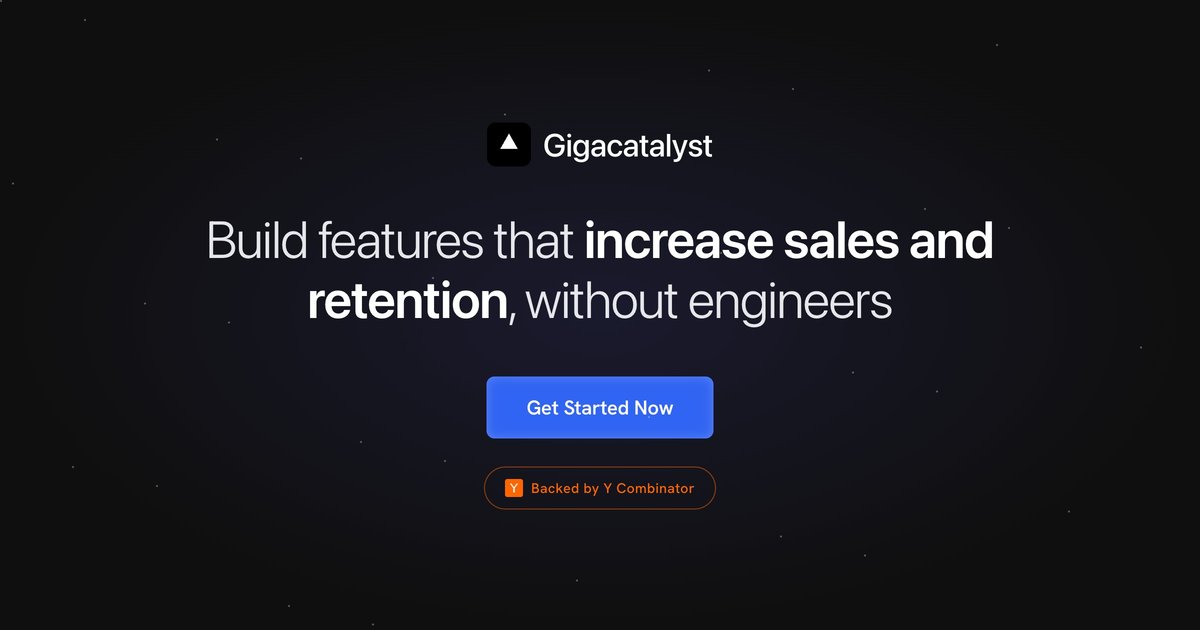
Gigacatalyst is a white-label AI builder for SaaS that lets customers create custom apps, workflows, dashboards, and automations inside your product.
What is Gigacatalyst?
Gigacatalyst is a white-label AI builder for SaaS products. It is designed to be embedded into an existing application so customers can create their own workflows, apps, dashboards, and automations using the product's APIs and design language.
The platform is positioned as an AI customization layer for software companies that want to let customers request and build tailored functionality without engineering involvement from the vendor. It supports natural-language interaction, built-in sharing and access control, and governed execution through the host platform's security model.
Key Features
- Embedded AI builder for SaaS products — teams can add Gigacatalyst inside an existing product rather than sending users to a separate tool.
- API-aware generation — the builder trains on the host product's APIs and design language so generated functionality fits the existing application structure.
- Natural-language workflow creation — customers can describe what they need in plain language and have the system generate apps, dashboards, reports, or automations.
- Sharing and app distribution — built experiences can be shared internally, across workspaces, or through a built-in app store-style publishing flow.
- Role-based access and guardrails — the product supports reusable roles, scoped permissions, secret handling, and operational guardrails for actions.
- Identity and access integration — it can connect to an existing auth provider so access management remains aligned with the host product.
- Model controls and policy settings — teams can restrict which AI models are available and set spend or usage guardrails.
How to Use Gigacatalyst
A software company typically embeds the Gigacatalyst builder into its SaaS product and connects it to existing APIs and authentication. After setup, internal teams or end customers describe the workflow they want, and the builder generates a working app, dashboard, or automation that uses the product's underlying data and actions.
Administrators can then control who can view, edit, share, or execute those experiences, and can apply policy limits to actions or model usage. The product is intended to work as part of the vendor's existing application rather than as a separate implementation platform.
Use Cases
- Custom customer workflows inside a SaaS app — a customer asks for a tailored process, and the product generates a workflow that matches their internal operations without requiring a separate software build.
- Customer success and implementation teams — non-engineering teams can assemble requested features or solutions faster when clients need something specific to their account or process.
- Dashboards and business intelligence — users can query data with natural language and generate formatted dashboards or reports instead of configuring filters manually.
- Manual process automation — teams still using spreadsheets, macros, or repetitive internal forms can turn those tasks into guided workflows inside the product.
- Shared internal tools with access control — organizations can publish custom tools for coworkers or other workspaces while keeping permissions, roles, and credentials controlled.
FAQ
How is Gigacatalyst integrated?
The source describes a white-glove installation that takes about two days and works on top of existing APIs. It is intended to be embedded into the host product.
Does it require engineering work from the vendor's team?
The page says the goal is to avoid engineering work from the vendor's side during implementation, with Gigacatalyst handling the technical setup.
What kinds of outputs can users create?
Examples on the page include apps, dashboards, automations, reports, and custom workflow tools.
How does access control work?
The source mentions workspace roles, scoped access, shared credentials, secrets, and guardrails, plus integration with an existing auth provider.
What does pricing look like?
Pricing is not listed publicly on the page. The site says pricing depends on expected usage and that interested customers should contact the company for a custom quote.
Alternatives
- Low-code application builders — a common alternative when teams want to create custom tools, but they typically require learning a separate platform and maintaining custom logic.
- Internal tool builders — products in this category help teams assemble dashboards and workflows quickly, but they are usually separate from the SaaS product itself rather than embedded for end customers.
- Custom engineering projects — a traditional build approach offers maximum flexibility, but it usually requires developer time and longer delivery cycles.
- AI assistant layers for SaaS — adjacent tools may add chat or copilots to a product, while Gigacatalyst focuses on generating functional, customer-specific workflows and app experiences within the host SaaS.
Alternatives
FigPrompt
FigPrompt is an AI Figma plugin builder that generates production-ready plugin logic from your description—no code, in seconds.

MakerLoft
MakerLoft is an AI app builder for non-developers that connects to your GitHub repo to generate working apps with auth, payments, files, jobs.

Rork
Rork creates complete, production-ready mobile apps from your description with AI and Expo (React Native)—from idea to working app fast.

Ably Chat
Ably Chat is a chat API and SDKs for building custom realtime chat apps, with reactions, presence, and message edit/delete.

Make Real
Draw a UI and make it real using the tldraw SDK.
AakarDev AI
AakarDev AI is a powerful platform that simplifies the development of AI applications with seamless vector database integration, enabling rapid deployment and scalability.