
Remembers what you said
Memmy reads local AI collaboration history and converts scattered chats, preferences, decisions, and technical notes into structured memory so you do not have to repeat them.

Memmy is a local-first AI agent that keeps shared long-term context on your device across AI tools, scanning authorized local chats and organizing memory.
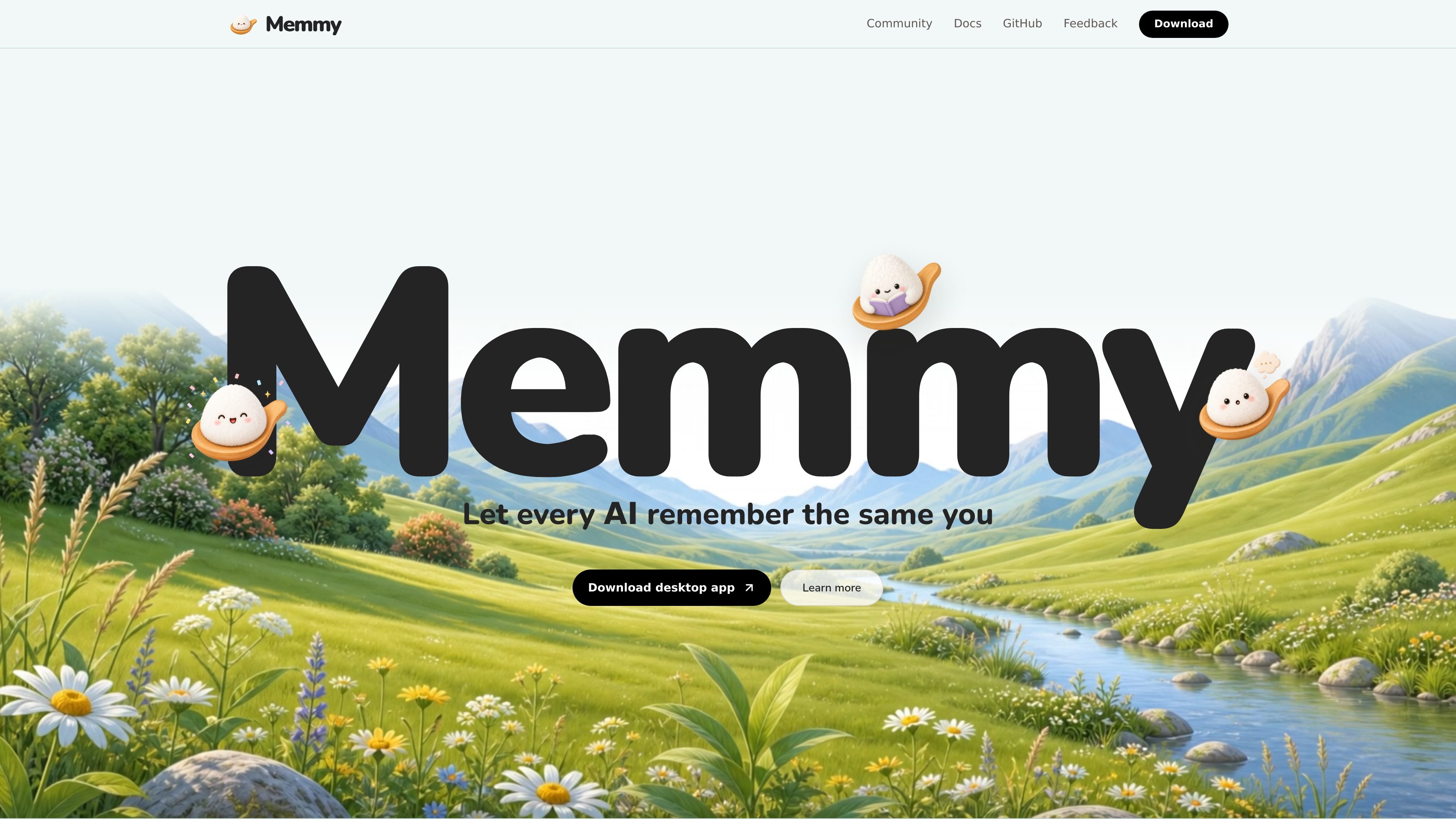
Memmy is a local-first AI agent built around a self-evolving memory foundation. It is designed to help people who use multiple AI tools keep the same long-term context across desktop apps, CLI workflows, and external agents.
The product scans authorized conversation history from local AI tools such as Cursor, Claude, and Codex, then turns that history into structured memory that can be injected back into whichever tool you are using. The stated goal is to preserve preferences, decisions, project background, and pitfalls without requiring users to repeat themselves.
Memmy reads local AI collaboration history and converts scattered chats, preferences, decisions, and technical notes into structured memory so you do not have to repeat them.
When you move between tools, Memmy passes the most relevant context forward so project background and progress stay available across your workflow.
Memmy can be given tasks directly, including organizing material, merging plans, and continuing unfinished work instead of only storing notes.
The organizer step deduplicates, categorizes, and makes memory searchable, which helps turn raw chat history into something easier to reuse.
Memmy keeps memory data on your own device and does not upload it to a remote server, according to the site.
You control authorization, revocation, source access, and the amount of context passed to each agent.
Keep project decisions, style preferences, and technical choices available when moving between AI tools during the same project.
Turn scattered collaboration history into organized memory that can be searched and reused later instead of rereading old chats.
Hand Memmy tasks like merging plans, organizing material, or continuing unfinished work when you want the agent to act on remembered context.
Preserve your preferred tone, constraints, and workflow rules so you do not need to restate them in every new session.
Memmy scans conversation history from local AI tools on your device after you authorize it. It then organizes that history into structured memory that can be reused across tools.
The source mentions desktop app use and shows downloads for macOS and Windows. It also describes Memmy as a local-first AI agent with a CLI and external agents sharing long-term context, but does not provide detailed setup documentation here.
Memmy is designed for people who work with several AI tools and want the same preferences, decisions, and project context to carry across them.
Memmy is free and open source, according to the site, and the pricing page highlights a free trial with 2 million tokens tied to GPT-5.6 Luna. The site does not provide full pricing detail in the collected text.
The site says all memory stays local, scans require explicit authorization, and you can view, delete, or disable memory sources at any time.

Goldfish is an AI memory app for macOS that helps you reply, write, summarize, and continue with context already on your Mac. It stores memory locally and writes in your tone.

Redline is a budgeting tool for Claude Code that paces sessions by time, tokens, cost, or plan percentage, helping them end with a usable result.

Macuse is a macOS app that lets AI assistants control native Mac apps through MCP and use Computer Use for any app, with on-device automation.

Dcyde is a shared decision log for product teams to capture what was decided, why, and the source, with searchable records from Slack, Figma, or Dcyde.

ByteAsk is a terminal-first AI coding agent for C and C++ that edits repos and verifies changes with compilers, debuggers, sanitizers, and tests.

Lasso is an ecommerce product data platform for enriching catalog records, processing supplier files, generating product content, and tracking competitors. It includes a web app, REST API, SDK, and MCP server.