

Outpost
Outpost is open-source infrastructure to reliably deliver application events to webhooks and queues—available as managed service or self-hosted Go/Docker.
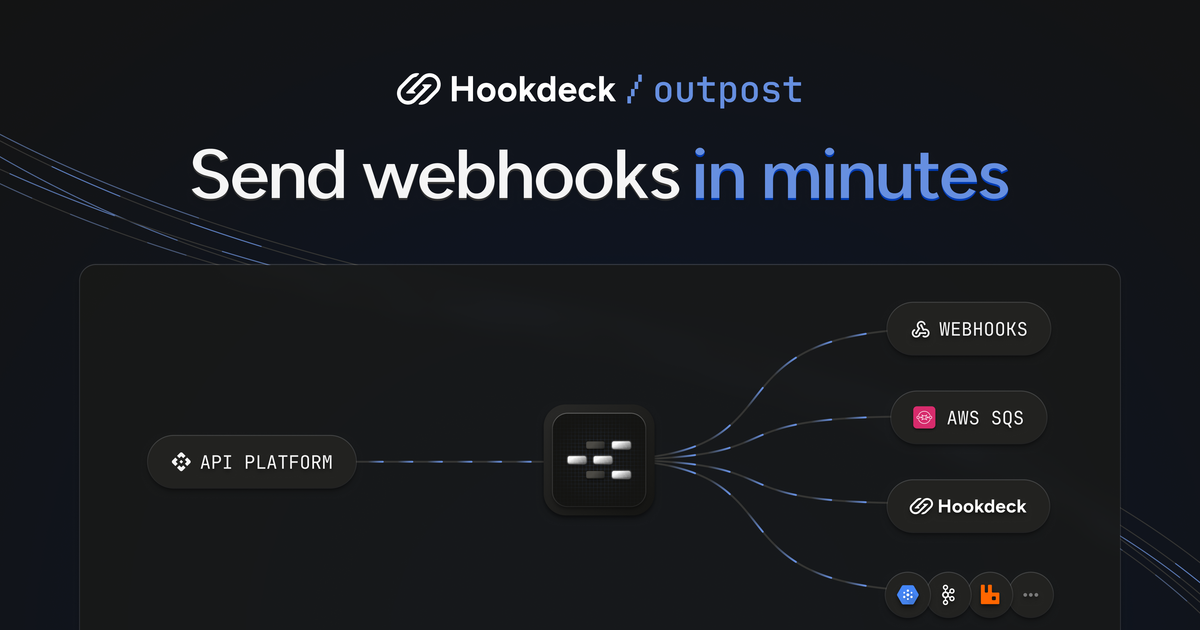
What is Outpost?
Outpost is open-source infrastructure for delivering events to user-preferred destinations such as outbound webhooks and several event/queue systems. It’s designed to help applications send event notifications reliably, with a focus on reducing operational complexity compared with building and maintaining webhook delivery logic yourself.
Outpost can be used either as a managed service by Hookdeck or self-hosted from open-source code. Its core purpose is outbound event delivery: you publish events and Outpost routes them to configured destinations using topics/subscriptions and delivery guarantees.
Key Features
- At-least-once delivery guarantees: Messages are delivered at-least-once, aiming to prevent lost events.
- Topic-based subscriptions: Publish/subscribe patterns to make it easier to map event types to destinations.
- Automatic and manual retries: Configure automatic retries, or trigger retries via an API or the user portal.
- Multiple delivery destinations: Support for webhook delivery plus event destinations such as AWS SQS, RabbitMQ, Pub/Sub, EventBridge, Kafka, and more (as listed on the page).
- Multi-tenant support: Run multiple tenants on a single Outpost deployment.
- Developer portal and destination controls: View metrics and manage, debug, and observe event destinations.
- OpenTelemetry support: Includes OpenTelemetry traces, metrics, and logs.
- Idempotency and delivery headers: Provides idempotency headers, timestamps, and signatures (including signature rotation), with an opt-out mechanism.
- Deploy your way (managed or self-hosted): Delivered as a Go binary or Docker image for self-hosting; the same Outpost is used whether managed or self-hosted.
How to Use Outpost
- Choose a deployment model: Start with the managed service (“Get started”) or run the open-source self-hosted version using the provided distribution (Go binary or Docker image).
- Define destinations: Configure one or more delivery targets (for example, a webhook endpoint, or a queue/bus destination).
- Set up topics and subscriptions: Create mappings between event topics (event types) and which destinations should receive them.
- Publish events: Send events using the Outpost API or by publishing into a queue that Outpost can read from.
- Operate and troubleshoot: Use the user portal to observe delivery metrics, manage destinations, and trigger retries when needed.
Use Cases
- Reliable outbound webhook delivery for app events: Route application events (e.g.,
user.created,order.created) to webhook destinations with at-least-once delivery and retries. - Queue-based publishing to decouple producers from delivery: Publish events into a queue and configure Outpost to read from it, then deliver to downstream systems.
- Fan-out across multiple event destinations: Send the same or related event topics to different destinations (e.g., a webhook plus a message queue/bus) using topic/subscription configuration.
- Multi-tenant event delivery: Serve multiple tenants from one Outpost deployment, isolating delivery configuration per tenant.
- Debugging and operational visibility for event plumbing: Use the portal to track destination status and delivery outcomes, and use manual retries when failures occur.
FAQ
-
Can I run Outpost myself, or do I need the managed service? Outpost is available as both a managed service and as open-source software for self-hosting.
-
How does Outpost handle retries? It supports automatic retries and also allows manual retries via an API or the user portal.
-
What delivery guarantee does Outpost provide? The page states that messages are delivered at-least-once.
-
Does Outpost provide observability features? Yes. It includes OpenTelemetry support for traces, metrics, and logs, and it provides a developer portal for metrics and destination observation.
-
How does Outpost sign and secure deliveries to webhooks? The page mentions timestamp and signature headers (with signature rotation) and idempotency headers, along with an opt-out mechanism.
Alternatives
- Roll your own webhook dispatcher: Build custom webhook delivery, retries, and security. This shifts the operational and reliability burden onto your application team.
- Generic event/queue systems without an outbound delivery layer: Use platforms that store/transport events (queues or buses) and implement your own consumer logic to push to webhooks/destinations.
- Other managed webhook/event delivery services: Use a hosted service that routes events to webhook endpoints; compare based on how they handle retries, delivery guarantees, and multi-destination delivery.
- Self-hosted event routing components: Look for open-source or self-hostable components focused on event routing from producers to destinations, especially those with subscription/topic semantics and operational tooling.
Alternatives

OpenFlags
OpenFlags is an open source, self-hosted feature flag system with a control plane and typed SDKs for progressive delivery and safe rollouts.

BenchSpan
BenchSpan runs AI agent benchmarks in parallel, captures scores and failures in run history, and uses commit-tagged executions to improve reproducibility.

Rectify
Rectify is an all-in-one operations platform for SaaS, combining monitoring, analytics, support, roadmaps, changelogs, and agent management—via conversation.

Sleek Analytics
Lightweight, privacy-friendly analytics with real-time visitor tracking—see where visitors come from, what they view, and how long they stay.

Codex Plugins
Use Codex Plugins to bundle skills, app integrations, and MCP servers into reusable workflows—extending Codex access to tools like Gmail, Drive, and Slack.

MacSpoof
MacSpoof is a macOS MAC address changer that lets you change or randomize your Wi‑Fi MAC to reconnect and limit device logging on public Wi‑Fi.