

Self-AI
Self-AI is an AI talent co-pilot (“Talent OS”) that supports organizational hiring and performance decisions with bias reduction and prediction.
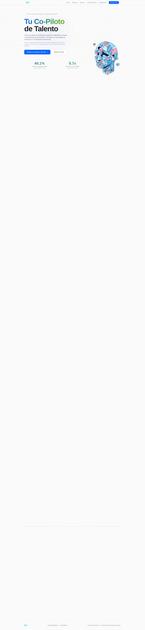
What is Self-AI?
Self-AI (Self-AI | Talent OS) is an AI-driven talent decision support system aimed at helping organizations make hiring and performance-related decisions using “science” and to reduce bias. The product positions itself as a co-pilot for talent workflows—supporting predictions of performance and helping teams apply more consistent decision-making.
From the provided page text, Self-AI is designed to be used within an organization to improve how talent decisions are made, with an emphasis on bias elimination and performance prediction.
Key Features
- Talent decision support using AI: Guides talent-related decisions with AI assistance rather than relying only on manual judgment.
- Bias reduction focus: Aims to eliminate or reduce bias in talent decisions as part of its core value proposition.
- Performance prediction: Supports forecasting or predicting performance as an input to talent decision-making.
- “Talent OS” co-pilot framing: Presents the product as an operating layer for talent processes, meant to assist users throughout their workflow.
How to Use Self-AI
- Use Self-AI as your talent co-pilot to support ongoing talent decisions in your organization.
- Apply it during decision points (for example, when evaluating candidates or assessing performance) to leverage AI-driven prediction and bias-reduction goals.
- Review outputs as decision support—the product is described as helping teams make decisions based on AI rather than replacing organizational judgment.
Use Cases
- Hiring and selection support: Use AI-backed performance prediction to inform screening or evaluation steps during candidate assessment.
- Performance evaluation workflows: Apply predictions to support performance-related decisions within ongoing talent management.
- Bias-aware decision processes: Use the product’s stated bias-reduction intent to help standardize how decisions are made across a team.
- Talent operations coordination: Operate Self-AI as a “Talent OS” co-pilot to keep talent decision-making more consistent across different decision stages.
FAQ
What does Self-AI do? Self-AI is an AI-driven co-pilot for talent decision-making, focused on bias reduction and performance prediction to support organizational decisions.
Who is Self-AI for? The page describes it as something used by organizations to improve talent decisions; it is therefore geared toward people involved in HR/talent operations and related decision workflows.
How does Self-AI help with bias? The page states that Self-AI aims to eliminate bias in talent decisions, but it does not provide technical details on the method.
Does Self-AI focus on hiring, performance, or both? Based on the page text, it is tied to talent decisions and includes “predicting performance,” which suggests applicability to both hiring/evaluation and performance-related decisions.
Where can Self-AI be used in the talent workflow? The product is framed as a talent co-pilot within a “Talent OS,” indicating it is intended to support decision points across talent processes; the specific workflow steps are not detailed on the provided content.
Alternatives
- General-purpose AI decision support tools: Broader AI platforms that can assist with analysis and recommendations, but may not be specialized for talent workflows or bias-focused design.
- HR analytics and talent management suites: Platforms focused on HR reporting and analytics; they may support performance assessment and structured processes without using an AI co-pilot framing.
- Recruiting/workforce planning platforms with predictive analytics: Tools that predict candidate or workforce outcomes; they can be used for similar goals (prediction and structured evaluation) depending on feature coverage.
- AI-enabled HR workflow automation tools: Solutions that streamline HR processes; they may improve consistency and execution, though they may vary in their ability to explicitly target bias reduction and performance prediction.
Alternatives

Ranpo AI
Ranpo AI offers automated risk assessment for rental listings, helping property managers and landlords identify potential issues before they arise. It streamlines the screening process by analyzing various data points to ensure tenant suitability and property safety.

PromptScout
PromptScout tracks how your brand is mentioned, which competitors are recommended, and what sources are cited in AI answers—plus website audits.

SaveMRR
SaveMRR scans Stripe billing data to find SaaS MRR leaks and help recover failed payments, save cancellations, and win back churn—60-sec Free Revenue Scan.

Sleek Analytics
Lightweight, privacy-friendly analytics with real-time visitor tracking—see where visitors come from, what they view, and how long they stay.

Struere
Struere is an AI-native operational system that replaces spreadsheet workflows with structured software—dashboards, alerts, and automations.

ClayHog
ClayHog tracks AI Search Visibility & GEO—see what ChatGPT, Gemini, Perplexity, Claude, and Google AI Overviews say about your brand, incl. citations and sentiment.