

sitefire.ai
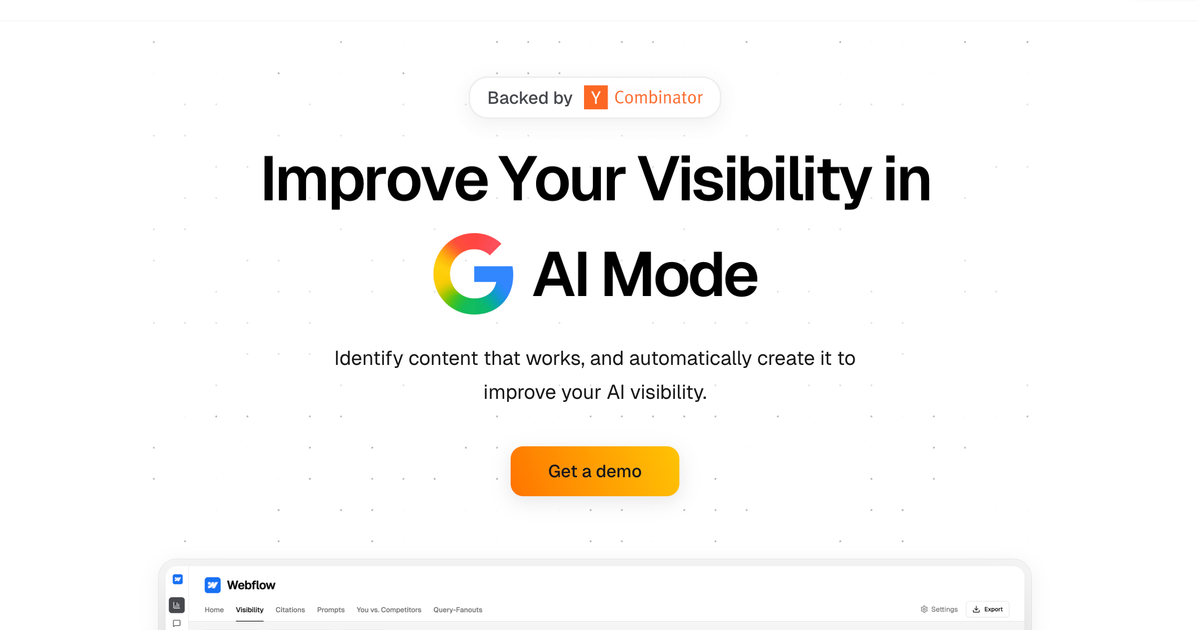
sitefire.ai helps marketing teams monitor brand visibility and AI citations across major models, then create AI-optimized, on-brand CMS-ready content.
What is sitefire.ai?
sitefire.ai is a marketing suite for “agentic” web and AI search. It helps teams check how visible their brand is in AI answers (across ChatGPT, Gemini, Perplexity, and other AI models), identify which of their content pages are cited, and create on-brand, ready-to-publish content based on what performs in AI discovery.
The core purpose is to turn AI visibility research into actionable recommendations and CMS-ready landing pages, with ongoing tracking of brand mentions and AI citations over time.
Key Features
- AI visibility monitoring by model/topic: Check brand visibility in multiple AI experiences (listed as ChatGPT, Gemini, Perplexity, DeepSeek, Claude, and Grok) to understand where your brand appears.
- Top-cited content identification: Find the highest-cited content by domain type and URL, helping you locate the pages that AI systems reference.
- Sitemap-aware page performance and citation mapping: Determine which site pages are being cited, using sitemap-aware insights.
- Topic-level brand mention visibility: For each topic, see which brands are mentioned in AI search results.
- On-page intelligence for new coverage: Target “author” mentions and other dynamics (including “power dynamics” tied to journalist content preferences) to surface materials and angles that align with how third parties respond.
- Optimized content creation and CMS-ready outputs: Create on-brand articles optimized for AI, using research of top-cited pages, fanout-query SERPs, and grounding; integrate with Webflow and Framer to publish.
- Progress tracking and attribution: Track changes in visibility and citations over time, including page attribution for modified or newly created pages.
- Planned analytics integrations: GA4 and CDN network logs are listed as coming soon for localized tracking across major AI models.
How to Use sitefire.ai
- Start with an AI visibility check for your brand to see where you’re referenced across supported AI models.
- Review top-cited content by domain type and URL, using sitemap-aware citation insights to understand which of your pages are already being used.
- Choose a topic and create content: use the platform’s recommendations (based on top-cited pages and research signals) to generate on-brand articles optimized for AI.
- Publish via your CMS through supported integrations (currently Webflow and Framer), then track how citations and brand positioning evolve.
Use Cases
- Audit brand presence in AI answers: A marketing team can review AI visibility to learn where the brand is mentioned and which topics produce the strongest or weakest coverage.
- Diagnose which website pages drive AI citations: Use top-cited content and sitemap-aware citation mapping to determine which URLs are contributing to AI discoverability.
- Plan new AI-optimized landing pages: Based on research of top-cited pages and fanout-query SERPs, generate on-brand articles and landing pages targeted to AI discovery.
- Improve third-party outreach materials: Use author targeting and “power dynamics” guidance tied to journalist content preferences to select data-driven, high-leverage angles for pitches.
- Measure impact of content updates: Track visibility and citations over time, including attribution for modified or newly created pages to connect changes to outcomes.
FAQ
Which prompts or topics should I monitor?
The platform is designed to monitor the prompts and topics that relate to your brand’s AI discovery. The FAQ questions indicate users often ask which prompts to monitor, but no specific selection rule is provided on the page.
How many prompts should I monitor?
The site lists this as a common customer question, but it does not provide a fixed number or rule in the provided content.
Will AI-optimized (“GEO”) content affect existing SEO?
This is listed as a frequently asked question. The provided page does not include an explicit answer, so you’ll need to confirm details with the sitefire team.
Can I track ROI from changes to specific pages?
The platform includes page attribution and ongoing tracking of brand visibility and citations over time, which supports measuring the impact of modified or newly created pages.
Does sitefire.ai integrate with my CMS?
Yes. Integrations are mentioned for Webflow and Framer (with additional integrations noted as coming soon).
Alternatives
- Content performance and SEO analytics platforms: Tools that focus on search rankings, traffic, and on-page SEO can help with traditional discovery but typically don’t provide AI-model-specific visibility and citation tracking across ChatGPT/Gemini/Perplexity.
- AI search optimization tooling (without content generation): Some solutions focus on monitoring AI search presence or tracking mentions, but may not create on-brand, CMS-ready content or map citations to your sitemap URLs.
- Marketing suites with CMS publishing workflows: Platforms that support content creation and publishing can replace the CMS delivery part of the workflow, but they may not include top-cited AI research, citation attribution, and AI-specific brand visibility tracking.
Alternatives

PromptScout
PromptScout tracks how your brand is mentioned, which competitors are recommended, and what sources are cited in AI answers—plus website audits.

ClayHog
ClayHog tracks AI Search Visibility & GEO—see what ChatGPT, Gemini, Perplexity, Claude, and Google AI Overviews say about your brand, incl. citations and sentiment.

beehiiv
beehiiv is an all-in-one newsletter and website platform with publishing, growth, analytics, and monetization tools for creators and brands.

Skayle
Skayle is a fully automated content and visibility engine that runs search-powered research before writing to help brands rank on Google and AI search.

SaveMRR
SaveMRR scans Stripe billing data to find SaaS MRR leaks and help recover failed payments, save cancellations, and win back churn—60-sec Free Revenue Scan.

DailyPlay.ai
Turn passive visitors into loyal customers with DailyPlay.ai—create personalized, data-driven mini games built for your brand’s engagement goals.