
Song and recording search
Search by song title and review matching recordings, artists, albums, and years before selecting a result.

Lyra explains song meanings, stories, themes, and context, helping you find recordings, explore lyric references, and discover related songs with AI-generated insights.
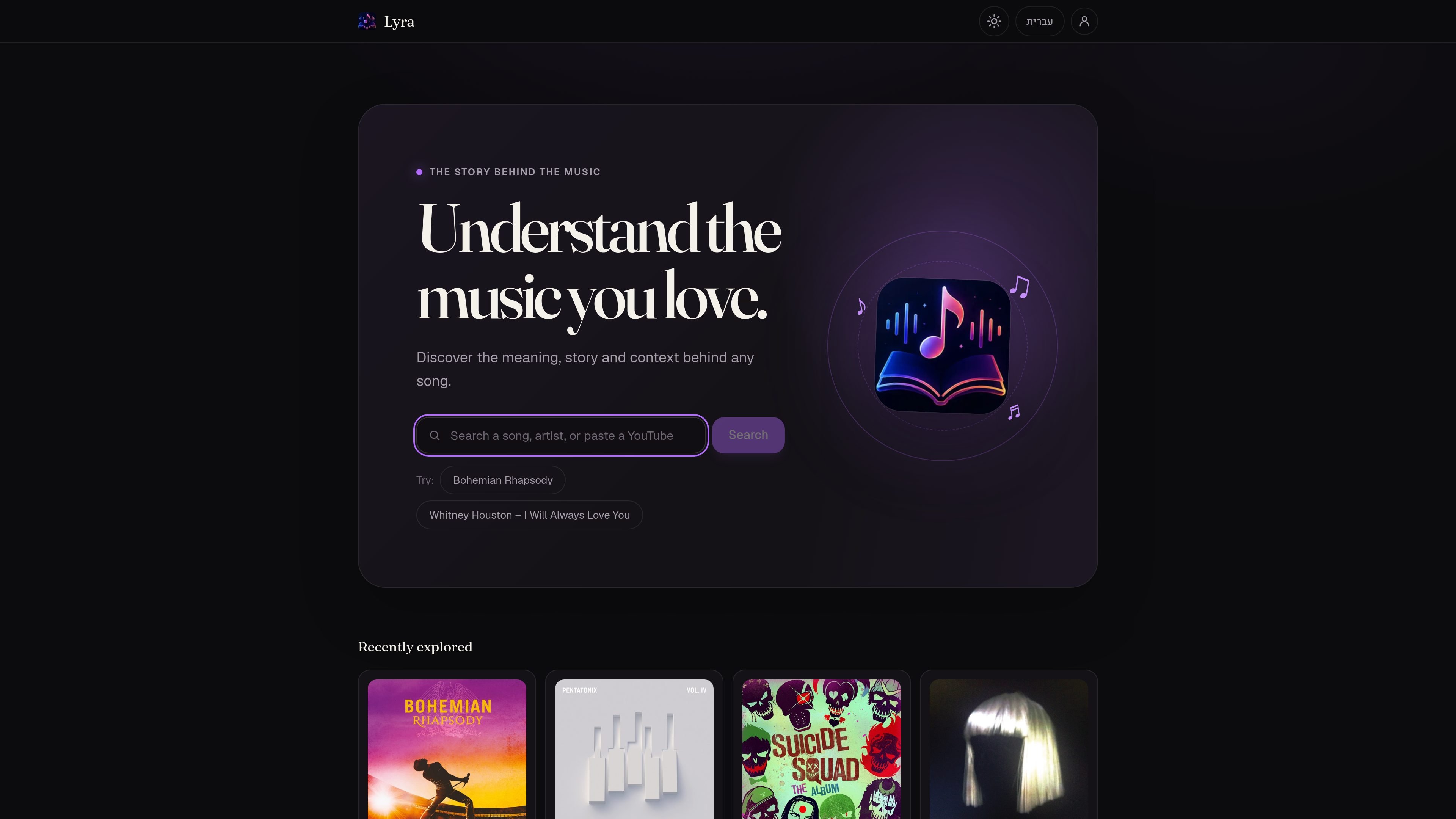
Lyra is a web-based song-interpretation tool for people who want more context around music they are listening to. Users can search for a song, distinguish between recordings or artists with the same title, and open a dedicated page describing its meaning and story.
Song pages combine a short “what’s this song about?” explanation with sections for themes, emotional tone, deeper interpretation, and metaphors or references. The examples cover both a Queen live recording and Sia’s “Chandelier,” and also provide related songs based on meaning. Lyra identifies the interpretations as AI-generated and notes that they can contain mistakes, so the pages are best treated as contextual reading rather than definitive artist commentary.
Search by song title and review matching recordings, artists, albums, and years before selecting a result.
Read a concise answer to the question of what a selected song is about before exploring the longer analysis.
Explore themes, emotional tone, story, and deeper interpretation to see multiple perspectives on a song’s meaning.
Review explanations of notable lyrics, metaphors, and references, with the quoted or referenced line connected to an interpretation.
Open related songs grouped by similar meaning, helping users continue discovery beyond the current track.
Interpretations are identified as AI-generated, with a visible warning that the output may contain mistakes.
Search a familiar track and use the short summary, themes, and emotional tone to understand a song without starting with a long critical essay.
Compare versions when a title appears under several artists, albums, or recordings, then open the specific result that matches the music you mean.
Use the deeper interpretation and metaphor sections as a starting point for discussing lyrics, narrative, symbolism, or emotional themes.
Follow similar-meaning songs from a detail page to explore a thematic path rather than relying only on artist or genre recommendations.
Read the song’s story, themes, and references as background for personal listening, informal study, or cultural conversation while keeping the AI disclaimer in mind.
Lyra lets you search for a song and choose among matching recordings or artists before opening an interpretation page. The available examples show searches by song title, including multiple versions of “Bohemian Rhapsody.”
A song page can include a short explanation of the song’s subject, themes, emotional tone, a deeper interpretation, metaphors and references, and similar-meaning songs. Some pages also show recording and album information.
Lyra labels its interpretations as AI-generated and states that they may contain mistakes. The product also presents fact and interpretation as separate kinds of information in its site disclaimer.
The supplied site content does not document team workspaces, collaboration features, integrations, supported platforms beyond the web experience, or pricing and plan limits.

ClayHog is an AI search visibility platform for tracking brand presence in ChatGPT, Gemini, Perplexity, Claude, and Google AI Overviews from one dashboard.

Grok is a free AI assistant developed by xAI, engineered to prioritize truth and objectivity while offering advanced capabilities like real-time information access and image generation.

qbrin is an enterprise AI search and governed agent platform that turns company knowledge into cited answers and can abstain when evidence is missing.

Octen is a search infrastructure for AI apps needing live web context, structured answers, and retrieval tools via API, SDKs, Skills, MCP, and CLI.

Scite is an AI research platform for finding papers, checking citation context, and getting answers grounded in scholarly literature and patents.

AI-driven wiki aggregator created to enhance user experience on Wikipedia by streamlining knowledge consumption.