

NVIDIA Nemotron 3 Ultra
NVIDIA Nemotron 3 Ultra is an open 550B-parameter Mixture-of-Experts model for long-running agent workflows, with reasoning, context retention, and open weights.
What is NVIDIA Nemotron 3 Ultra?
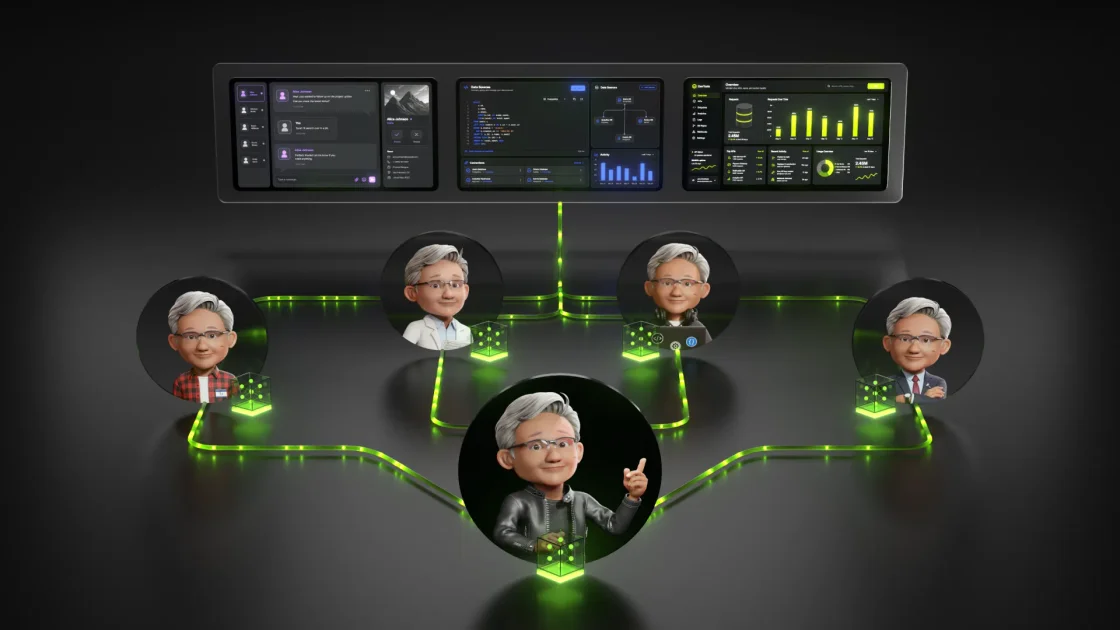
NVIDIA Nemotron 3 Ultra is an open 550B-parameter Mixture-of-Experts model with 55B active parameters, designed for long-running agent workflows. It is positioned for agent orchestration tasks that require sustained reasoning, tool use, context retention, and efficient execution across many turns.
The model is intended to help developers split agent systems into different layers of work: frontier reasoning for complex planning and more efficient execution for high-volume calls, validation, and tool use. NVIDIA says Nemotron 3 Ultra combines architectural changes for long-context handling, faster inference, and open training recipes so teams can adapt and fine-tune it for domain-specific needs.
Key Features
- 550B-parameter Mixture-of-Experts architecture with 55B active parameters, giving the model large capacity while only using a subset of parameters per token.
- Built for agent orchestration, including planning, reasoning over long workflows, and handling repeated tool calls across many turns.
- Hybrid Mamba-Transformer layers for more efficient long-context processing, which is relevant for agents that must retain and use extended conversation or task history.
- NVFP4 quantization support for cross-architecture GPU deployment, with NVIDIA describing up to 5x higher throughput compared with other open models in its class.
- LatentMoE expert routing and multi-token prediction to improve generation efficiency in multi-turn tasks.
- Multi-Teacher On-Policy Distillation using feedback from more than ten domain-specific teacher models, supporting specialization and continuous improvement.
- Open weights, open recipes, and licensing designed to make the model easier to adopt, evaluate, and fine-tune.
How to Use NVIDIA Nemotron 3 Ultra
Teams would typically use Nemotron 3 Ultra as the reasoning layer in an agent system, especially when tasks require long-horizon planning or careful synthesis of information. A practical setup would pair it with smaller, efficient models for routine tool calls, retrieval steps, validation, or other high-volume operations.
To get started, developers would evaluate it on the workflows they need to automate, then adapt it through fine-tuning or domain-specific training if their use case requires specialized behavior. Because NVIDIA emphasizes open weights and recipes, the model is aimed at teams that want to inspect, adapt, and deploy it within their own infrastructure and agent pipelines.
Use Cases
- Orchestrating coding agents that must preserve architectural decisions across long development sessions.
- Synthesizing contradictory evidence from many research sources into a single reasoning trace or answer.
- Verifying complex constraints, such as chip design requirements or other technical systems with many dependencies.
- Running long-horizon enterprise workflows where repeated planning, tool use, and validation can increase token cost and latency.
- Supporting domain-specific agent behavior where developers want to fine-tune an open model using transparent training recipes.
FAQ
Is Nemotron 3 Ultra a chatbot model or an agent model? It is presented as an open model for long-running agent workflows rather than a simple single-turn chatbot.
What makes it different from smaller efficient models? The source positions it as the reasoning and orchestration layer for harder calls, while smaller models can handle routine execution, validation, and tool calling.
Does NVIDIA describe support for long-context use? Yes. The article highlights hybrid Mamba-Transformer layers and a long-context benchmark result, indicating focus on extended workflow handling.
Can teams adapt the model for their own domain? The source says it comes with open recipes, weights, and licensing intended to support adoption and fine-tuning.
What deployment performance claim is made? NVIDIA says it achieves up to 5x higher throughput compared with other open models in its class, and that NVFP4 enables cross-architecture GPU deployment.
Alternatives
- Other large open Mixture-of-Experts reasoning models: these are similar when the main need is high-capacity reasoning and open model access, though individual training methods and throughput vary.
- Smaller efficient models for tool use and validation: these are better suited to high-volume execution tasks, but they are not positioned as the primary orchestration layer for difficult reasoning.
- Proprietary frontier reasoning models: these may offer strong planning and answer quality, but they may not provide the same openness in weights, recipes, or fine-tuning workflow.
- General-purpose long-context language models: these can handle extended inputs, but they may not be optimized specifically for agent orchestration, MoE routing, or the throughput profile described here.
Alternatives

AakarDev AI
AakarDev AI is a powerful platform that simplifies the development of AI applications with seamless vector database integration, enabling rapid deployment and scalability.

Arduino VENTUNO Q
Arduino VENTUNO Q is an edge AI computer for robotics, combining AI inference hardware and a microcontroller for deterministic control. Arduino App Lab-ready.

Devin
Devin is an AI coding agent that helps software teams complete code migrations and large refactoring by running subtasks in parallel.

BenchSpan
BenchSpan runs AI agent benchmarks in parallel, captures scores and failures in run history, and uses commit-tagged executions to improve reproducibility.

open-codex-computer-use
open-codex-computer-use is an open-source “Computer Use” MCP server that lets AI agents run desktop GUI actions on macOS, Linux, and Windows.

Codex Plugins
Use Codex Plugins to bundle skills, app integrations, and MCP servers into reusable workflows—extending Codex access to tools like Gmail, Drive, and Slack.