
Five-layer GEO analysis
The audit reviews your site against five GEO layers. The blog identifies those layers as crawlability, entity clarity, content citability, third-party presence, and structured data.

Seviq AI is a one-time GEO audit that shows why AI search ignores your product and what to fix, with a scored report, guidance, outreach targets, and copyable fixes.
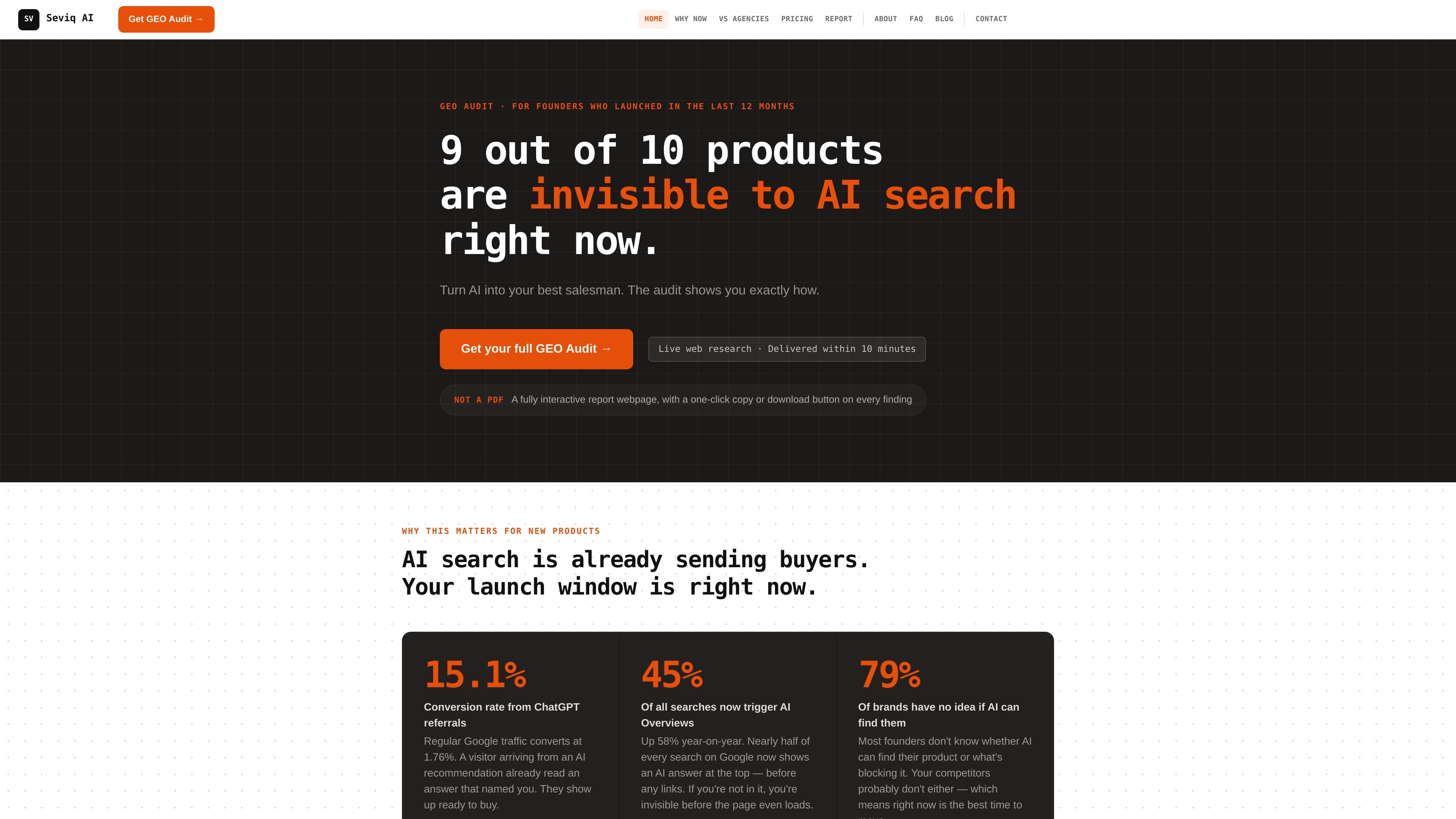
Seviq AI is a one-time GEO audit for founders who want to understand why AI search is not citing their product and what to change first. The homepage positions it as a self-serve report for products launched in the last 12 months, with an emphasis on AI search visibility rather than general SEO.
The report reviews a product site across five GEO layers and returns a scored, evidence-based breakdown of what is missing, which sources AI already trusts in the category, and the fixes needed to improve discoverability. It is delivered as an interactive webpage within minutes of purchase, with findings that include copyable code, outreach drafts, and platform-specific implementation guidance.
The audit reviews your site against five GEO layers. The blog identifies those layers as crawlability, entity clarity, content citability, third-party presence, and structured data.
Each finding is tied to your actual domain and includes evidence for why it was flagged. The homepage says the report is scored and explains how the score is calculated.
The product surfaces exact fixes under each finding, including code you can paste into the site head, outreach copy, and platform-specific steps for Framer, Webflow, or Squarespace.
The homepage says the report identifies articles AI already trusts in your category, names the writers, and provides a personalized outreach pitch for each one.
The report is delivered as an interactive webpage with copy or download buttons on each finding, not as a static PDF.
The audit is designed to run automatically after checkout and arrive within 10 minutes, so founders can start implementing changes the same day.
A founder can use the audit to identify why a newly launched product is not appearing in AI answers and get a prioritized list of technical and content signals to change.
A small team can use the cited findings and copyable fixes to update metadata, structured data, and page signals without hiring an agency for the initial investigation.
A founder trying to earn mentions in trusted category sources can use the writer-targeted outreach suggestions to contact the specific articles AI already cites.
A product team comparing agency help with a one-off audit can use the report as a lower-cost starting point before deciding whether ongoing support is needed.
It is a one-time GEO audit for a single product URL. The homepage says you paste your URL, pay once, and receive the report for that domain.
The report is described as a fully interactive webpage rather than a PDF. It includes expandable findings, cited evidence, and copy or download buttons on each fix.
The homepage says the audit checks your site across five areas AI cares about. The blog names those layers as crawlability, entity clarity, content citability, third-party presence, and structured data.
The homepage says the report is delivered within 10 minutes after payment and runs automatically on your domain.
The site positions the product for founders who launched in the last 12 months. It is presented as a self-serve audit, with instructions for implementing fixes yourself using your site’s code, outreach copy, and platform-specific steps.

PromptScout tracks how ChatGPT, Gemini, Google AI Overviews, and Perplexity mention your brand or competitors, with source analysis and website audits.

ClayHog is an AI search visibility platform for tracking brand presence in ChatGPT, Gemini, Perplexity, Claude, and Google AI Overviews from one dashboard.

beehiiv is a newsletter platform for creators, publishers, and brands to build, grow, and monetize email newsletters and websites in one place.

Skayle researches topics, publishes structured CMS content, and tracks AI search citations for teams needing one system for visibility.

SaveMRR is a Stripe retention tool for SaaS teams to scan churn and MRR leaks, then automate recovery with dunning, cancel-save offers, win-back emails, and onboarding nudges.

Hype is a web tool for finding trending YouTube topics by category, time range, and scoring mode. Spot emerging ideas and review source videos.