

Willow Voice
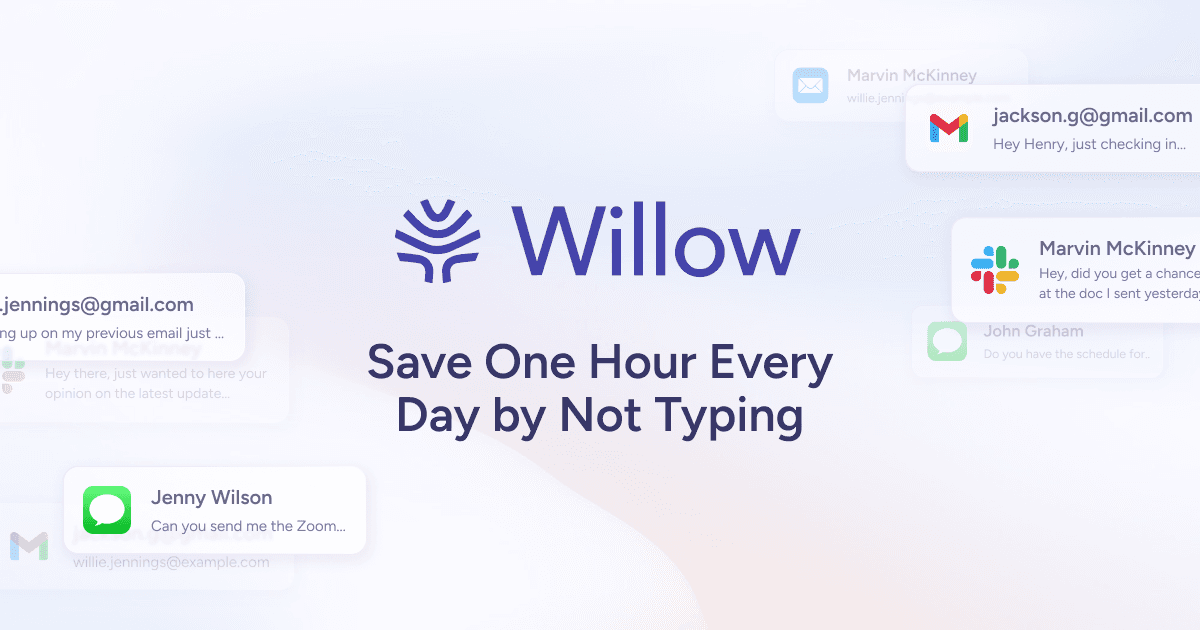
Willow Voice is an AI speech-to-text dictation tool for Mac, Windows, and iPhone—turn spoken words into editable text for emails, documents, notes.
What is Willow Voice?
Willow Voice is a dictation (speech-to-text) tool that lets you turn spoken words into editable text on your computer or iPhone. The core purpose is to help you produce writing—such as emails and documents—by speaking naturally and then working with the resulting text.
On the website, Willow is presented as available on Mac, Windows, and iPhone, with a simple workflow: press a hotkey, speak, and get “perfect text” to edit and reuse.
Key Features
- Hotkey-based dictation workflow: start dictation by pressing a hotkey, then speak to generate text without manually switching modes.
- Speech-to-text conversion for practical writing: converts spoken input into text suitable for everyday writing tasks (e.g., email and documents).
- Automatic text editing: the site states that text appears and can be edited automatically after you speak.
- Context-aware AI: described as “context-aware,” intended to help the output match what you’re trying to write.
- Custom dictionaries: the site mentions custom dictionaries to influence how terms are captured and rendered in dictation.
How to Use Willow Voice
- Download Willow Voice for your device (the site offers Mac, Windows, and iPhone options).
- Start dictation by pressing the hotkey.
- Speak naturally what you want to write.
- Review the generated text and edit it as needed before sending, saving, or pasting it into your workflow.
Use Cases
- Email drafting: dictate replies and full emails, then edit the text before sending.
- Document and note creation: speak content for long-form documents or notes and then refine the text afterward.
- Messaging and chat replies: use dictation to respond quickly in messaging apps (the site references WhatsApps and Slack in user quotes).
- Developer or technical writing: draft messages or written responses where you need speed and iteration, including working from dictated content into documents.
- Writing assistance with custom terms: use custom dictionaries when you have names, jargon, or recurring phrases you want dictated text to handle more consistently.
FAQ
- Which devices does Willow Voice support? The website states Willow is available for Mac, Windows, and iPhone.
- How do I start dictating? The site describes a three-step workflow: press a hotkey, speak, and then use the resulting text.
- Does Willow produce text that I can edit? Yes—text appears after dictation, and the site mentions automatic editing of the output.
- Can I improve accuracy for specific words? The site mentions custom dictionaries, which suggests you can add terms so they appear correctly in dictation.
- Is Willow only for emails? No. The site references emails, documents, note-taking, and messaging as supported writing contexts.
Alternatives
- Built-in OS dictation (macOS/iOS/Windows speech-to-text): These are free and already installed, but they may be less tailored to a specific writing workflow (hotkey-driven dictation and custom dictionaries aren’t guaranteed).
- General-purpose speech-to-text apps: Standalone dictation tools can convert speech to text for writing, though the workflow and editing experience may differ.
- Writing-focused AI assistants with voice input: Some tools support speech entry or drafting, but they may position themselves more around generation than dictation and editing.
- Captioning/transcription services: These are often aimed at turning audio into transcripts; they can be useful for writing from recordings, but dictation workflows for real-time drafting may differ.
Alternatives

Sanota
Sanota turns your voice into clear, beautiful text—capture memories and ideas easily, then start for free.

Carbon Voice
Carbon Voice is an asynchronous voice messaging app for teams with people and AI agents, plus transcribed updates, voice or text replies, and desktop, mobile, watch, and widget access.
Speech to Text Converter Online
A free online tool that converts audio and video files into accurate text transcripts in over 45 languages. It supports numerous file formats and requires no downloads or sign-ups.

Dictato
Dictato is an offline voice-to-text dictation app for macOS that transcribes on-device and inserts into any app you type in. No cloud.

LIAM
LIAM is an AI copilot that drafts email replies, organizes your inbox with auto-labels and prioritization, and schedules meetings from your calendar.

Tavus
Tavus builds AI systems for real-time, face-to-face interactions that can see, hear, and respond, with APIs for video agents, twins & companions.