
Label ingredient scanning
Reads ingredients, additives, E-numbers, and nutrition values from packaged food labels so the analysis is based on the full label, not just the front-of-pack claims.
LabelLens scans packaged food labels from a photo or upload and gives a nutrition score with a plain-English breakdown of ingredients, additives, and key values.
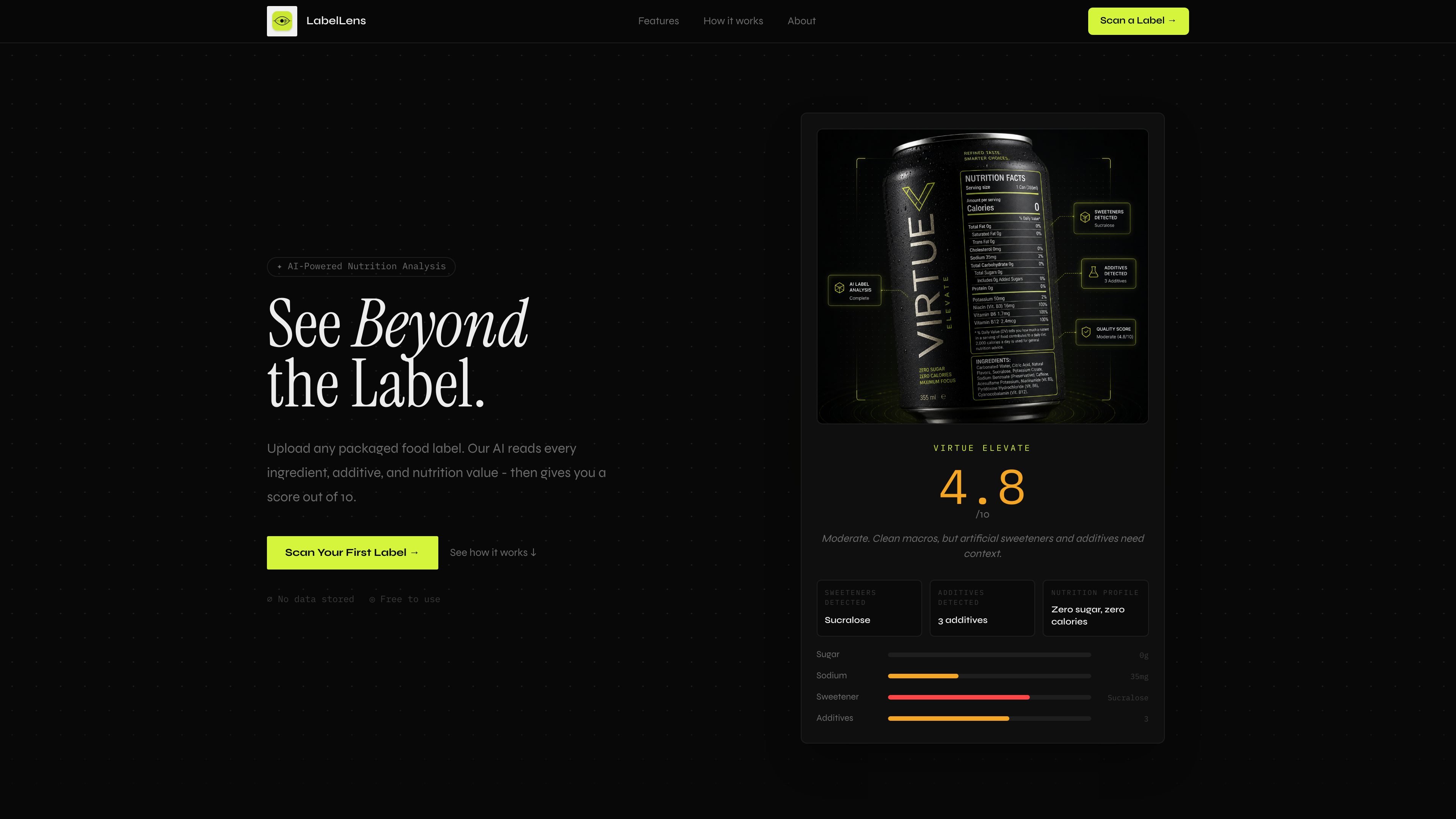
LabelLens is an AI-powered nutrition analysis tool for packaged food labels. It lets you point a camera at the back of a package or upload an image, then reads the ingredient list and nutrition panel to produce a score out of 10.
The product is designed to explain what is in a food item in plain English. Its output combines a numeric rating with notes about beneficial and concerning ingredients, plus a short verdict that helps users judge whether a product looks like an everyday option or an occasional treat.
Reads ingredients, additives, E-numbers, and nutrition values from packaged food labels so the analysis is based on the full label, not just the front-of-pack claims.
Breaks down sugar, sodium, fat, protein, and fiber in plain language to show how the numbers fit together.
Flags artificial colors, flavor enhancers, preservatives, and WHO-listed harmful chemicals when they appear on the label.
Returns a 1-10 score calibrated to nutritional guidelines, along with a verdict that explains what the scan means.
Processes scans quickly and presents the result in under 5 seconds according to the site.
States that images are never saved and that analysis is real-time and ephemeral.
Useful when you want to understand a packaged snack before buying or eating it and need more than a front-of-pack claim.
Helpful for comparing similar products, such as cereals or crackers, when you want to see which one has a cleaner label or less sodium.
Works as a way to inspect ingredients, sweeteners, and additives in a specific food item and decide whether it fits your preferences.
Can help shoppers or families interpret nutrition panels quickly without reading every line of the label themselves.
Supports fast, one-off scans when you only need a quick verdict and do not want to create an account.
LabelLens scans a packaged food label from a camera photo or uploaded image, then returns a nutrition score with a breakdown of ingredients, additives, and nutrition values.
The source shows scanning from a camera photo or by uploading an image from your gallery. It does not mention a separate desktop app or manual data entry flow.
The product says it provides a 1-10 rating with a plain-English verdict and a breakdown of what is good, what to avoid, and the nutrients it found.
The site states that images are not saved and that analysis is real-time and ephemeral.
The available sources do not show detailed pricing tiers, limits, or team features. The pricing page exists, but the captured text does not expose plan details.

Munch is a social app for food and recipes to discover, share, and organize recipes in one place, with AI formatting and ingredient scanning.

Malyatko is a baby tracker for feeding, sleep, growth, teething, and milestones. Use it on iPhone, Apple Watch, and widgets offline, with iCloud sharing.
MIRA vision develops synthetic-data-driven AI for pathology image analysis, with privacy-compliant training data, automatic annotations and controlled data generation.

Snapmark is a VS Code extension for annotating clipboard screenshots before pasting them into AI chats. Blur sensitive details, add numbered callouts, and auto-resize large images.

Arduino VENTUNO Q is an edge AI computer for AI and robotics, combining AI inference and deterministic control on one board with Arduino App Lab support.
KlutterAI is an AI expense tracker for iOS and Android to capture receipts, organize spending, track budgets, surface recurring charges, and export reports.