
Real-time dashboard
See sales, delivery, workload, profitability, and alerts in a single command-center view so teams can spot issues and prioritize action.

LEAP is a cloud-based operating system for services businesses that connects CRM, ERP, sales, delivery, and finance in one platform. It helps teams manage work from lead to invoice to cash with real-time visibility and forecasting.
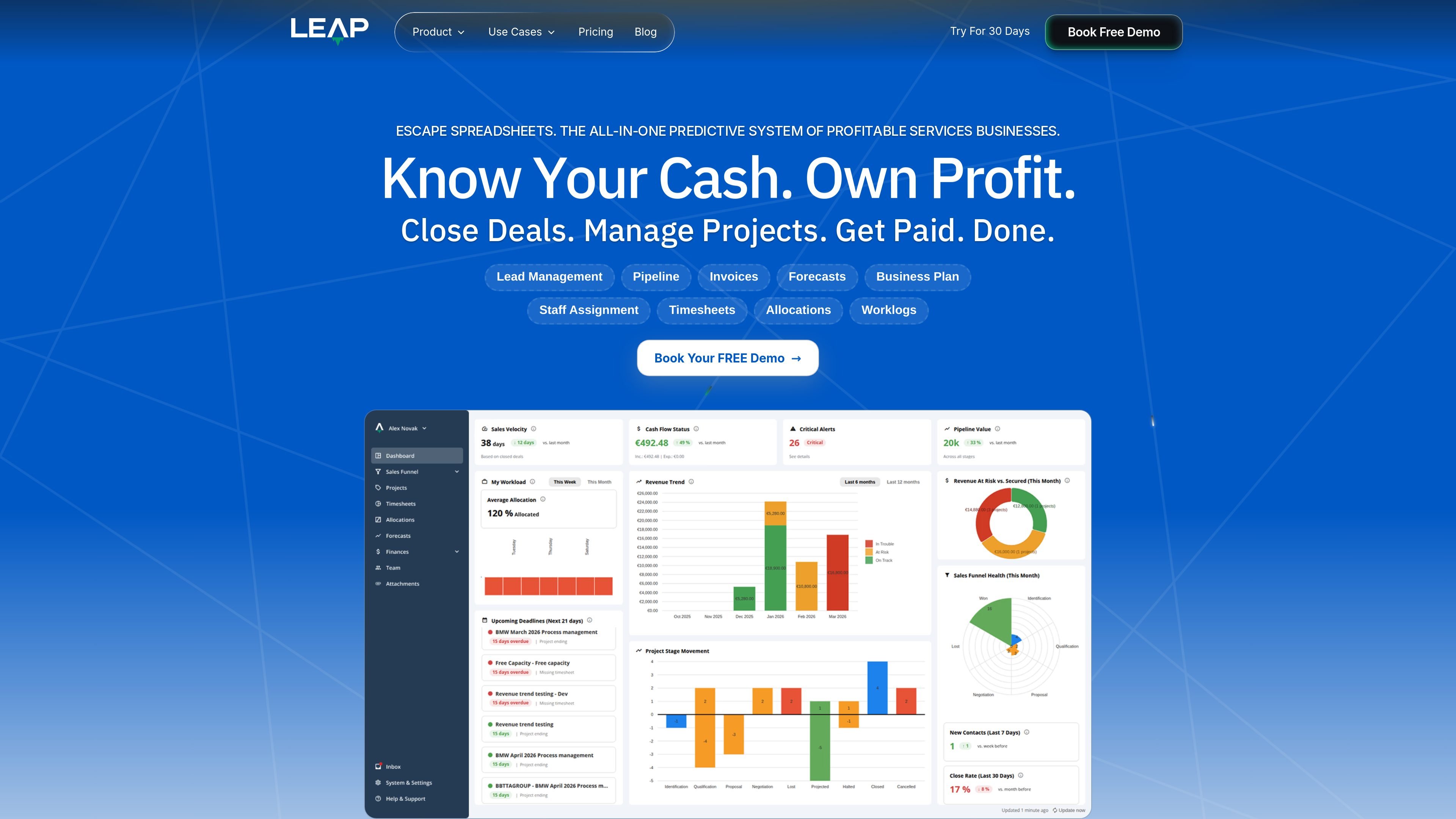
LEAP is a cloud-based operating system for services businesses that brings CRM, ERP, sales, delivery, and finance into one connected platform. The site presents it as a way to manage the full flow of work and revenue, from lead and pipeline activity through projects, invoicing, and cash.
Its core purpose is to give teams real-time visibility into what is on track, what is at risk, and where attention is needed. The product pages emphasize operational clarity, forecasting, and control for businesses that work with projects, shared resources, and changing scope.
See sales, delivery, workload, profitability, and alerts in a single command-center view so teams can spot issues and prioritize action.
Move prospects through a structured visual flow from inquiry to qualified opportunity, with role and stakeholder tracking plus handoff to pipeline and projects.
Track opportunities through each sales stage with live revenue totals and financial visibility from qualification through closed deal.
Create invoices from completed work with approvals, VAT handling, worklog-based billing, and traceability back to delivery.
Forecast revenue, compare forecasted and actual performance, and monitor budget sustainability with time- and role-based projections.
Plan staffing and allocations by role, define rates and time allocation, and connect resource decisions to revenue and cost impact.
Use LEAP to keep prospects, opportunities, and handoffs organized as leads move from first contact into pipeline and project delivery.
Use the dashboard, forecasting, and business plan views to review revenue, costs, and margin across active work and expected demand.
Use allocations, staffing, and time-linked financial views to assign people to roles, set rates, and understand the cost impact of resourcing choices.
Use worklogs, invoice generation, approval steps, and VAT handling to bill completed work with traceable links back to delivery.
Use the platform when you need one system for projects, delivery, finance, and reporting instead of separate CRM, billing, and planning tools.
LEAP is an operating system for services businesses that combines CRM, ERP, sales, delivery, and finance in one platform. It is built for teams that need visibility from lead through project delivery, invoicing, and cash collection.
The site positions LEAP for services businesses such as consulting firms, agencies, field service teams, project-based teams, and scaling organizations.
The pricing page offers a 30-day free trial with no card required, and the homepage also offers a free demo option. Enterprise buyers can contact sales for a custom package.
LEAP is described as replacing disconnected CRM, ERP, sales, delivery, and finance tools by connecting operational and financial data in one system.
The product pages describe enterprise-grade security, role-based access control, secure cloud architecture, and global data hosting with GDPR compliance.

PromptScout tracks how ChatGPT, Gemini, Google AI Overviews, and Perplexity mention your brand or competitors, with source analysis and website audits.

SaveMRR is a Stripe retention tool for SaaS teams to scan churn and MRR leaks, then automate recovery with dunning, cancel-save offers, win-back emails, and onboarding nudges.

Hype is a web tool for finding trending YouTube topics by category, time range, and scoring mode. Spot emerging ideas and review source videos.

Biji is a versatile platform designed to enhance productivity through innovative tools and features.

Sleek Analytics is a privacy-friendly web analytics tool with real-time visitor tracking, Core Web Vitals, and revenue attribution.

Struere turns spreadsheet data into structured operational software with dashboards, alerts, and automations for teams replacing manual spreadsheet workflows.