
Weekly goal-based iteration
Robynn sets a measurable goal on a page, measures it against your analytics, recommends changes, and repeats the cycle every seven days until the goal is reached.

Robynn AI audits pages, recommends changes, and publishes approved updates weekly for continuous website optimization using existing analytics and brand context.
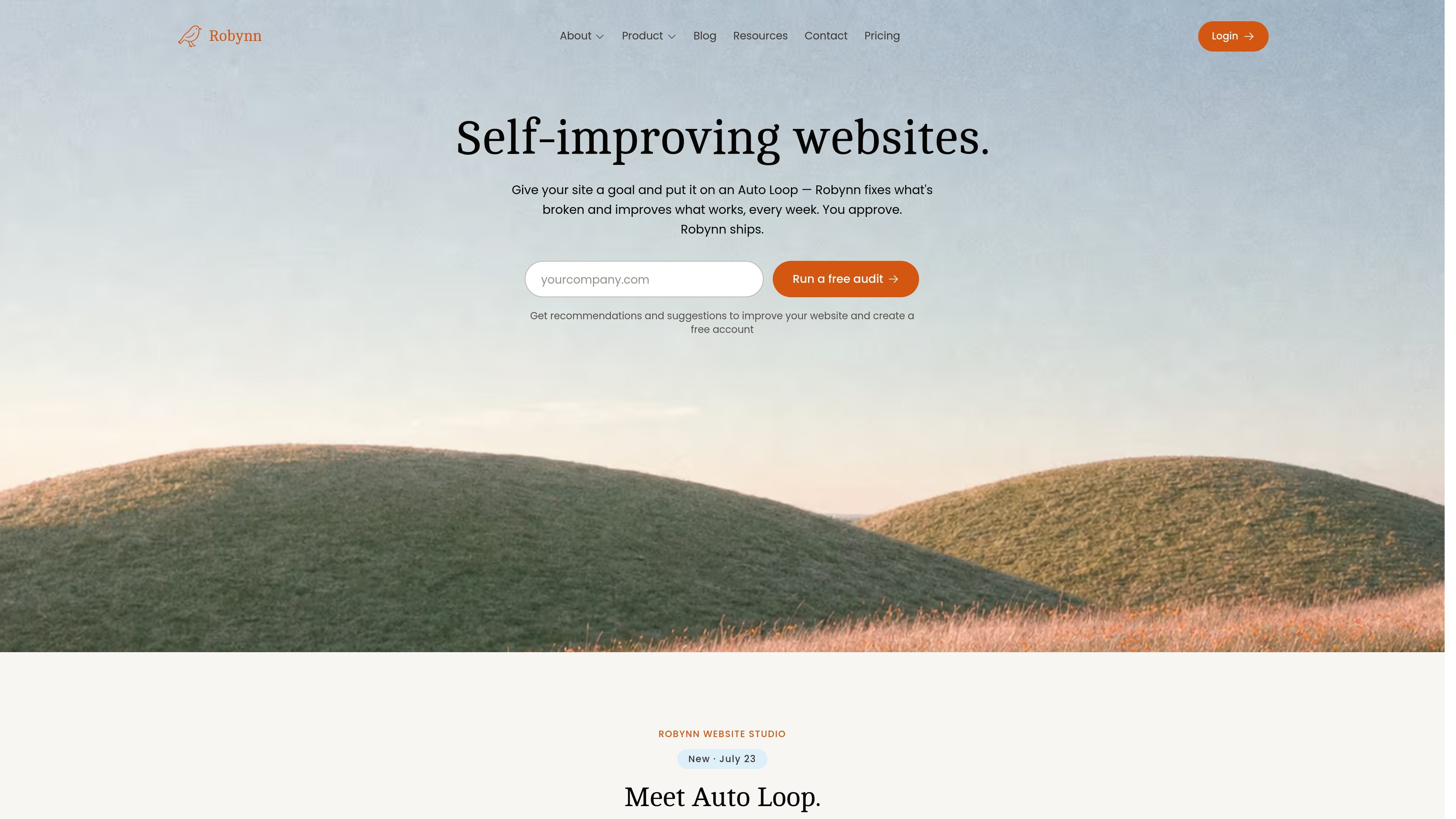
Robynn AI is a self-improving website platform built around an Auto Loop workflow. It gives a page a measurable goal, audits the page, recommends one approved change at a time, and publishes improvements on a weekly cycle using the site’s analytics and brand context.
The product is positioned for teams that want continuous website and marketing optimization without managing each iteration manually. The site says it can work with existing websites, installs with two lines of JavaScript, and supports common site platforms such as WordPress, Webflow, Next.js, Framer, Shopify, and custom CMS setups.
Beyond the website loop, Robynn presents itself as a broader marketing workspace with brand memory, connected tools, and specialist agents for research, writing, and analysis. The public pages also show a pricing structure built around tokens, a free audit, and paid plans for growing teams.
Robynn sets a measurable goal on a page, measures it against your analytics, recommends changes, and repeats the cycle every seven days until the goal is reached.
The workflow is approval-based: Robynn prepares a single change with a reason, and nothing is published until you approve it.
The product installs with two lines of JavaScript and is described as working without migration, which makes it easier to add to an existing site.
The site says Robynn can audit and improve inbound work across SEO, GEO, landing pages, lifecycle nurture, and attribution from one loop.
Robynn builds context from connected tools such as HubSpot, Salesforce, Notion, Drive, and Google Analytics, using that brand memory in future work.
The home page says the platform coordinates specialist agents for research, writing, and analysis so work can be handled across web, Slack, and mobile.
Set a measurable goal on a landing page, such as sign-ups or conversions, and let Robynn propose one change per week based on analytics evidence.
Use the audit flow to find page-level issues and create an improvement queue before a site redesign or campaign launch.
Give a marketing team one workspace for brand memory, research, writing, and analysis so ongoing website and content work can move through the same approval loop.
Connect existing tools like HubSpot, Salesforce, Notion, Drive, and Google Analytics to keep recommendations grounded in current brand and performance context.
Apply the platform to inbound work such as SEO, GEO, lifecycle nurture, and attribution where continuous updates and measurement matter.
No. The site says you can run a free audit without signing up, then create an account if you want to review proposed fixes, connect your site, and keep improving.
Robynn says Auto Loop measures a page against your analytics, recommends changes, and then iterates every seven days until the goal is reached, with nothing published without your approval.
The source describes a free audit, a free tier, and paid plans. Pricing is presented in tokens, with additional tokens available as add-ons, but plan details should be checked on the pricing page for current limits.
The site positions Robynn as a website and marketing workflow product that installs with two lines of JavaScript and also connects tools like HubSpot, Salesforce, Notion, Drive, and Google Analytics for read-only context.
The getting started page says Robynn works with WordPress, Shopify, and custom sites, with Webflow and Framer coming soon. The home page also mentions WordPress, Webflow, Next.js, Framer, and any CMS.

beehiiv is a newsletter platform for creators, publishers, and brands to build, grow, and monetize email newsletters and websites in one place.

PromptScout tracks how ChatGPT, Gemini, Google AI Overviews, and Perplexity mention your brand or competitors, with source analysis and website audits.

ClayHog is an AI search visibility platform for tracking brand presence in ChatGPT, Gemini, Perplexity, Claude, and Google AI Overviews from one dashboard.

findloc.ai publishes local AI reports and checks business sites for AI visibility signals, helping owners, marketers, and agencies see which businesses AI assistants recommend.

Skayle researches topics, publishes structured CMS content, and tracks AI search citations for teams needing one system for visibility.

SaveMRR is a Stripe retention tool for SaaS teams to scan churn and MRR leaks, then automate recovery with dunning, cancel-save offers, win-back emails, and onboarding nudges.