

Rocket
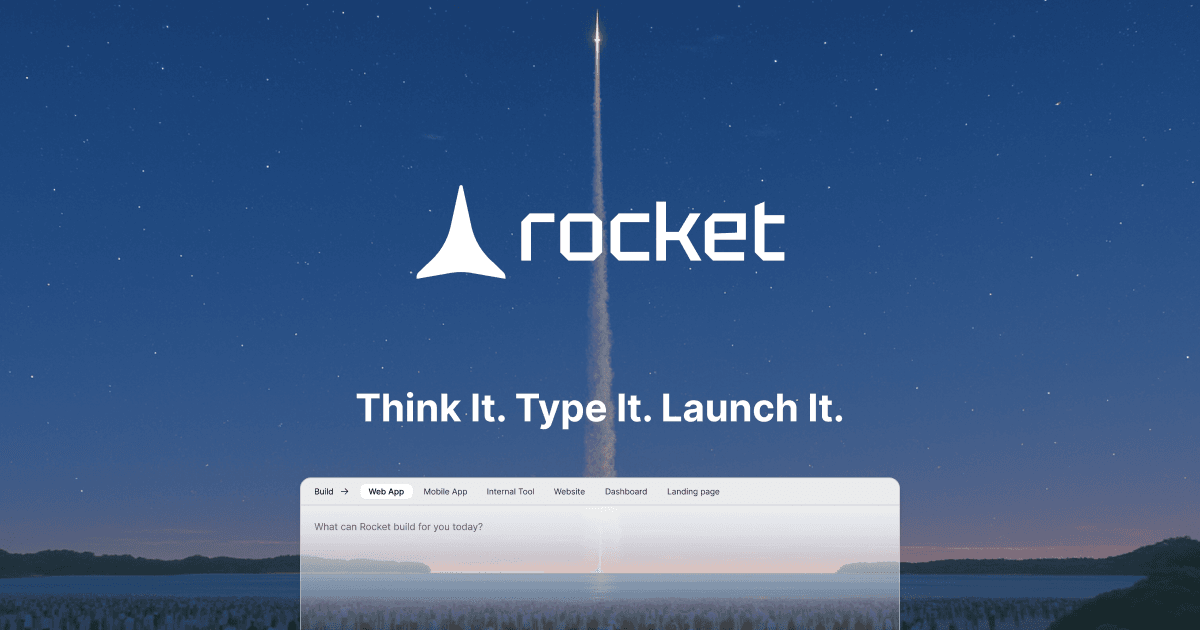
Rocket is an AI-powered app builder that turns a plain-English app vision into a production-ready mobile app with backend-ready components and deploy flow.
What is Rocket?
Rocket is an AI-powered app builder that converts a plain-English description of an app into a production-ready mobile app plus supporting backend components. The product is designed to take a one-time vision and generate a functional starting point including UI/UX, backend setup, and code that can be deployed.
The page describes Rocket as working through a flow of researching the market context, selecting a feature set, designing the user experience, writing SEO-oriented copy, and then generating code in a chosen framework. It also includes a deployment pipeline and templates intended to speed up the path from idea to a deployable application.
Key Features
- One-prompt full app generation: Describe your vision once to produce a full, functional app rather than prompting for each page and feature.
- Automated backend readiness: Generates database schemas, authentication/security configuration, and API endpoints based on the services and options you select.
- Integration and payments readiness: Creates a backend foundation intended to support payment gateways and other integrations.
- Deployment pipeline for launching: Handles code optimization and bundling, GitHub synchronization, and prepares builds ready for Netlify and custom domains.
- Template library for starting points: Provides curated landing page, web app, brand website, internal tool, mobile app, and dashboard templates; templates are described as helping reduce token consumption.
How to Use Rocket
- Provide a single prompt describing your desired app.
- Review the generated app output, including the produced UI/UX, supporting backend setup, and any generated copy.
- Select the framework you want the code written in and choose backend/service options as prompted by the workflow.
- Use the deploy flow to prepare the project for deployment (including options called out as Netlify and custom domains).
- Optionally start from a curated template when you want to begin closer to a specific app type.
Use Cases
- Build a production-ready internal tool: Start from a description of the internal workflow you need, then generate an app with a backend that includes authentication and API endpoints.
- Turn an app idea into a deployable web/mobile project: Use one prompt to produce an end-to-end starting point, then run the deployment pipeline to prepare for launch.
- Create a landing page or brand site faster: Use a curated landing page or brand website template and generate the associated application code and content.
- Prototype and validate a mobile app concept: Generate a mobile app with supporting backend components and prepare it for install/deployment as described in the workflow.
- Prepare for integrations and payments: Generate a backend foundation that includes ready-to-configure payment gateway and integration support.
FAQ
- Does Rocket generate a complete app from a single prompt? Yes. The page contrasts Rocket with tools that require prompting for each page/feature, describing Rocket as producing a whole functional app from one prompt.
- What backend components does Rocket generate? The page specifically mentions auto-generated database schemas, authentication/security configuration, and API endpoints.
- Can Rocket deploy the generated app? The page describes a deployment pipeline that prepares code for deploy on Netlify and on a custom domain, and includes steps like code optimization/bundling and GitHub synchronization.
- Are templates available to speed up starting? Yes. The page lists multiple template types (e.g., landing page, web app, internal tool, mobile app, dashboard) and says templates are curated and intended to reduce token consumption.
- Is the app code available to the user? The page states: “You own the code. Clean, functional, and high quality.”
Alternatives
- No-code/low-code app builders: These tools typically focus on UI building and configuration; some still require more step-by-step setup than a one-prompt full-app generation workflow.
- AI coding assistants and IDEs: Tools like AI pair-programming inside an editor can help write parts of an app, but they usually require the developer to assemble the project structure and deployment steps.
- Backend scaffolding tools and templates: Options focused on generating backend CRUD/auth structures can help with backend setup, but they may not generate a complete app UI/UX and deployable project in one flow.
- Template-driven website/app generators: These can speed creation for common page/app types, but they generally rely on customizing within the template rather than generating a whole stack from a single plain-English vision.
Alternatives

zero
Deploy any Docker image to your own server in one command with automatic HTTPS, health-checked zero-downtime switching, previews, and rollback.

Prompty Town
Prompty Town is a tiny internet city of links—buy a tile, attach your link, prompt it with text/content, and let others browse.

Make Real
Draw a UI and make it real using the tldraw SDK.

Falconer
Falconer is a self-updating knowledge platform for high-speed teams to write, share, and find reliable internal documentation and code context in one place.
OpenFlags
OpenFlags is an open source, self-hosted feature flag system with a control plane and typed SDKs for progressive delivery and safe rollouts.

beehiiv
beehiiv is an all-in-one newsletter and website platform with publishing, growth, analytics, and monetization tools for creators and brands.