
Flexible subscription billing
Manage flat-fee, tiered, volume-based, usage-based, and hybrid pricing in one billing system, including prorations, pauses, upgrades, downgrades, trials, and discounts.

PaymentKit is a multi-processor billing platform for SaaS and e-commerce, combining subscription billing, payment routing, and revenue analytics.
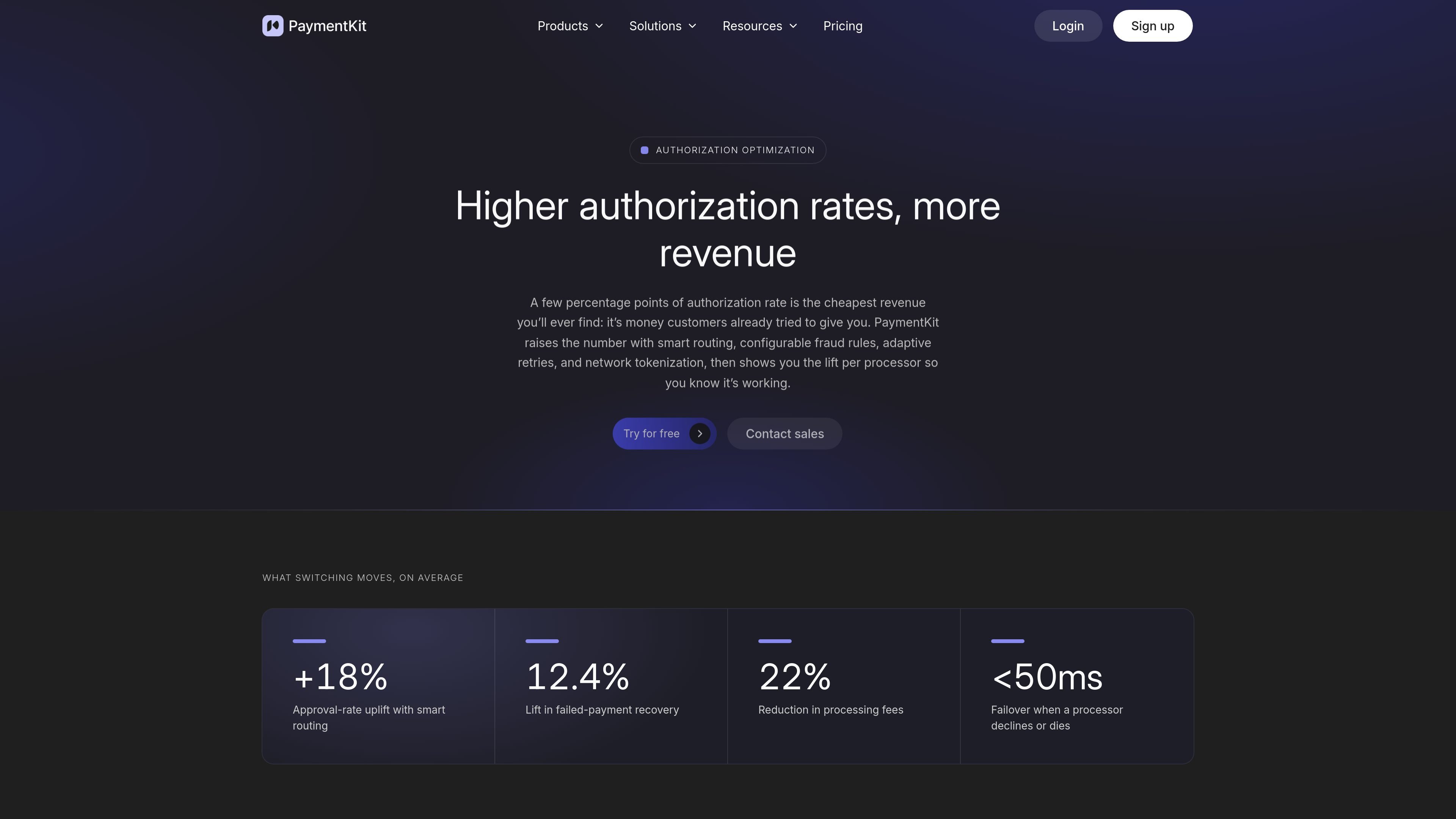
PaymentKit is a multi-processor billing platform for SaaS and e-commerce businesses. It combines subscription billing, payment orchestration, revenue metrics, and recovery tools in one system so teams can manage the full billing lifecycle without tying their logic to a single processor.
The product is built around processor independence. PaymentKit routes transactions across multiple PSPs, vaults tokens separately from any processor, and keeps billing and reporting unified even when the underlying payment stack changes.
Manage flat-fee, tiered, volume-based, usage-based, and hybrid pricing in one billing system, including prorations, pauses, upgrades, downgrades, trials, and discounts.
Route transactions by payment method, card brand, currency, transaction value, geography, or other rules, then cascade to another processor if the first attempt fails.
Keep payment tokens portable and owned outside a single processor, so customers can continue renewing if you move traffic to another PSP.
Run recovery flows for failed renewals with adaptive retries, branded dunning emails, and a self-serve card update portal.
Track revenue, churn, processor performance, and recovery outcomes in a single dashboard across processors and currencies.
Launch through no-code components or connect via APIs, SDKs, webhooks, and a sandbox for testing before go-live.
A SaaS team can bill with flat, tiered, usage-based, or hybrid pricing, then automate upgrades, downgrades, pauses, prorations, invoicing, and customer self-service.
An e-commerce business can use hosted checkout, payment routing, fraud controls, and failed-payment recovery to improve authorization and renewal performance across processors.
A company operating in multiple regions can bill customers in local currencies while keeping a unified view of revenue and processor performance in one dashboard.
Teams that want to reduce dependence on one PSP can route by rules, use cascading on soft declines, and keep tokens portable when changing processors.
Businesses with more complex or higher-risk underwriting requirements can combine billing, vaulting, and routing controls on a processor-agnostic stack.
PaymentKit is positioned as a multi-processor billing platform, so it can handle billing, payment routing, and revenue metrics in one system. The pricing page also lists a no-code path and an API/SDK path, suggesting it can fit both lighter and more custom implementations.
The pricing page states that Standard includes global payment acceptance, recurring invoices, trials, metered billing, dunning, hosted checkout, fraud protection, and real-time metrics. The product pages also describe payment orchestration, independent vaulting, and revenue dashboards.
The site says setup can be done without code using drop-in components, or through APIs and SDKs, and it says developers can integrate in under an hour with a sandbox. That is the strongest setup detail available from the source.
The source says PaymentKit is processor agnostic and offers independent vaulting, so the same billing logic can be used while routing across multiple PSPs. The site also describes zero-downtime failover and portable tokens, which are meant to reduce disruption when switching processors.
The source explicitly mentions Stripe, Adyen, Braintree, and several others in its orchestration copy, but it does not provide a complete, authoritative integration list. For exact processor support, the site points users to sales or docs.

EchoTik is a TikTok e-commerce data analysis platform designed to assist sellers and e-commerce creators in making data-driven decisions for product selection and market analysis.

PromptScout tracks how ChatGPT, Gemini, Google AI Overviews, and Perplexity mention your brand or competitors, with source analysis and website audits.

Lasso is an ecommerce product data platform for enriching catalog records, processing supplier files, generating product content, and tracking competitors. It includes a web app, REST API, SDK, and MCP server.

SaveMRR is a Stripe retention tool for SaaS teams to scan churn and MRR leaks, then automate recovery with dunning, cancel-save offers, win-back emails, and onboarding nudges.

Hype is a web tool for finding trending YouTube topics by category, time range, and scoring mode. Spot emerging ideas and review source videos.

DailyPlay.ai is a behavioral growth platform using AI site scans and micro-games to boost engagement and conversions across web, mobile, and more.