
Unified AI workspace
WorkElate combines docs, sheets, mail, chat, tasks, and automation in one AI-orchestrated workspace, so teams can work from a single environment instead of stitching together separate apps.

WorkElate is an AI work OS that connects planning, execution, communication, and automation in one modular workspace. It helps teams move work from intake to follow-through with fewer handoffs and less manual chasing.
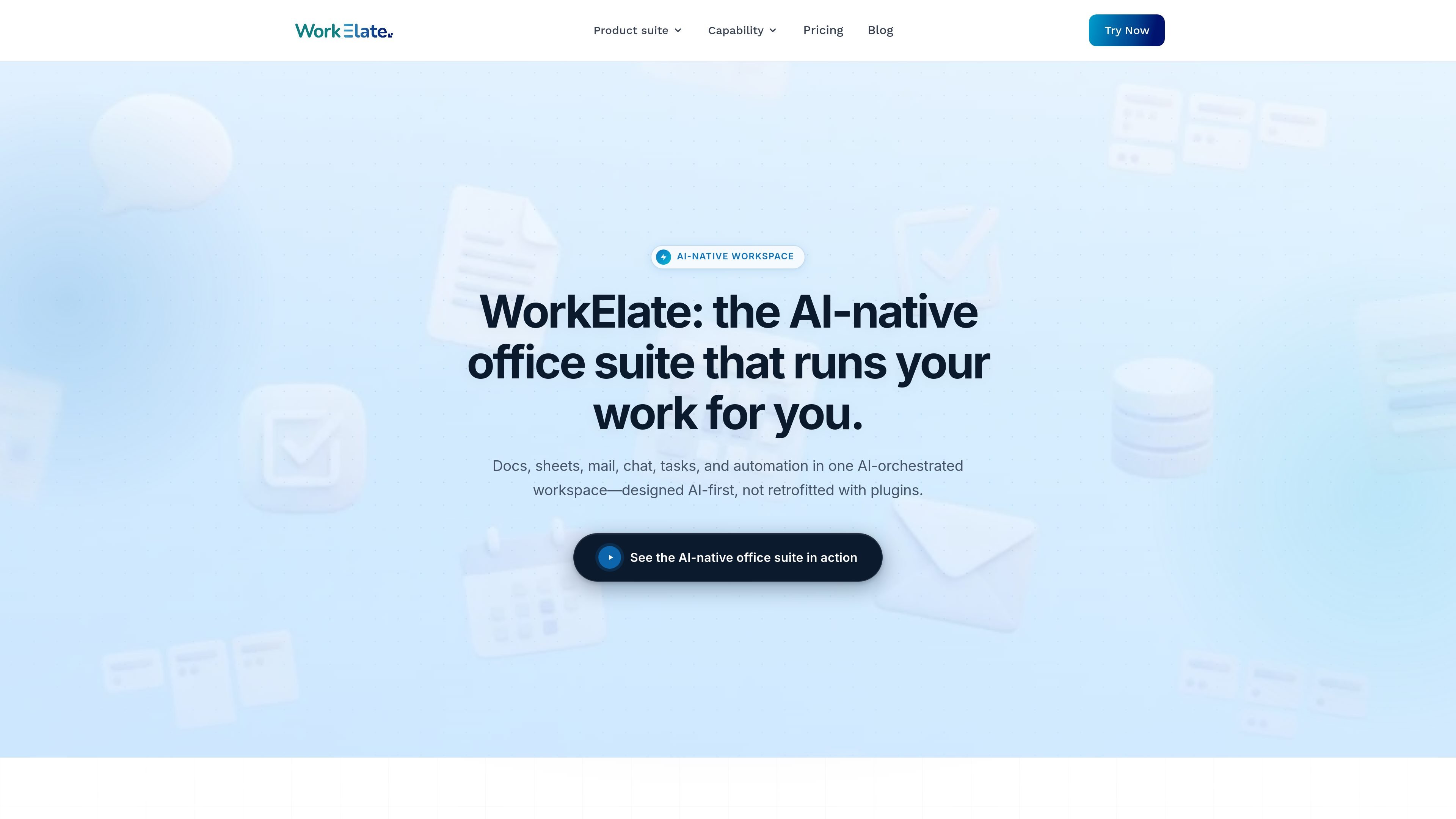
WorkElate is an AI work OS that combines planning, execution, communication, and automation in one modular workspace. The site positions it as an AI-native office suite rather than a collection of retrofitted tools, with the goal of turning work intake into coordinated action with less manual follow-up.
Its product pages describe a suite built around an orchestration engine called WAO plus modules such as taskNetic, formNetic, boardNetic, datanetic, WeMail, and syncnetic. Across the site, WorkElate is presented as useful for teams that want tasks, forms, boards, data, chat, and mail to stay connected to the same workflow and shared context.
WorkElate combines docs, sheets, mail, chat, tasks, and automation in one AI-orchestrated workspace, so teams can work from a single environment instead of stitching together separate apps.
The WAO engine interprets intent, triggers workflows, and coordinates actions across apps, aiming to move work forward automatically as new signals appear.
TaskNetic turns natural-language requests into assigned and tracked tasks, with goal-linked execution maps, reminders, and role-based views.
formNetic creates forms from plain-language prompts and can validate submissions, trigger workflows, and feed responses into analytics.
datanetic supports natural-language data queries, narrative insights, and alerts so teams can ask questions of structured data without manual reporting.
The suite also includes board and mail experiences that connect planning, communication, and follow-up back into the same execution flow.
Use WorkElate when a team wants new work to move from a request or intake step into follow-up tasks, status tracking, and shared data without bouncing between disconnected apps.
Use taskNetic for goal-linked execution when leaders need tasks tied to company, team, or personal outcomes, with reminders and views that help keep delivery moving.
Use formNetic and the related onboarding flow when incoming requests need to become structured forms, then route into personas, boards, tasks, and spreadsheets automatically.
Use datanetic when teams need to query data in plain language, surface trends, and track signals instead of exporting spreadsheets for every question.
Use the suite when chats and email need to produce follow-up work automatically, so decisions, commitments, and action items stay connected to execution.
WorkElate is designed as an AI work operating system, so it combines planning, execution, messaging, data, forms, and automation in one workspace instead of separate point tools.
The pricing page shows Starter, Growth, Business, and Enterprise options. Starter is listed as free, while the higher tiers are priced per user or custom for Enterprise.
The site presents WorkElate as modular, with products such as taskNetic and WAO plus related apps for forms, boards, data, email, and chat. The exact deployment and setup steps are not described in detail on the source pages provided.
TaskNetic is positioned for goal-first task management, WAO for orchestration across apps, and the broader suite for teams that want work to move from intake to execution without manual follow-up.
The source pages describe automation, summaries, routing, and action triggers, but they do not provide a full technical integration map or every supported workflow. The pricing page does list some standard integrations and API availability on higher plans.

Biji is a versatile platform designed to enhance productivity through innovative tools and features.

Goldfish is an AI memory app for macOS that helps you reply, write, summarize, and continue with context already on your Mac. It stores memory locally and writes in your tone.

ArtDeck is a visual reference board app for iPhone, iPad, and Mac. Collect mixed references on one canvas and study them with ToolBox lenses. Offline, optional iCloud sync, one-time purchase.

Malyatko is a baby tracker for feeding, sleep, growth, teething, and milestones. Use it on iPhone, Apple Watch, and widgets offline, with iCloud sharing.

Codex Plugins bundle reusable skills, app integrations, and MCP servers into workflows you can install in the Codex app or use from Codex CLI.
Struere turns spreadsheet data into structured operational software with dashboards, alerts, and automations for teams replacing manual spreadsheet workflows.