
Browser-based image vectorization
Upload raster images and convert them to vector output in the browser without installing software. The product is positioned for quick online vectorization and previewing before download.

Vectorizer.AI turns raster images into editable SVG, PDF, EPS and DXF in your browser, with developer tools for automated workflows.
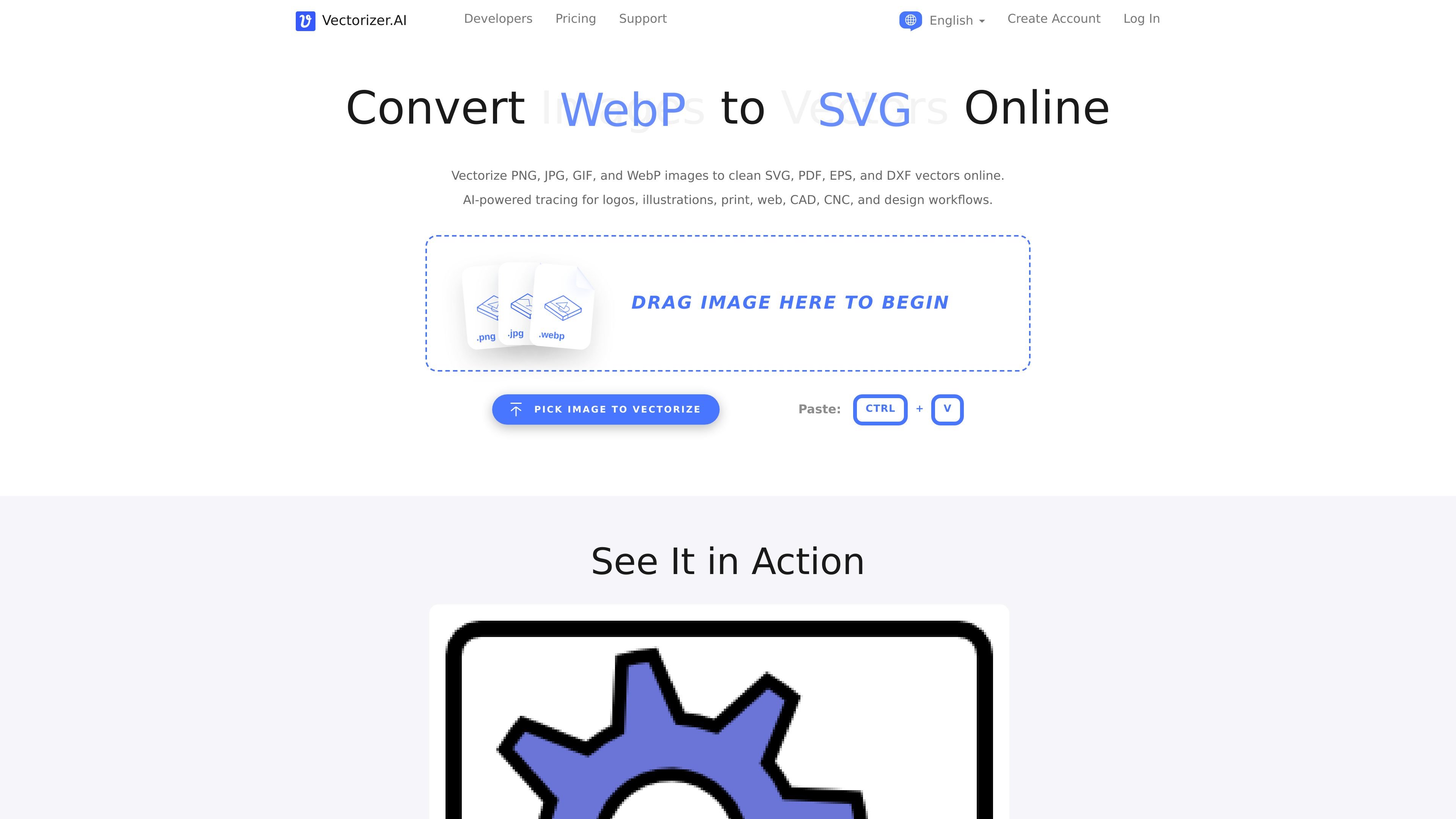
Vectorizer.AI is an image-to-vector conversion service that turns raster images such as PNG, JPG, GIF, BMP, and WebP into editable vector output. It runs in the browser for manual use and also exposes developer tools for automated workflows through SDKs, a CLI, direct HTTP endpoints, and OpenAPI documentation.
The product is aimed at people who need clean SVG, PDF, EPS, DXF, or PNG output from bitmap artwork, logos, sketches, scans, diagrams, or photos. The site emphasizes interactive previews, configurable export settings, and output that follows standard file format behavior so users can check compatibility before committing to a download or production workflow.
Upload raster images and convert them to vector output in the browser without installing software. The product is positioned for quick online vectorization and previewing before download.
Supports common bitmap inputs including PNG, JPG, GIF, BMP, and WebP, with vector exports in SVG, PDF, EPS, and DXF. The site also mentions a cleaned-up PNG output option.
Provides a full interactive preview so you can inspect the result before buying or downloading production output. Example images can also be downloaded for free to test compatibility with your software.
Offers detailed output controls for compatibility, including file format version, curve types, grouping, shape drawing, sizing, and other format-specific options. This is intended to help results work across standards-compliant readers and downstream software.
Includes developer-focused ways to automate the same vectorization engine through official SDKs, a command-line tool, direct HTTP API calls, and OpenAPI documentation. SDKs are listed for TypeScript and JavaScript, Java, C# and .NET, Go, PHP, Ruby, and a Python SDK in preparation.
Uses an AI-assisted vectorization engine with shape fitting, curve support, symmetry handling, corner cleanup, and adaptive simplification. The product also states that it supports 32-bit color and transparency.
Convert logos, illustrations, and other artwork from bitmap files into scalable vector formats for print, brand assets, or screen use.
Turn sketches, scans, and hand-drawn material into editable vector shapes that can be refined after conversion.
Generate DXF output for workflows that need paths for CAD, cutting, embroidery, or CNC-related tools.
Automate image-to-vector conversion inside a website, mobile app, or internal pipeline using SDKs, the CLI, or direct API calls.
Use the browser preview and output options to check whether a result will open correctly in downstream vector software before committing to production.
Yes. The Web App is designed for people who want to upload images, inspect a preview, adjust export options, and download results in the browser. The API and developer tools are better when your own software needs to automate vectorization.
The API accepts PNG, JPG, WebP, GIF, and BMP inputs. Production results can be downloaded as SVG, PDF, EPS, DXF, or PNG.
Yes. The site says it is free to integrate with and test the API before subscribing, so you can build and inspect your workflow in test mode first.
Unused API credits roll over up to 5 times your monthly credits. If you run out of credits, API requests return 402 Payment Required errors.
The pricing page says subscriptions can be upgraded, downgraded, or renewed on the account page, and that cancellation is available any time from the account page.

Snapmark is a VS Code extension for annotating clipboard screenshots before pasting them into AI chats. Blur sensitive details, add numbered callouts, and auto-resize large images.

ArtDeck is a visual reference board app for iPhone, iPad, and Mac. Collect mixed references on one canvas and study them with ToolBox lenses. Offline, optional iCloud sync, one-time purchase.

Codex Plugins bundle reusable skills, app integrations, and MCP servers into workflows you can install in the Codex app or use from Codex CLI.

Pixelcut is an AI photo editor for product images, social content and video assets. Free and paid plans; mobile app and browser access for individuals and teams.

Petalica Paint is a web service for automatic line-art coloring and tracing drawings from photos, with commercial use allowed under stated terms.
PixelDrive is a bulk image generation API for on-brand images from one template via browser editor, REST API, CSV batch, or MCP.